7/18/07 Vol. 4 #18

An extremely pleasant meal last evening at Panzanella.  What a huge turn out, I don’t think I have ever seen the place so full.  The dishes Chris made from our produce were simple yet full of great flavors, the risotto with the sweet corn was my favorite but the pasta was also outstanding with just the right amount of Italian parsley coming through the tomato sauce.  It was good to see all of you who came out.  We drove home through a good rain so I won’t have to irrigate this morning either, what a bonus!

I was thinking about the sweet corn experiment and continue to be amazed at those farmers who consistently grow sweet corn.  We have not grown it in the past for several reasons.  First corn takes a lot of room and we just didn’t have any spare ground to put it in.  The second major reason is that you just don’t make the money per foot of row that we feel you need to make on a farm as intensive as ours, even at 50 cents an ear much less the old days when it was two dollars a dozen.  We use a rough rule of thumb that we need to gross $200 a bed (that is a planting strip 4′ X 100′) or the crop probably isn’t carrying it’s weight here on the farm.  In theory you have a corn plant every eight inches in the row, with two rows per bed, that is 300 plants per bed and, usually, you get one ear per plant so at 50 cents an ear that is $150 a bed.  That is in theory though, before the ones that don’t pollinate well, the corn ear worms, the Japanese beetles, and finally the raccoons that seem to be able to levitate over the electric fence and help themselves to all of the perfect ears that are just now full and ripe.  With this last planting we pulled about 80 ears a bed, $40 hmmm…  But corn at least is fairly easy to grow in some aspects as it is a large vigorous plant once you get it germinated and past the crows who love to pull up the tiny seedlings.  One good cultivation and as long it rains, it takes care of itself until picking time, no transplanting, no pruning, or trellising.  The good corn growers of course do it on a large scale, with tractors, so their labor is minimal until picking time.  Then to have a consistent supply requires planting every ten days or so.  So my hat’s off to those corn growers at market who have corn for weeks at a time.  We will continue to mess around with the corn experiment, for a while anyway, it is so good when it does behave, and it gives me something else to tinker with.
Picture of the Week
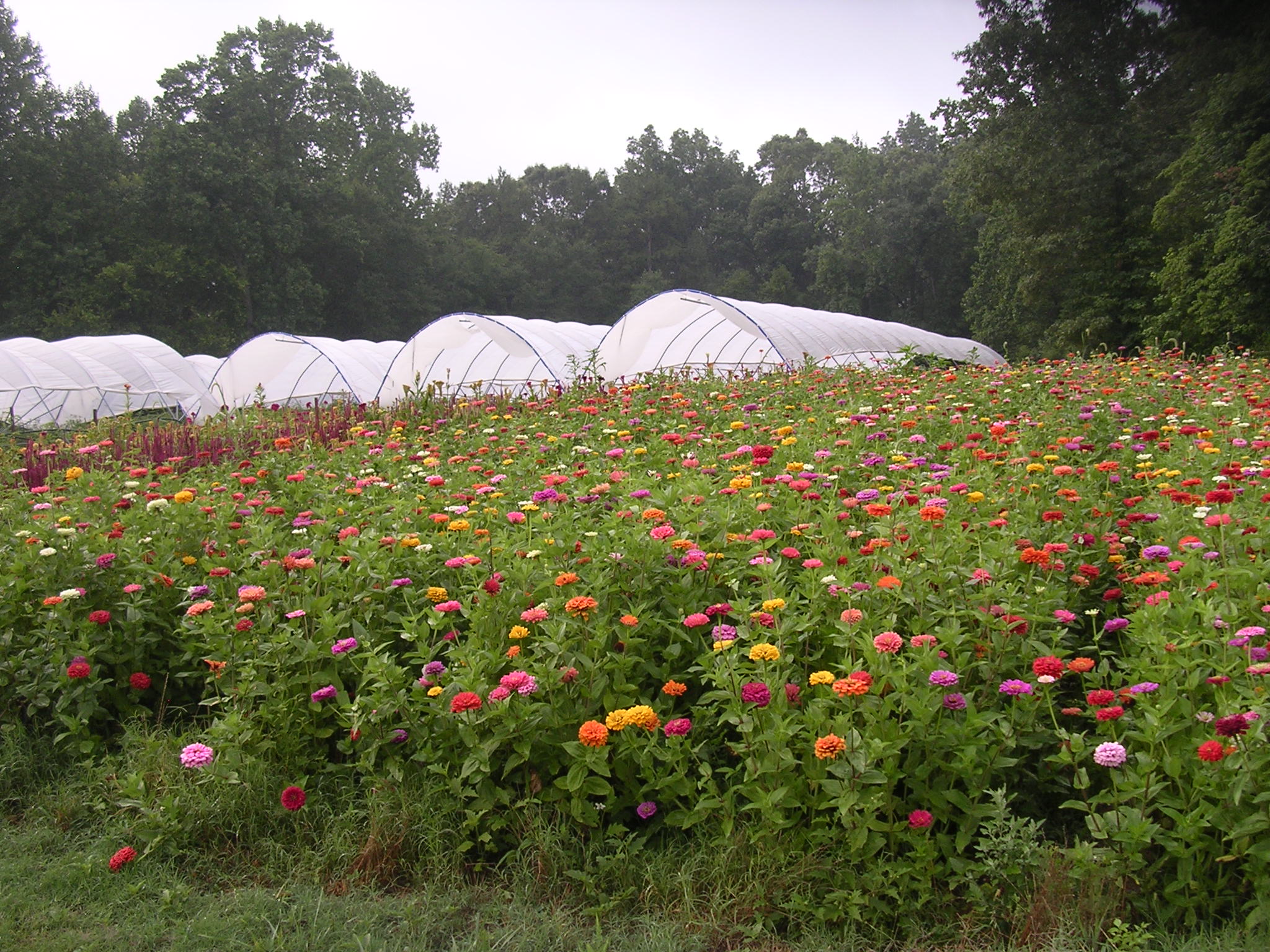
Brilliant Zinnias in front of the Big Tops

8/1/07 Vol. 4 #20

We made it to August!  To me August always signals fall and the end of the season.  Yes it is still hot and sometimes it is a very wet month with thunderstorms but the lushness of early summer is gone and the farm begins to look tired after months of full production.  The tomatoes have given us their best and Betsy is into the third planting of zinnias as the first two look shabby as the diseases and insects gain the upper hand.  Even the weeds begin to mark the end of their run with big old seed heads and yellowing leaves, if we have let them get to that stage.  After 20 straight weeks at market, we are feeling shabby too so it is time for the summer break.  We will be at the markets this week and then will miss the markets on the 8th and 11th.  No newsletter either as we will be hiding somewhere cool with minimal human contact!  I know many of you will be taking a last bit of time off too before school and other fall things start the end of the month.

I have been thinking a lot this week about last Wednesdays radio show “The State of Things” on WUNC.  If you heard it you know they came to the market and recorded a piece on the Tomato Tasting event that the market held on the 21st of July.  It was a fairly interesting piece and they did a pretty good job of getting the feel of what the Tomato Tasting is like but there was one thing that got many of us market members hackles up and that was the comments about how food at Farmers’ Markets is expensive.  Excuse me, but IT’S NOT!  It used to be that prices at markets were ridiculously cheap and as I speak around the country to farmers I always say “Who ever started the concept that Farmers’ Markets are the place to buy cheap produce I want to grab them by the neck!”  Why would fresher, better tasting food, grown in better way, many varieties which you can’t find anywhere else be priced low?  Now the misunderstanding has swung the other way and I hear these “experts” say shopping at Farmers’ Market is expensive.  I want to grab them by the neck too.  Now I know there are exceptions to everything and some markets around the country are more expensive but by and large they are retail affairs with prices generally the same or cheaper than the grocery store.  I know for us at Peregrine Farm our vegetable prices are right in line with the local groceries because I check on a weekly basis.  The cheapest red tomato at Food Lion has not been below $2.29 this year and almost all of their tomatoes are $3.00 and up.  Food Lion!  Don’t even get me started on what they taste like.  Makes our delicious red tomatoes at $2.50 seem like a bargain not to mention all of our different heirlooms.  Same with lettuce and on and on.  With Betsy’s incredible flowers, that you can’t even get unless you work with a really good florist, it is even worse, our prices are wholesale- what the florist would pay before they charge the public at least twice as much.  Of course you all know that the Farmers’ Market is much more than just a place to buy and sell things, it is the town square where we all slow down and get to see and visit each other, let the kids run around and get some really beautiful food and flowers to enrich our lives even further.  That is worth a lot too and makes those incredibly flavorful sungold tomatoes seem really inexpensive!

Picture of the Week
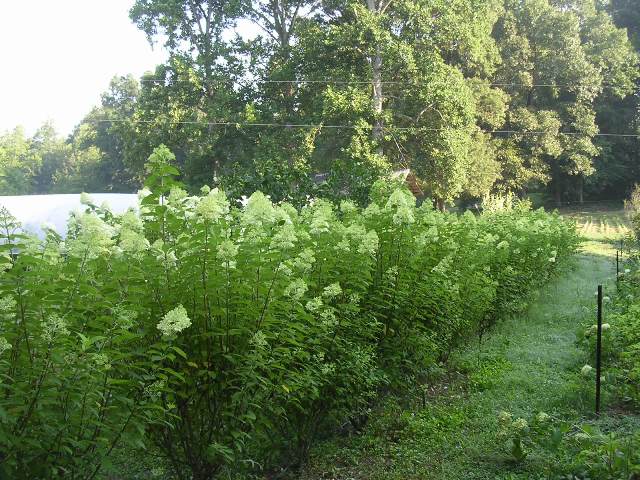
Limelight Hydrangeas

3/21/08 Vol. 5 #1

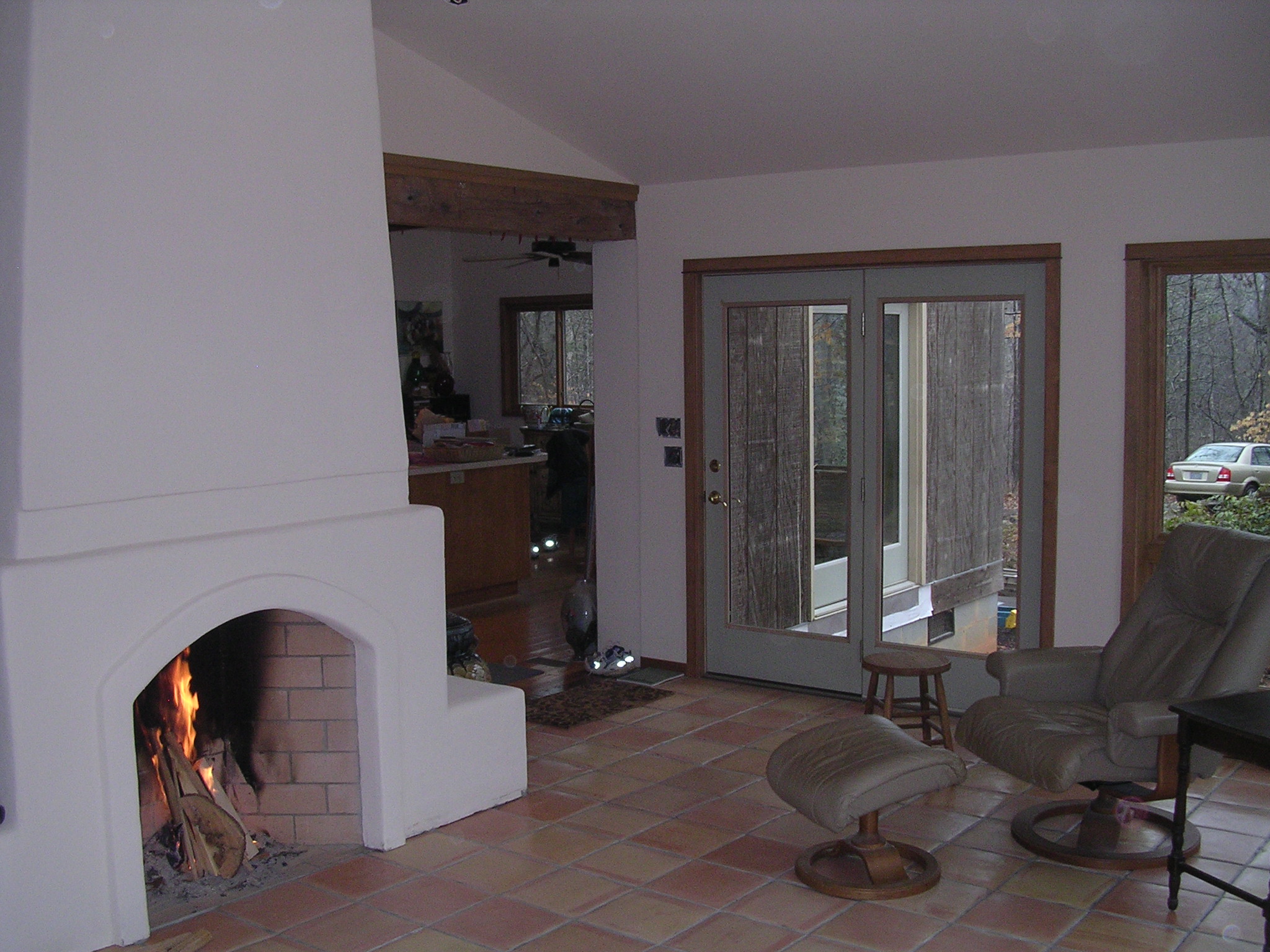
Happy first day of Spring and Easter!  Alright so once again the winter has zipped by and I have managed to be so busy that I didn’t get one newsletter out.  I would have to say that this has been one of the most densely packed winters we’ve ever had but we did get a lot done and find some time to have fun too.  Dominated by the construction on the house, which has occupied most of my brain power since October, and punctuated by trips away to conferences, before we knew it, it was time to start planting again.  People always ask who do we get to do the construction work and then look quizzical when I say we do all the work.  We did hire a mason to do the foundation and to build us a fireplace and an electrician to make sure we don’t burn the house down but everything else we do ourselves.  It takes a bit longer sometimes but the end product is exactly what we want and Betsy is an excellent assistant.  The whole project has turned out great and is “almost” done.  Some entrance steps and a few other outdoor things remain but I hope to have them done in the next week or two.  The funny part is we keep asking ourselves “who’s house is this?”

There were too many conferences and farm related meetings away from the farm this winter and I will have to have a word with my agent about over booking.  We try to schedule just one a month but sometimes things pop up after we have committed to another group and we just can’t say no.  The highlights for us are the new and interesting people we meet who are changing the face of food and farming.  Our own “home” conference of the Carolina Farm Stewardship Association was a good starter along with the 1200 attendees at the Southern Sustainable Agriculture Working Group’s conference in Kentucky.  As always I had fun at the Georgia Organics conference a group I have worked with for many years now, it is pleasing to see it grow from a group of 20 or 30 to over 600 this year.  The most unusual meeting and highest honor for us was to be inducted as fellows in the Fellowship of Southern Farmers, Artisans and Chefs.  An offshoot of the Southern Foodways Alliance, this new group brings together those folks, from across the south, who have been working for a long time in food and farming for a weekend to be able to share ideas and experiences.  Betsy and I are still trying to figure out exactly how it all works but it is certainly an interesting group of people.

On the farm things are moving a pace.  The greenhouse is full of transplants, believe it or not, we seeded peppers yesterday.  Almost all of the lettuce is planted in the field now as are the onions and most of the spring vegetables.  The peas are up and look better than last years poor stand.  The little sliding tunnels are full with early greens and flowers and today we will slide the last three so we can plant the earliest tomatoes and melons in the next week or two.  We are thankful for the rains we have gotten in the last month but we still need more.  One pond is full but the other one still is six feet down.  We will begin to fill it from the creek (which only started to flow again on New Years eve) in the next few weeks.  To be honest we are still very worried about whether there will be enough water for this season, we are planting like there will be but know that if the drought persists we will have to make decisions about what to water and what to let go.  The staff started this week and so now we really know that the winter is over!  No more late mornings with another cup of coffee, no more random unscheduled days, every week is full with a plan now.  Welcome to our 27th growing season!

Pictures of the Week

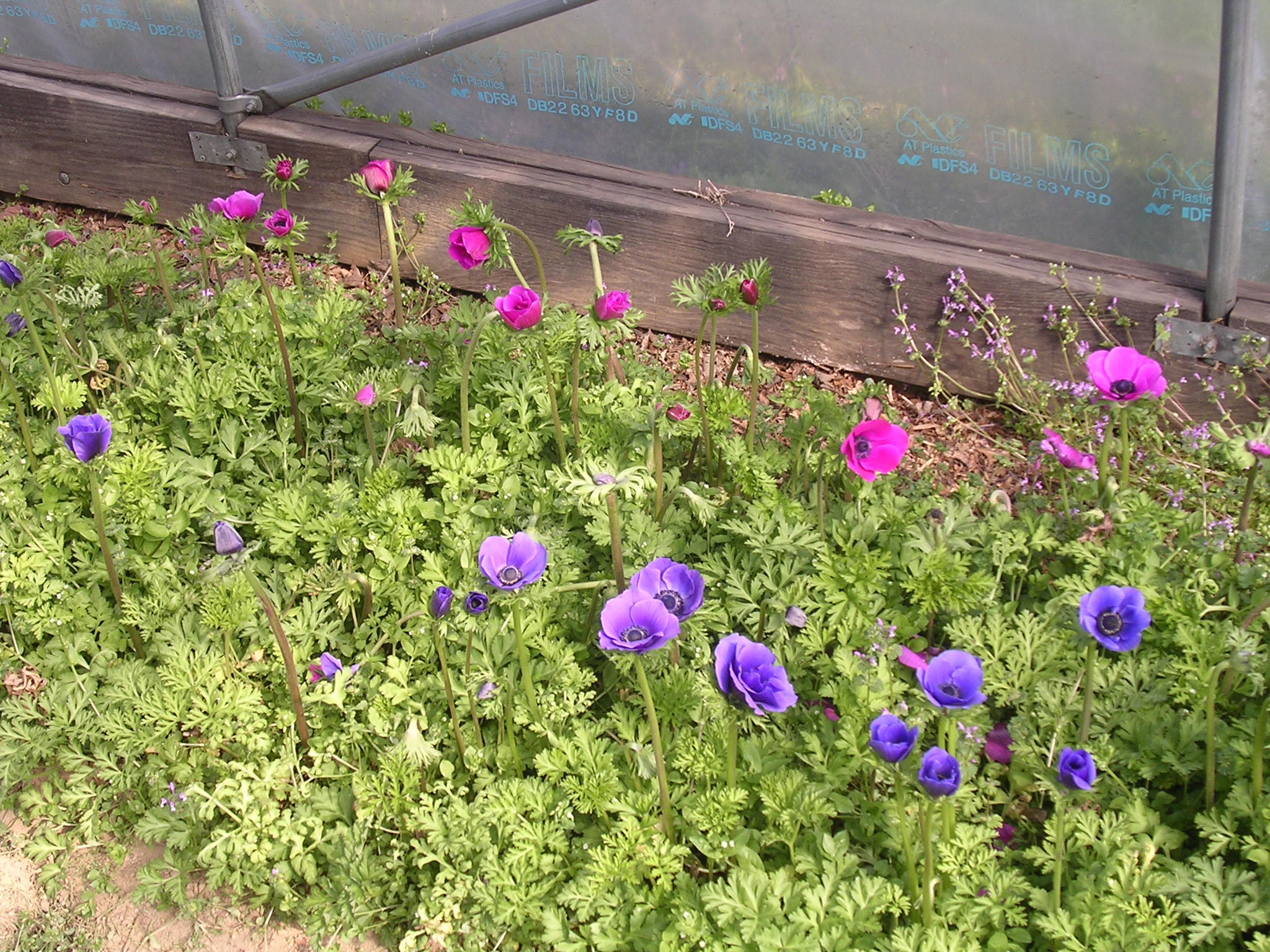
The finished livingroom and incredible anemones

5/7/08 Vol. 5 #8

What a great day it was last Saturday.  The celebration of the 30th season of the Carrboro Farmers’ Market brought out a huge crowd to enjoy the festivities and shop.  I know that there had to have been ten thousand of those raffle coupons handed out to all the shoppers.  We enjoy such great support both from all of you who come to market but also all of the surrounding businesses that donated for the raffles.  And a big thank you to Sarah Blacklin (our market manager) and all of the volunteers who helped put it on.  This is what the market founders envisioned all those years ago when they stated the goals of the market to be (from the By-Laws)  “The goal of the corporation is to operate farmers’ markets in the Chapel Hill-Carrboro area which serve the dual purpose of providing (1) a direct retail outlet for local farmers thereby promoting local agriculture, and (2) an alternative buying arrangement for consumers where high quality fresh products are available at reasonable prices in an atmosphere conducive to the exchange of information and ideas between the original producer and the consumer.” and the town of Carrboro wanted to bring more people into downtown to help keep it vibrant and working.  I would say that all of that has happened and more.

I rarely talk about “the seamy underbelly of the market” as we want most people to have the feeling that we all just happen to show up on Saturdays, Wednesdays and Thursdays and what a wonderful coincidence it is.  Yeah sure there are always glitches along the way, issues between vendors, between the market and the town and surrounding businesses, sometimes it’s difficult to park but we all have worked together to solve those problems so we can enjoy the benefits.  It’s called community.  As members of the market for 23 seasons now we are extremely proud and defensive of the market and it’s organization.  It has been a model for many of the markets in North Carolina and around the country too.  It is unusual for a market to be farmer run and farmer controlled, it takes a lot of time to run such a large organization when you have to farm as well.  I tell folks that it is as close to democracy as you can get when 80 plus individual businesses come together to agree on how their market place will be organized and then elect a board of their peers to make policy and run the day to day business of the market.  Farmers working together making decisions that work for farmers, not some other organization.  So we thank all of you for rewarding us with your support all these years, it takes all of us to have a dance!

Picture of the Week

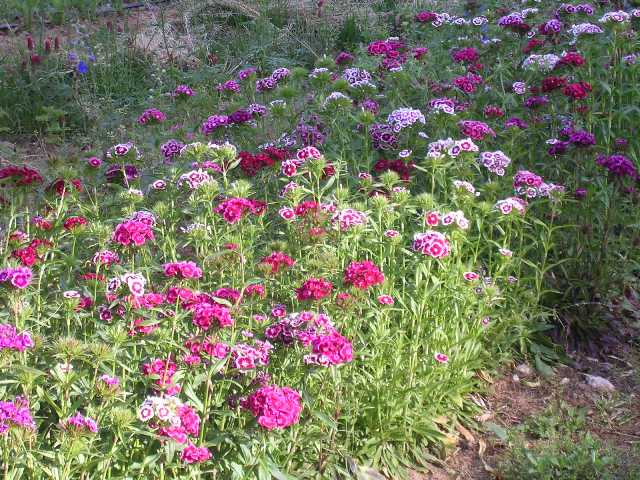
Sweet William in the first morning light

7/16/08 Vol. 5 #18

Well we seem to be in the tourist season now.  Last week the National Academy of Sciences, today a bus load of extension agents here in North Carolina for the National Association of County Agricultural Agents meeting.  Next week we have an all day turkey production workshop for 50, put on by our friends at the American Livestock Breeds Conservancy.  They were going to hold it down at the Center for Environmental Farming Systems in Goldsboro but all their turkeys got eaten by coyotes and they needed a new location that had heritage turkeys on pasture!  In two weeks we might be hosting a big press conference to announce two new endowed chairs in Sustainable Food Systems at NC A&T and NC State.  In three weeks we have 90 civil servants from India coming to see what farming techniques we use.  In four weeks we will be taking our summer break to rest up from all of this activity!  So we have been mowing and cleaning up the place.  Not that we don’t constantly do this kind of maintenance but usually not all at once.  All of the rain has made the mowing more critical as stuff is growing like wildfire.

The rest of our days are as usual, a steady pace of harvesting, planting and crop control.  I had predicted this week to be the peak week of tomato harvest but it appears as if last week actually was.  That week of 100 degree temperatures in early June is probably part of the reason.  When it’s that hot tomatoes don’t pollinate well.  That combined with not a lot of sun last week to help ripen the fruit and we seem to have a drop in production this week over last.  Still we have tomato plants to tie up, peppers and lisianthus to trellis, zinnias to be weeded and lots of flowers to be seeded for next years early crops (already?).  The last planting of zinnias and sunflowers went in the ground this week and the first of the fall lettuce too.  The little turkeys graduated yesterday, their first time out of doors.  It is always surprising how fast these broad breasted turkeys grow compared to the heritage birds and these guys are looking good.  In two weeks they will join the older birds out in the field.

Picture of the Week
Limelight Hydrangeas

7/30/08 vol. 5 #20

Depending on how we look at it, it has been either 20 or 24 weeks since we started going to market.  Twenty occupying our regular Saturday spot with two spaces but with the market going year round now Betsy started going four weeks earlier with the first few anemones and ranunculus.  Either way it’s a long time without a break.  Twenty weeks for the staff as well, hot, cold, wet, dry, steamy, arid, seeding, planting, weeding, cultivating, harvesting.  Twenty weeks of dealing with each other and us, time for a pause.  As most of you all know we take a week off, every summer, in early August timed to hit just as the early tomatoes wane and before the peppers really kick in.  Now I always refer to it as the “break” and not a vacation because Betsy and I don’t really get to check out.  We give the staff the week off with pay and they usually leave town.  That leaves us here to water, and irrigate, keep and eye on the turkeys, pick a little bit of stuff that has to be harvested, etc.  The break is in not going to markets and doing regular deliveries.  We usually do a few hours of chores in the cool of the morning and then find some kind of diversion in the afternoons, eat a lot, take naps, read and other general sloth.  To that end there will be no newsletter next week and we will not be at market Wednesday 8/6 and Saturday 8/9.

This break marks the transition into fall and gives us the bit of rest needed to head into this most important time of year for the farm.  The ten weeks that follow the break are not only the end of our harvest season with peppers, tomatoes and the last of the summer flowers but it is the start of the next year.  We are busy dismantling all of the infrastructure we put in place all season to grow and support the crops; irrigation, trellises and more.  At the same time we are busy seeding and transplanting flowers for next spring, improving the soil with mineral amendments and seeding cover crops.  By mid October it will all be put to bed for the winter save a few hundred feet of row for the vegetables for Thanksgiving and the turkeys wandering around in their pasture.  In many ways the next growing season is decided and set in place during this period, we take it very seriously and when it’s done we then can take a “vacation” and rest assured that next year will be another good one!

Picture of the Week
Crazy Celosia heads

8/20/08 Vol. 5 #22

Wow, I almost forgot to write the newsletter this morning!  I woke up thinking about the turkeys and then just forgot that it was Wednesday.  We had one of those turkey events yesterday that makes one question why we raise them.  Most of the time the birds are well behaved and get along fine, but as they get older they become teenagers and lose all common sense occasionally.  Just like teenage boys the toms get full of themselves and can start picking on each other.  The problem with turkeys is once they draw blood they just keep at it until their victim is dead or disappears.  Such was the case as I went out yesterday evening to feed and water them.  I found two birds cowering under the roosts with the backs of their heads all bloodied, one seriously.  I separated them out to the hospital pen to heal and the others don’t even know that they are gone.  It is one of the things about raising any livestock; injuries, sickness and death occur more often than one likes.  It is something that you have to get used to, ready for and become somewhat hardened about.  It is just not the same kind of emotion as when a hail storm comes or a disease kills your tomatoes.  Fortunately these two should recover completely and will be reintegrated with the flock with no further troubles.  From now on though we have to keep a closer eye on them as you never know when they will get crazy.

We had a good evening on Monday at the Panzanella farm dinner.  Great turn out and the dishes they made with our produce were very nice.  It is hard to beat a good tomato and mozzarella salad or pasta with a fresh tomato sauce, just two of the dishes they offered up.  For us one of the best parts is seeing everyone who came out to eat food with our produce and to spend time with our own assembled group.  We always end up with a large table surrounded with our current staff, some former staff and other friends.  We carried on, told stories and hopefully weren’t too loud.  The next farm dinner features Chapel Hill Creamery and their great cheeses.

Picture of the Week
Dan and Cov cleaning up the lisianthus for the last time

9/3/08 Vol. 5 #24

Well it looks like the rain isn’t over yet.  We ended up with seven inches last week from the remnants of Fay and with hurricane Hannah on the way there could be a whole lot more.  We had water moving debris in places we have never seen before.  Of course the driveways that I had just regraded are all now back down at the bottom of the hill.  The most interesting were the leaves and sticks that washed out of the small gullies that are across the heavily wooded hillside between the top fields and the bottom fields.  The river backed up on the bottom field for the first time in several years but only on the lower end.  It got within about a foot of the irrigation pump, which we are always prepared to pull out if need be.

It has dried out nicely now and the mowing has begun.  Nothing like a little water to make weeds and grass, pent up from the drought, go wild.  Betsy has been on the small mower for two days getting all the grassed areas and I have been on the tractor taking out the summer cover crops, old flower crops and areas we haven’t mowed for some time.  This will be the last mowing for the season on a lot of the farm so it is very satisfying.  Mechanical frost we like to call it.  After this next storm (assuming there is not another on its heels) I will begin turning soil over and getting ready for the winter cover crops.

No newsletter next week as we will be in Portland Oregon for the 20th Association of Specialty Cut Flower Growers conference.  I think that Betsy has been to nearly every one and this organization has been very important to the growth of her/our cut flower business.  She has served on it’s board of directors as both regional director and treasurer.  She now is the executive director of their Research Foundation.  It is always a good time with interesting tours of farms and of course checking in with old friends.  We will be back in time for next Saturday’s market though.

Picture of the Week
Newly mown Zinnias with the old celosia going next

9/17/08 Vol. 5 #25

OK enough with the rain for a minute!  Thirteen inches over the last few weeks but at least the forecast for the next week looks sublime and maybe fall is really here.  We had a great time in Portland last week with the cut flower growers where they kept us on the move.  Up every morning at 5:00 to get on a bus for another tour.  The first day we went out to the misty coast and saw acres of colored calla lilies, hydrangeas and the largest artichoke producer in Oregon, beautiful huge purple chokes.  The second day we went to the Portland Wholesale Flower Market for a short visit but it is always good to see how the larger farmers send their product through the system.  In our only real free time Betsy and I made it downtown to a really great small farmers’ market (the size of the Carrboro Wednesday market) with some of the finest produce displays we have ever seen anywhere.  We took lots of pictures and brought home some new ideas for our set up at market.

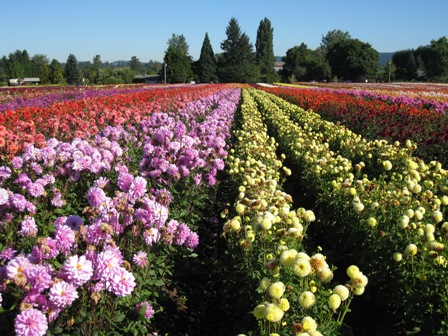
The last day we headed south of Portland into the Willamette valley to see four farms including the largest dahlia grower in the US with an amazing 40 acres in full bloom!  We also visited maybe the largest producer of dried flowers in the US with something like 30 acres including their huge drying rooms and processing facilities.  Just when we thought the bus rides were over we got back on the bus that evening and went up the Columbia river gorge for a dinner cruise on an old paddle wheel boat.  Beautiful night on the decks with the moon rising over the river.  Friday we were up again at 5:00 to start the long flight back home.  Back to the farm with just enough daylight to cut some lettuce, feed the turkeys and finish loading the truck.  Dan and Cov did a great job taking care of the place and had us ready for market but by the time market was over on Saturday we were ready for a rest!

Things here on the farm are winding up smoothly despite the rain.  Most of the irrigation is up and put away (don’t seem to really need it anymore) and the Big Tops are uncovered except the last bay with the last tomatoes.  Soon we will be ready to begin to turn under all the fields.  The little sliding tunnels are all cleaned out and several already planted with crops for Thanksgiving.  The Brussels Sprouts are maybe the best looking we have ever grown, at least at this point.  If the grass would just stop growing so fast from all the rain, the end would even be closer.

Pictures of the Week
Acres of Calla lilies and Dahlias

7/8/09 Vol. 6 #16

What glorious weather for July (except that lack of rain thing), can’t remember summer weather so delightful for such an extended period of time.  I am sure we will return to the normal steamy hot days before it’s over but we are really enjoying it for the time being.  We are into the “easy” days of summer where we have designed the program to have everything in the field done by noon and then hide out in the shade (or air conditioning) the rest of the day.

Some of this means fewer crops to manage and less planting going on but what ever is in the field now needs to be established and/or tough enough to handle the conditions.  Betsy is in the thick of Lisianthus harvest, it is a daily process of cutting truck loads of stems, taking them back to the packing shed (in the shade) and then processing them for later use.  The big job for the staff is the Monday and Thursday tomato harvest which takes all morning to complete.  The rest of the week is filled with a little harvesting of other crops, a little planting, a little trellising, a little mowing, a little weeding, a little irrigating.

Fusarium Wilt (chapter two).  I want to thank everyone who has expressed on their sorrow for our problem with this disease in the heirloom tomatoes.  It is a damn shame but it is just the kind of thing that happens in farming that you become used to and learn to adapt.  The good news is we have several things we can do about it for the future and it appears to only really be in this one area in the Big Tops field.  I have already taken the first steps this week by saving seed from plants that showed no signs of the wilt or at least a strong resistance.  The seed for the Cherokee Purples we are growing is some we saved two years ago, from plants grown in the same field.  They are showing no signs of the wilt and producing lots of great fruit.

The other two things we can do are to solarize the soil in that area by covering the bare, moist soil with clear plastic in the hottest part of the summer and basically cooking the fungus spores out of the top few inches of the soil.  That process will have to wait until year after next when we have a rest year planned for that spot.  The last thing we can do is to take advantage of the research we have done with NC State over the last few years and use grafted tomato plants.  I have mentioned this in the past and didn’t really think we needed to use this technique until now.  It is just like fruit trees where you graft what ever tomato variety you want onto a wilt resistant rootstock.  So next year we may actually have to graft some of our own plants.  There’s always something when farming.
Picture of the Week
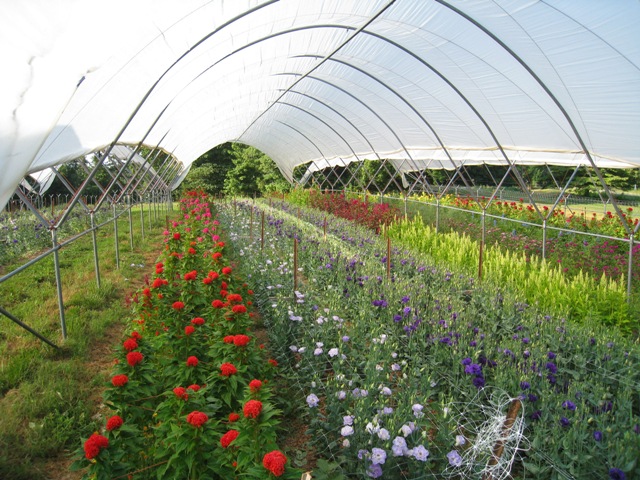
Beautiful Lisianthus beds flanked by brilliant Celosia