7/11/07 Vol. 4 #17

While not what some would call a million dollar rain, last nights rain was worth a lot to us.  1.3 inches of much needed water on those crops that are not irrigated (cover crops, winter squash, corn, hydrangeas and the like) and a mental boost for the irrigator.  The creek had dropped to a trickle and the line from the creek to the pumping pond was likewise down to a trickle.  Yesterday after nearly two straight weeks of daily irrigation the pumping pond was getting seriously low, I was even beginning to eye the water stored in the upper pond.  Once we start taking water out of the upper pond there is no recourse, no resupply for that reservoir other than winter rains.  So at least for this morning the wolf has backed away from the door.  A rain like last nights will last us for four or five days and then we will have to fire up the pump again and if we are lucky the creek will show a little more life and help fill the pumping pond back up before we have to start major irrigating again.  Of course everything under the Big Tops and the little tunnels still needs water but that is less than a third of the normal daily irrigation needs.  Every little bit helps!

Major dog days of summer now.  Highs in the 90’s everyday and the air (especially after last nights rain) if getting thick.  We are in that lets- not-get-too-physical mode, a steady even out put of energy to get us through the mornings and then go and hide in the shade for the rest of the day.  Harvest first thing in the morning while it is sort of cool, a little weeding, a little trellising, change the irrigation, watch the sun get higher and the temperature spike just before noon (or it seems to).  It is summer after all.

Something to look forward to next week though.  Tuesday evening at Panzanella restaurant (in Carr Mill next to Weaver Street Market) is our “Farm Dinner”.  This is the third year we have worked with them on a dinner centered around what is at the peak of the season.  So obviously this one will be tomato heavy but also with cucumber and sweet corn undertones.  Come on out and enjoy their air conditioning.  The restaurant is open as usual and their regular menu is also available.  They will have specials (usually several appetizers and entrees) using our produce.  Tomorrow I will be going in to visit with Chris (the head chef) to get an idea what dishes he is thinking about and how much produce and what kinds he has in mind.  It is always fun, and we will look for you there!

Picture of the Week
Three foot tall Lisianthus brightening a grey day

4/3/08 Vol. 5 #3

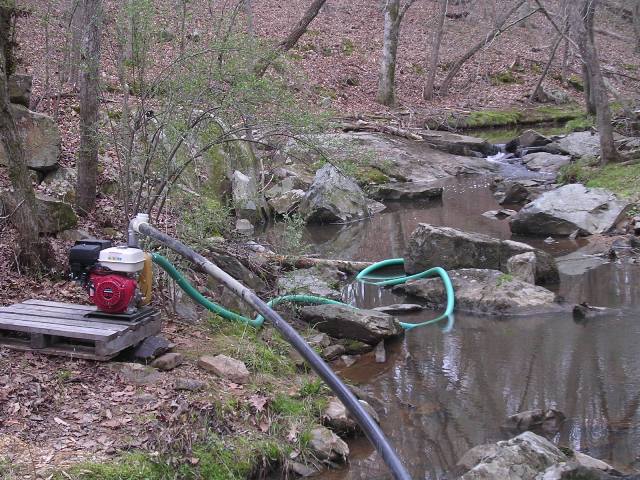
The rain has certainly been unexpected and welcome.  Originally forecast for just some drizzly weather it turned into almost three days of off and on rain, almost two inches worth.  Everyone is asking “is the drought over?” and the quick answer is no.  Yes the streams are running well right now and many ponds and reservoirs are full or filling.  I am sure the ground water is in no way recharged and as soon as the leaves come out on the trees and the heat hits it will become evident in reduced stream flows.  The National Weather Service/NOAA is forecasting the next three months to have normal precipitation for our area, better news than before.  I still am apprehensive and we are taking all precautions we can to store water.  The upper pond was still six feet down, the spring that used to feed it has long ago gone dry and there is only maybe five acres of watershed above it so we started filling it this week.  Normally we slowly fill the lower pond by means of a gravity feed, two inch line, that runs 800 feet from the creek at about five gallons a minute.  When the lower pond is full we pump that water uphill to the upper pond using the electric irrigation pump, 24 hours of pumping will nearly empty the lower pond and raise the upper pond by about two feet, something like 50,0000 gallons.  We then have to let the lower pond refill, which can take many days, and then start again.  With the creek running well right now we decided to be more aggressive and pump from the creek into the lower pond at a much higher rate and then relay pump at the same time to the upper pond.  So we borrowed a gasoline powered pump and have it set up on the creek bank hooked into that two inch pipe we already have laid and it is working well.  The gas engine has to be refilled every two hours when it runs out of gas but hopefully with three days of running water we can have both ponds completely full.  96 hours of pumping, another 150,000 gallons of water.

Difficult to get a lot of farm work done this week, a bit damp.  The staff did spend Monday morning in the greenhouse moving up the seedlings for the main planting of tomatoes, from one inch containers to four inch containers so they will have large vigorous root systems when we plant them out in 3 weeks.  About 700 plants of 15 varieties.  Tedious work both in working with the little plants but also making sure not to mix the varieties up and mislabel them.  It’s good practice for when they have to do the same thing with the peppers in a few weeks, 2500 plants of 30 varieties.  Perfect weather to do this kind of work as the plants are not as stressed when it’s overcast.  The sugar snap peas got trellised too.  600 feet of plastic net on metal posts to support the soon to be five foot tall vines.  Otherwise we are doing that early spring clean up of fallen limbs, cutting the last firewood for next winter, and other around the farm odds and ends.

Picture of the Week
The temporary pumping station, this large creek was dry for nearly 6 months last year!

4/8/08 Vol. 5 #4

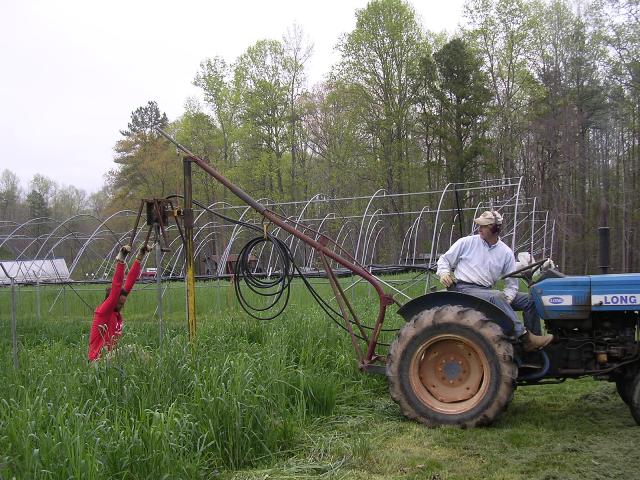
OK so the rain has officially put us behind as far as field work is concerned.  Plants are backing up in the greenhouse and hopefully we will get them all in Thursday and Friday.  We also really need to get some cover crops turned under so they can decompose in time for us to plant the cash crops that will need their nutrients to grow.  The scariest thing is the main planting of tomatoes is to be planted in two weeks and we have to get the Big Tops built over the field they are going into, and fast!  The most difficult part of the process is drilling the legs into the ground.  They go in, or are supposed to go in, thirty inches deep.  You till a field for a quarter of a century and you think you know where all the rocks are but it turns out that you only know where the rocks are in the top twelve inches, there are parts of the planet down there that you can only hope you miss.  We started with the legs yesterday and so far not too bad, 15% have hit rocks we couldn’t work around.  We knew this field would be a trial and feel if it stays about the same we will be fine.  Big rocks mean we have to get a BIG jackhammer to bust them up.  We will drill or attempt to drill in all 95 legs and anchors first and then go rent the jackhammer and finish up the troublesome holes all in one day.  If we can get the rest of the legs in today then we can quickly finish it up early next week.  Let’s hope, because tomatoes wait for no one!

The rest of the water pumping went well last week and now both ponds are essentially full.  Lets hope they stay that way and the only use for that water will be to swim in this summer when it’s hot!  Things are really greening up fast now and with all this rain and warm temperatures it will all move really quickly, crops and weeds.  We need to get the last of the lettuces in the ground as well as seeding of the last spinach, and radishes.  Believe it or not we need to seed the first Zinnias and plant the first Celosias too.  Betsy even started mowing this week, you know that the last frost date is approaching when the first summer crops go in and the weedeater comes out!

Picture of the Week
Cov hanging on for dear life while we drill in legs for the Big Tops

7/2/08 Vol. 5 #16

A million dollar rain?   I’m not sure but it certainly was great to finally get something substantial, we had gone for over a month with only one tenth of an inch and were beginning to make alternative plans for the fall crops.  The 90 day forecast is for normal temperatures and rain, lets hope they are right.  These last few days have been sublime with the cool nights and clear days, almost like fall.  With that inch and a half of rain we can now start the process of getting cover crops in the ground.  When it gets as dry as it was it is impossible to “cut ground” as the old timers say.  Yesterday as I headed into town to deliver I noticed several farmers out disking their fields, turning under the residues of wheat or something else and drilling in soybeans or sudangrass.  So the same will occur here, except it will be the overwintered flowers and other spring crops just now finished.  Hopefully we will continue to get some good rains to bring up thick soil improving crops of cowpeas and sudangrass or soybeans and millet.  These crops will grow to eight feet high in eight weeks giving us thousands of pounds of organic matter to return to the soil along with over a hundred pounds of free nitrogen fixed by the bean crops to feed the next cash crops.  They will provide habitat for good bugs that will help us fight the bad bugs.  They will shade out summer weeds and give shade to the turkeys when we move them into those fields.  If the rains come.

A fairly normal week here on the farm, the staff is getting into the easy pattern of tomato picking Mondays and Thursdays, weeding a little, seeding new crops for the fall and winter, and continuing to trellis the summer crops.  The last planting of Sungold cherry tomatoes went in the ground yesterday, timed to be ready in late August and to carry us to the end of the season.  It has been interesting to watch the salmonella tainted tomato story unfold over the last few weeks and of course we are humored by that fact that they can’t seem to trace it back to where is came from or even if it was tomatoes at all.  To all of us local produce farmers it is just another supporting argument for local small scale agriculture.  If you know your farmer and where your produce comes from it you can be more assured it won’t come with bad things attached.  Now I am not saying that it can’t happen but the reality is that most small growers don’t have the volume to need produce washing lines which is where most of these health problems start.  When you dump thousands of pounds of tomatoes into a big tank and slosh them around it makes it much easier for the few tomatoes that might have had contact with something unhealthy to pass it onto the rest.  Most of us don’t wash our tomatoes at all.  Because we don’t spray anything bad on our tomato plants we are able to just wipe them with towels to clean them up and pack them straight into the boxes for market.  Nothing like a good local tomato.

Picture of the Week
A good looking field of peppers

7/9/08 Vol. 5 #17

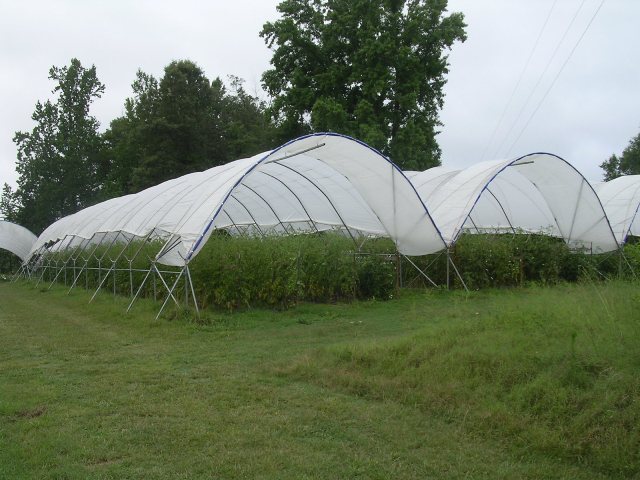
It has been so long since we have had a wet period like this, one almost forgets what it can be like.  It used to be that every July we would have a monsoon period right in the middle of tomato season, generally near the peak.  We feared these wet times as all of our hard work in tending the plants was literally washed away.  Two things were guaranteed to happen.  First the tender skinned ripe heirloom varieties would split and explode from too much water.  Tomatoes are not like balloons that you can just keep pumping up, once they begin to turn color that is as big as their skin will get, excess water has to go somewhere.  We would pick buckets and buckets full of huge Striped Germans and Cherokee Purples split across the bottom from side to side and just throw them away, every Sungold cherry would be split.  The second insult was that  the foliar disease, that haunts us, would run up the plants like someone light a match to them, exposing the remaining fruits to sunscald and increasing the chances of those fruits exploding because when there are no leaves to transpire (breath) water out of the plant any excess water makes the fruit splitting worse.  Once the disease started up the plants it was only a matter of a week or two until that crop was finished for good.  To counter act this we would plant tomatoes three times in the field to try and have some tomatoes all summer.  In reality the best tomatoes are the ones planted in late April right after frost because they grow the biggest plants to support great fruit with great taste.  Plants grown later in the summer just never get as big or set fruit as well.  As the days get shorter in August and then the nights begin to cool off in September it affects the flavor of the tomatoes too, never as intense as fruit ripened in the middle of the summer.  Enter the Big Tops, the cathedrals of tomato production.  We knew if we could keep those plants dry and control the water to their roots we could grow incredible tomatoes.  The trick was that smaller greenhouse structures can’t hold enough plants and get too hot in the middle of the summer.  The huge size of the Big Tops (24 feet wide and 13 feet high) makes it just like growing the plants out in the open but with a thin plastic roof just over the plants.  Now instead of only producing for four or five weeks, that April planted crop will produce for eight or nine weeks or longer and the fruit quality is nearly perfect.  So now when these rainy periods come, I just smile and sleep well, it’s a miracle!

Interesting day yesterday.  We spent most of the day being interviewed by a pair from the National Academy of Sciences for a study being funded by the Bill and Melinda Gates and Kellogg Foundations titled “Twenty-First Century Systems Agriculture”.  Twenty years ago the National Academies released a ground breaking report “Alternative Agriculture” that showed, definitively for the first time, that sustainable and organic approaches to farming actually worked and were as profitable as conventional agriculture.  Now two decades later they are doing it again but with a broader scope than just economics.  Using fact-finding workshops, data analysis and case studies to identify the scientific foundations of sustainable farming systems.  Somehow (it’s always a mystery to us) we were chosen to be one of the nine farms nationwide as one of the “real world” case studies.  They sent seven pages of questions that they wanted to cover (enough to scare anyone) but it turned out to be a wide ranging conversation about how we farm.  As Betsy said, “We had the easy part, they have to try and make a report out of that conversation!”

Picture of the Week
Happy tomatoes under gray skies

8/27/08 Vol. 5 #23

Well that was the largest rain event we’ve had in maybe a year or more, 3.5 inches.  Just in time to help with the crops but it also helps to get the ground ready for fall planting of cover crops and next springs earliest flowers.  It has been so dry that it has been impossible to get the soil probe into the ground to take soil samples much less think about turning crop residues in.  The fall process here at the farm starts with taking soil tests of every planting area in August.  By the time we are ready to begin preparing the fields for next year, in September, the results will have come back.  We amend the fields only once every year as we are really feeding the soil microbes that in turn help release the nutrients that actually feed the crops.  We are just trying to make the soil environment ideal for all of the “livestock” that live in the soil and help us farm.

What we add to the soil are minerals that get used up in the process of growing the cash crops.  Every time we send a flower or head of lettuce home with you, you take some of our minerals with you so we have to replace them.  We add lime (calcium and magnesium) to make sure the soil is not too acid for the little critters.  We also add phosphorus (P) and potassium (K) which are major players in root, plant and fruit development.  With that all set for the coming year we then can turn under the remnants of this years crops and get the soil ready for the winter.  We will raise up beds or wide ridges so the soil will drain faster and warm up quicker in the late winter and early spring when we need to begin planting.  After that we will seed it all down with soil holding and improving cover crops of a grain and a legume.  It is hard to imagine that we need to be getting ready for next year already.

On the turkey front the two that were injured last week have been returned to general population.  One we slipped back in a few days later with the younger birds and then moved back with the older birds and they all are getting along fine.  Quee Queg (remember the tattooed native from Moby Dick), the more injured of the two stayed in the hospital for a week and now is in the same process of re-entry, first with the little guys and then the whole clan.  We moved them to a new field so there are new things to keep everyone entertained.  Did I say it was like teenagers?

Picture of the Week
some damp turkeys, Quee Queg on the far left

9/3/08 Vol. 5 #24

Well it looks like the rain isn’t over yet.  We ended up with seven inches last week from the remnants of Fay and with hurricane Hannah on the way there could be a whole lot more.  We had water moving debris in places we have never seen before.  Of course the driveways that I had just regraded are all now back down at the bottom of the hill.  The most interesting were the leaves and sticks that washed out of the small gullies that are across the heavily wooded hillside between the top fields and the bottom fields.  The river backed up on the bottom field for the first time in several years but only on the lower end.  It got within about a foot of the irrigation pump, which we are always prepared to pull out if need be.

It has dried out nicely now and the mowing has begun.  Nothing like a little water to make weeds and grass, pent up from the drought, go wild.  Betsy has been on the small mower for two days getting all the grassed areas and I have been on the tractor taking out the summer cover crops, old flower crops and areas we haven’t mowed for some time.  This will be the last mowing for the season on a lot of the farm so it is very satisfying.  Mechanical frost we like to call it.  After this next storm (assuming there is not another on its heels) I will begin turning soil over and getting ready for the winter cover crops.

No newsletter next week as we will be in Portland Oregon for the 20th Association of Specialty Cut Flower Growers conference.  I think that Betsy has been to nearly every one and this organization has been very important to the growth of her/our cut flower business.  She has served on it’s board of directors as both regional director and treasurer.  She now is the executive director of their Research Foundation.  It is always a good time with interesting tours of farms and of course checking in with old friends.  We will be back in time for next Saturday’s market though.

Picture of the Week
Newly mown Zinnias with the old celosia going next

9/17/08 Vol. 5 #25

OK enough with the rain for a minute!  Thirteen inches over the last few weeks but at least the forecast for the next week looks sublime and maybe fall is really here.  We had a great time in Portland last week with the cut flower growers where they kept us on the move.  Up every morning at 5:00 to get on a bus for another tour.  The first day we went out to the misty coast and saw acres of colored calla lilies, hydrangeas and the largest artichoke producer in Oregon, beautiful huge purple chokes.  The second day we went to the Portland Wholesale Flower Market for a short visit but it is always good to see how the larger farmers send their product through the system.  In our only real free time Betsy and I made it downtown to a really great small farmers’ market (the size of the Carrboro Wednesday market) with some of the finest produce displays we have ever seen anywhere.  We took lots of pictures and brought home some new ideas for our set up at market.

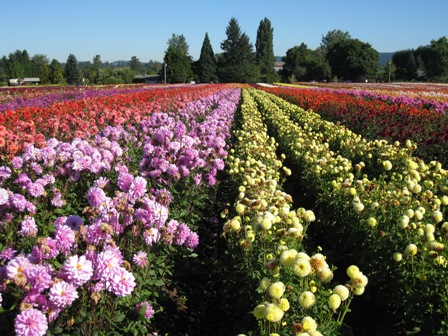
The last day we headed south of Portland into the Willamette valley to see four farms including the largest dahlia grower in the US with an amazing 40 acres in full bloom!  We also visited maybe the largest producer of dried flowers in the US with something like 30 acres including their huge drying rooms and processing facilities.  Just when we thought the bus rides were over we got back on the bus that evening and went up the Columbia river gorge for a dinner cruise on an old paddle wheel boat.  Beautiful night on the decks with the moon rising over the river.  Friday we were up again at 5:00 to start the long flight back home.  Back to the farm with just enough daylight to cut some lettuce, feed the turkeys and finish loading the truck.  Dan and Cov did a great job taking care of the place and had us ready for market but by the time market was over on Saturday we were ready for a rest!

Things here on the farm are winding up smoothly despite the rain.  Most of the irrigation is up and put away (don’t seem to really need it anymore) and the Big Tops are uncovered except the last bay with the last tomatoes.  Soon we will be ready to begin to turn under all the fields.  The little sliding tunnels are all cleaned out and several already planted with crops for Thanksgiving.  The Brussels Sprouts are maybe the best looking we have ever grown, at least at this point.  If the grass would just stop growing so fast from all the rain, the end would even be closer.

Pictures of the Week
Acres of Calla lilies and Dahlias