9/5/07 Vol. 4 #24

Made it to September, on paper anyway, sure doesn’t feel like it out in the field.  August turned out to be one for the record books- the hottest month ever recorded at RDU airport by almost 2 degrees, that is huge as far as weather averages go!  30 days over 90 degrees another record and the second driest August ever.  Now can we break the record for the number of days over 90 degrees in one year?  It stands at 72, I know we are close.  I pulled more water out of the upper pond yesterday and that leaves just one more round until that water hole is dry.  With this kind of heat that is about two weeks worth of water left.  If it cools off it will be just enough to get us to the end of our season, a little over three weeks away.  Almost everyday I am cutting off the irrigation lines to more beds of crops that are just about finished for the season.  Betsy is down to about ten beds of flowers now and I have mowed down the rest.  On the vegetable side we are soon to be down to eight beds of tomatoes, twenty beds of peppers and and some odds and ends.  It is just at half an acre of crops that need water every day when the temperatures are in the 90’s, but that is still just under 3000 gallons a day!  Boy am I glad that I am not trying to plant fall crops, except that we do need to get some flowers in the ground for next spring and, of course, we need to get the winter cover crops planted in the next month, not unless some good rains come though.

I want to thank everyone for the feedback on last weeks newsletter about what defines local food.  It was as I expected and I am fairly sure that it will be how the Farmers’ Market comes out on the subject in the end.  I used the meat example because, for the farmers, it is the most complicated as far as logistics and regulations.  I always want to try and solve the most complicated situation first, if possible, because then the simple ones are an easy fit into the new solution.  Of course with the increased demand for local products, like meat, it leads processors and suppliers to eventually fill the need, but it takes time and money (and people of vision).  Until then I feel the Farmers’ Market should make it possible for it’s members to operate viable businesses without compromising it’s long established goals and rules.  As a market we have always been careful about setting precedents because once the horse is out of the barn it is almost impossible to get it back in.

Picture of the Week
Summer Crisp lettuce a miracle of shade cloth and daily irrigation

9/12/07 Vol. 4 #25

We are in the middle of an interesting week beginning with getting the place ready for multiple groups of visitors.  It is hard to make the Kalahari desert look vibrant when everything is brown except for the small patches we are irrigating.  But we mowed what needed it and picked up and tidied around the buildings making mental notes that we should never have tours in September when we are just about to close for the season, oh well.  The best looking thing we have are the cowpeas we planted as a cover crop and which, in a normal year, should have been mowed down by now but have struggled to get this far, at least they are a rich green.  Saturday was a long but fun day.  The Southern Foodways Alliance was in town for what they call one of their field camps.  A group dedicated to the preservation of southern culture(s), from arts and crafts to music and writing but all sort of surrounded by the foods of the south.  People from all over the country were here, you may have noticed them touring the market on Saturday.  We hosted them here at the farm Saturday afternoon where we talked about small scale farming, the market in this area and tasted tomatoes.  They didn’t realize what a miracle it was for us to have the wealth of tomatoes we have had this late in the season, this season in particular!  We then headed into town for a large dinner with the whole group, having been awake since 1:00 a.m. we decided to head home at 10:30 instead of following the group down the road to sample the local taco truck, it was a sound idea.

Yesterday we had a group out from NC State which included two Uruguayans who are doing research in their country on organic farming.  Through an excellent interpreter we walked all around and showed them how we did it here.  Discussions about soil fertility, rotations, cover crops, etc.  They were also very interested in how we used the turkeys, integrated with the crop production, too bad we didn’t have any turkeys to show them this time around.  This coming Saturday after market, again, there will be a film crew here from Gourmet Magazine shooting some of our crops (up close I hope) for their TV show “The Diary of a Foodie” which is on PBS, here on Saturday afternoons.  They are working on a piece with Andrea Ruesing at Lantern Restaurant, who knew when we all agreed to do this that we would be in the middle of an historic drought.  At least it will be cooler and they always tell me they can do miracles with the camera and editing!

Picture of the Week
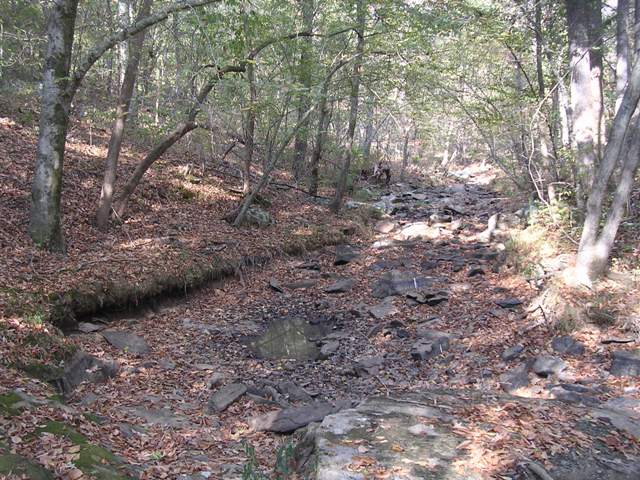
This is our creek, a good sized stream, dry for two months now, our house is 100′ to the left

9/19/07 Vol. 4 #26

Glorious fall like weather these past few days and we have been reveling in it and getting a lot done.  Mornings have started kind of brisk at least in comparison with the past month, long pants and shirts, Elizabeth has even started the days with a wool hat on!  Slowly the unraveling of the farm proceeds.  The little sliding tunnels have been cleaned out of their long finished tomatoes and melons, the first ten rows of tomatoes in the Big Tops are now gone too.  All of the trellises, landscape fabric mulch and irrigation line out too.  Lisianthus trellis pulled out and drip lines in the old Zinnias pulled up.  Tomorrow we will take the plastic off the Big Tops and cinch the long rolls up like sausages to rest the winter in the valleys between the bows. One week to go now until we are finished marketing for the year and then the final clean up will begin, taking down the last of the tomatoes and the major roll up of the pepper field.  If it will rain a little more and I can get soil worked for next year we will seed it all down to a beautiful winter cover crop to hold it until we pull their starter rope again early next year.  Soon the staff will head off for their winter occupations and Betsy and I will be here all by ourselves enjoying the heart of the fall.

Too much to do the think about all that now and the forecast for the weekend is to be back into the low 90’s, so the reality will come rushing back.  All of the summer cover crops and as many of the finished cash crops as possible have been mowed in anticipation of the fall soil preparation fiesta.  Today I need to go and take soil tests as I am bit late in getting them done.  It has been so dry that it is hard to get the soil probe in the ground which makes taking a hundred or so samples a real pain.  But I can’t wait any longer because I will need the results soon so I can add any amendments they may indicate before I seed all the winter cover crops.  We also need to begin planting flowers for Betsy and leeks for me for next spring.  And all too soon the ranunculus corms from Italy will be here and they will need to go into the ground too.  Guess I better get out there and get to work.

Picture of the Week
The Upper pond completely drained, you can also see the logging clear cut in the background

9/26/07 Vol. 4 #27

So once again the end is here, one more Saturday market.  Just as the finish line is in sight, the starting line appears.  Yesterday we planted the first seven beds of flowers for next spring- Sweet William, delphinium, scabiosa and more.  Today leeks go in for next spring too.  This is one of the main reasons we stop selling at this time of year so we can concentrate on growing for next year.  Sure it’s also about the improved quality of life that comes with a reduced schedule and enjoying the fall weather especially after this brutal summer but it is equally about getting ready for next year.  The coming year is really made the preceding fall as we prepare the soil with mineral amendments and raise up the beds we will plant next spring then seed them down with nourishing cover crops that will protect and improve them over the winter.  We will slowly plant flowers and vegetables to overwinter too so they will be ready for those early markets next March.  Finally we are planning and ordering seeds and plants and dreaming of new things to entice you and interest us.

Then there are the projects we can only do in the off season and the meeting season begins all too soon as well.  The big project has already started, the final addition to the house, a living room.  The mason will finish the foundation today so that it will be standing there waiting for me to strap on the tool belt in two weeks to frame it up so it can be dried in before it gets cold.  This means the rest of the winter will be filled with interior and exterior finishes, I promised Betsy that I would have the construction done by the time we were 50, I figure a year late is not too bad.  The meeting and speaking calendar is already full too, beginning next week when the national cut flower meeting is in Raleigh where Betsy is an integral player and I will be giving a presentation.  Two more conferences in North Carolina in November including the Carolina Farm Stewardship Association’s meeting in Durham, where I am giving multiple talks.  December takes me to South Carolina to speak at the Vegetable Growers conference.  January is too full, with trips to Tennessee, Missouri (where I am the keynote at a vegetable growers conference there) and Kentucky.  Late February I am off to speak at the Georgia Organics conference and March might take me back to Missouri.  Betsy is thinking about heading to Italy in February for a cut flower conference there and then to see our friends while I am hopefully hiking out west.  In between all of this will be sheetrock and trim and painting and flooring; I wonder when I am going to get to read those books on my side table?  We will keep you updated on all of the off season activities will a monthly newsletter.

Finally we want to thank all of you who have sent kind messages through out the year in response to one grousing or report of yet another obstacle we have encountered and reported to you.  It is our hope that through the newsletter that you get a feel of what everyday life is like on a small farm like ours.  Sure there are hard things that happen but majority of our work is calm and rewarding.  The good news is that after all that has happened this season (late freeze, drought, no blueberries or turkeys, poor and late spring crops) we have roared back and have had the best season we have ever had (as far as gross income).  That is a tribute to a resilient, sustainable farming system we have developed over the years, of which all of you are no small part, thank you again for your support!

Picture of the Week
Construction begins

3/21/08 Vol. 5 #1

Happy first day of Spring and Easter!  Alright so once again the winter has zipped by and I have managed to be so busy that I didn’t get one newsletter out.  I would have to say that this has been one of the most densely packed winters we’ve ever had but we did get a lot done and find some time to have fun too.  Dominated by the construction on the house, which has occupied most of my brain power since October, and punctuated by trips away to conferences, before we knew it, it was time to start planting again.  People always ask who do we get to do the construction work and then look quizzical when I say we do all the work.  We did hire a mason to do the foundation and to build us a fireplace and an electrician to make sure we don’t burn the house down but everything else we do ourselves.  It takes a bit longer sometimes but the end product is exactly what we want and Betsy is an excellent assistant.  The whole project has turned out great and is “almost” done.  Some entrance steps and a few other outdoor things remain but I hope to have them done in the next week or two.  The funny part is we keep asking ourselves “who’s house is this?”

There were too many conferences and farm related meetings away from the farm this winter and I will have to have a word with my agent about over booking.  We try to schedule just one a month but sometimes things pop up after we have committed to another group and we just can’t say no.  The highlights for us are the new and interesting people we meet who are changing the face of food and farming.  Our own “home” conference of the Carolina Farm Stewardship Association was a good starter along with the 1200 attendees at the Southern Sustainable Agriculture Working Group’s conference in Kentucky.  As always I had fun at the Georgia Organics conference a group I have worked with for many years now, it is pleasing to see it grow from a group of 20 or 30 to over 600 this year.  The most unusual meeting and highest honor for us was to be inducted as fellows in the Fellowship of Southern Farmers, Artisans and Chefs.  An offshoot of the Southern Foodways Alliance, this new group brings together those folks, from across the south, who have been working for a long time in food and farming for a weekend to be able to share ideas and experiences.  Betsy and I are still trying to figure out exactly how it all works but it is certainly an interesting group of people.

On the farm things are moving a pace.  The greenhouse is full of transplants, believe it or not, we seeded peppers yesterday.  Almost all of the lettuce is planted in the field now as are the onions and most of the spring vegetables.  The peas are up and look better than last years poor stand.  The little sliding tunnels are full with early greens and flowers and today we will slide the last three so we can plant the earliest tomatoes and melons in the next week or two.  We are thankful for the rains we have gotten in the last month but we still need more.  One pond is full but the other one still is six feet down.  We will begin to fill it from the creek (which only started to flow again on New Years eve) in the next few weeks.  To be honest we are still very worried about whether there will be enough water for this season, we are planting like there will be but know that if the drought persists we will have to make decisions about what to water and what to let go.  The staff started this week and so now we really know that the winter is over!  No more late mornings with another cup of coffee, no more random unscheduled days, every week is full with a plan now.  Welcome to our 27th growing season!

Pictures of the Week

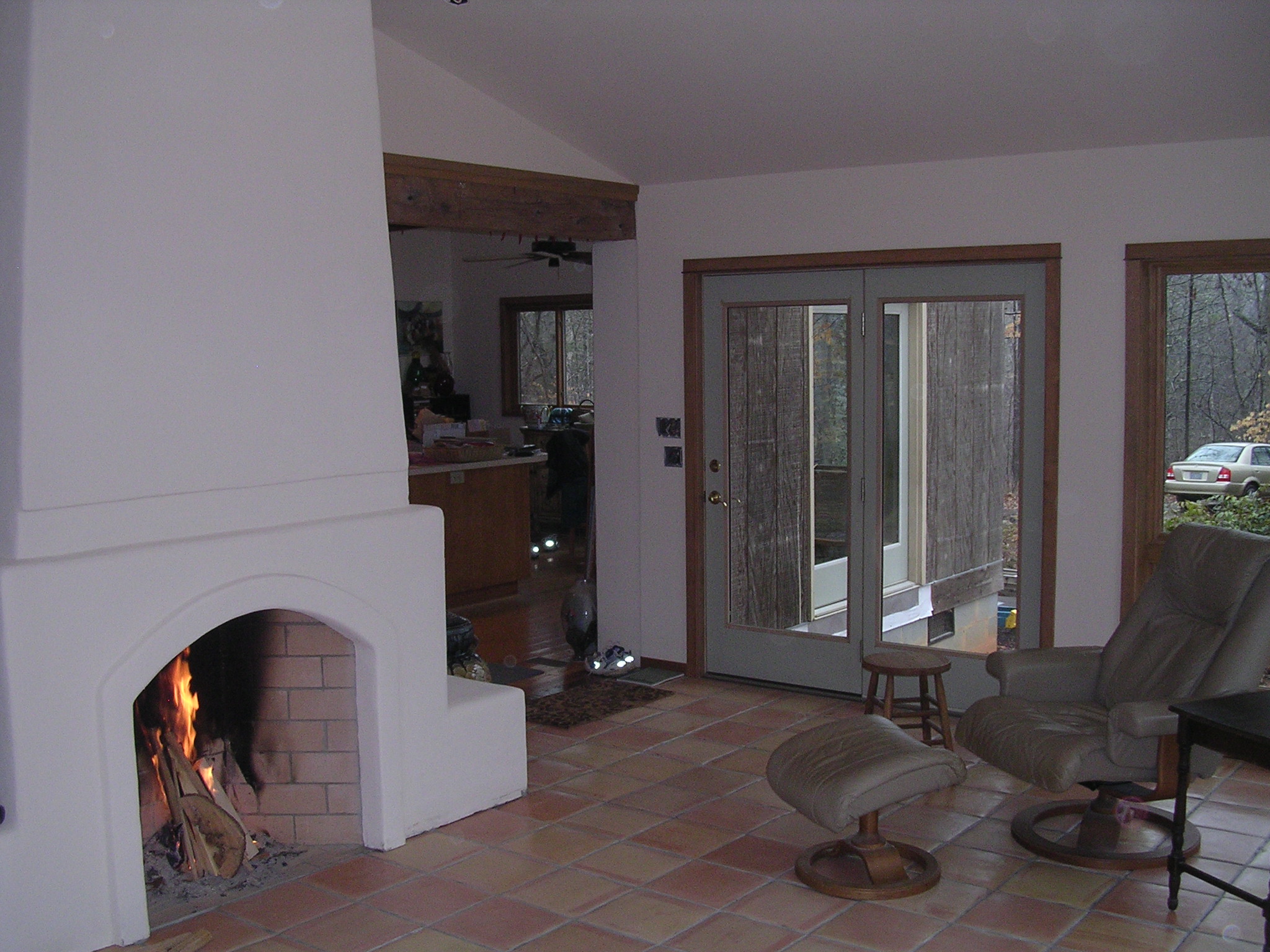
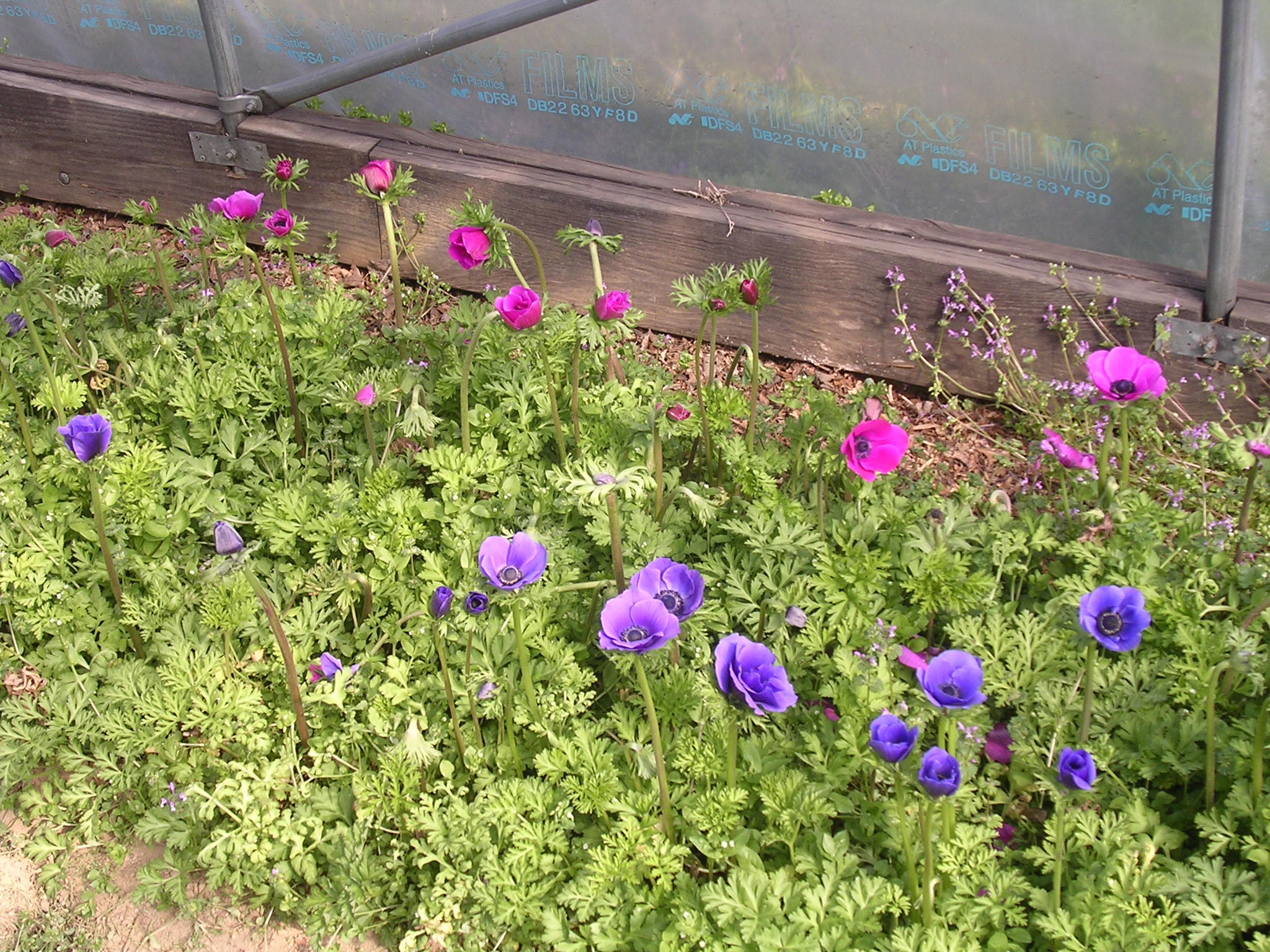
The finished livingroom and incredible anemones

3/28/08 Vol. 5 #2

Busy week, the last out of town conference trip of the season combined with typical spring chores.  Who would have thought that I would be in Kansas City twice in the span of two months?  In January I flew in to be the keynote speaker and a conference presenter at the Great Plains Vegetable Growers conference, a new group to me and I had a fine time.  In the back of my head was the knowledge that the Sustainable Agriculture Research and Education Program (SARE) was having their 20th anniversary meeting in late March, also in KC.  For us, once the market season starts, we just don’t go away, too much to do.  But the SARE program holds a special place in my heart and in the development of Peregrine Farm.  SARE is the federal government’s effort at promoting sustainable agriculture through an innovative grants program and then information dispersal.  Split into four regions of the country, I spent seven years in the 90’s as a farmer representative on the Administrative Council  of the Southern Region which reviews the grants and oversees the operation of the regional program.

Extremely unusual for a government program, it is very participatory and diverse.  The Administrative Councils have representatives from universities, industry, NGO’s, state and federal governmental organizations as well as farmers.  They discuss and debate the future of agriculture and how to direct that future towards more sustainable solutions via the carrot of grant monies.  Not only was I exposed to the newest cutting edge ideas in farming and the leading minds in sustainable ag but also how this kind of group operates.  The politics and relationships involved, how to manage large groups of diverse opinions to come to decisions, where the money goes.  In the end I was elected to the august position of council Chair (I think I left the room at the wrong time).  This took me to the National Operations meetings where I was able to work with my counterparts from the other regions.  In all it was a very formative time for us.  So late March be damned, Betsy particularly thought I should attend partly for the conference sessions but also to see old friends.  Off I flew early Tuesday and returned late last night tired but glad that I did attend infused with new ideas and renewed contacts.

Here on the farm the staff and Betsy have been making great headway.  The early tomatoes and cucumbers were planted on Tuesday, waiting until just after what we hope was the last night in the mid 20’s.  As it has become more common in recent years we are having to do variety trials to find a replacement for a longtime favorite vegetable.  This time it is the early red tomato we have relied on for great early production with great flavor.  Most tomatoes are not suited to planting this early and the ones that are, usually don’t have very good size or flavor.  Burpees Early Pick hybrid is the one we have grown for years and it has performed reliably but in today’s modern seed industry they have decided to discontinue it’s seed production, damn!  We had some seed left and are growing it alongside three new varieties in the hopes of finding good replacement.  In a few months you will get to taste the results.  Big cultivation and weeding week, looks like they got everything cultivated while I was gone.  Weed control is all about timing and the soil conditions were ideal this week.  If all goes well, that will be the last time we have to do any cultivation on the early spring crops.

Picture of the Week
Newly planted tomatoes

4/3/08 Vol. 5 #3

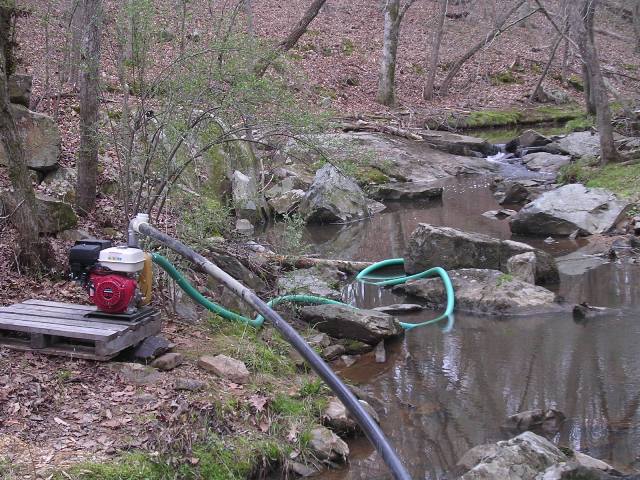
The rain has certainly been unexpected and welcome.  Originally forecast for just some drizzly weather it turned into almost three days of off and on rain, almost two inches worth.  Everyone is asking “is the drought over?” and the quick answer is no.  Yes the streams are running well right now and many ponds and reservoirs are full or filling.  I am sure the ground water is in no way recharged and as soon as the leaves come out on the trees and the heat hits it will become evident in reduced stream flows.  The National Weather Service/NOAA is forecasting the next three months to have normal precipitation for our area, better news than before.  I still am apprehensive and we are taking all precautions we can to store water.  The upper pond was still six feet down, the spring that used to feed it has long ago gone dry and there is only maybe five acres of watershed above it so we started filling it this week.  Normally we slowly fill the lower pond by means of a gravity feed, two inch line, that runs 800 feet from the creek at about five gallons a minute.  When the lower pond is full we pump that water uphill to the upper pond using the electric irrigation pump, 24 hours of pumping will nearly empty the lower pond and raise the upper pond by about two feet, something like 50,0000 gallons.  We then have to let the lower pond refill, which can take many days, and then start again.  With the creek running well right now we decided to be more aggressive and pump from the creek into the lower pond at a much higher rate and then relay pump at the same time to the upper pond.  So we borrowed a gasoline powered pump and have it set up on the creek bank hooked into that two inch pipe we already have laid and it is working well.  The gas engine has to be refilled every two hours when it runs out of gas but hopefully with three days of running water we can have both ponds completely full.  96 hours of pumping, another 150,000 gallons of water.

Difficult to get a lot of farm work done this week, a bit damp.  The staff did spend Monday morning in the greenhouse moving up the seedlings for the main planting of tomatoes, from one inch containers to four inch containers so they will have large vigorous root systems when we plant them out in 3 weeks.  About 700 plants of 15 varieties.  Tedious work both in working with the little plants but also making sure not to mix the varieties up and mislabel them.  It’s good practice for when they have to do the same thing with the peppers in a few weeks, 2500 plants of 30 varieties.  Perfect weather to do this kind of work as the plants are not as stressed when it’s overcast.  The sugar snap peas got trellised too.  600 feet of plastic net on metal posts to support the soon to be five foot tall vines.  Otherwise we are doing that early spring clean up of fallen limbs, cutting the last firewood for next winter, and other around the farm odds and ends.

Picture of the Week
The temporary pumping station, this large creek was dry for nearly 6 months last year!

4/8/08 Vol. 5 #4

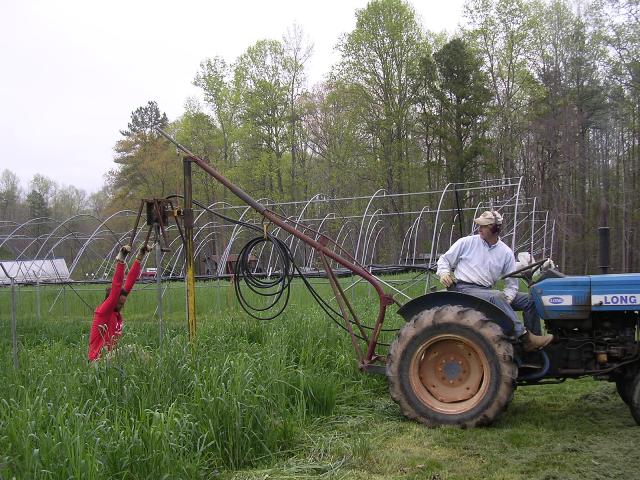
OK so the rain has officially put us behind as far as field work is concerned.  Plants are backing up in the greenhouse and hopefully we will get them all in Thursday and Friday.  We also really need to get some cover crops turned under so they can decompose in time for us to plant the cash crops that will need their nutrients to grow.  The scariest thing is the main planting of tomatoes is to be planted in two weeks and we have to get the Big Tops built over the field they are going into, and fast!  The most difficult part of the process is drilling the legs into the ground.  They go in, or are supposed to go in, thirty inches deep.  You till a field for a quarter of a century and you think you know where all the rocks are but it turns out that you only know where the rocks are in the top twelve inches, there are parts of the planet down there that you can only hope you miss.  We started with the legs yesterday and so far not too bad, 15% have hit rocks we couldn’t work around.  We knew this field would be a trial and feel if it stays about the same we will be fine.  Big rocks mean we have to get a BIG jackhammer to bust them up.  We will drill or attempt to drill in all 95 legs and anchors first and then go rent the jackhammer and finish up the troublesome holes all in one day.  If we can get the rest of the legs in today then we can quickly finish it up early next week.  Let’s hope, because tomatoes wait for no one!

The rest of the water pumping went well last week and now both ponds are essentially full.  Lets hope they stay that way and the only use for that water will be to swim in this summer when it’s hot!  Things are really greening up fast now and with all this rain and warm temperatures it will all move really quickly, crops and weeds.  We need to get the last of the lettuces in the ground as well as seeding of the last spinach, and radishes.  Believe it or not we need to seed the first Zinnias and plant the first Celosias too.  Betsy even started mowing this week, you know that the last frost date is approaching when the first summer crops go in and the weedeater comes out!

Picture of the Week
Cov hanging on for dear life while we drill in legs for the Big Tops

4/16/08 Vol. 5 #5

Welcome to last frost/freeze day!  28 degrees this morning and by the look of the forecast this should be the last night below freezing this spring (don’t borrow money based on this prediction).  In Chapel Hill most folks use April 15th (April 11th is the official date at the RDU airport) as the average last frost date but out here along the Haw river we are always three to five degrees colder and I use April 21st as our safe date. We’ve had too many close calls in the early years, sleepless nights worrying about tender plants.  Polar Cap Farms we call it in the spring, our staff always complains about how much colder it is out here in the mornings as compared to their houses in town.  Now it’s safe to plant the tomatoes outdoors.  It’s not that we are risk averse, hell we’re farmers after all, but we just don’t roll the dice the way we used to in the past.  I guess it’s the benefit of having weathered so many growing seasons, might as well not fight it and just wait until it’s right for the tomatoes needs, not our calendars.

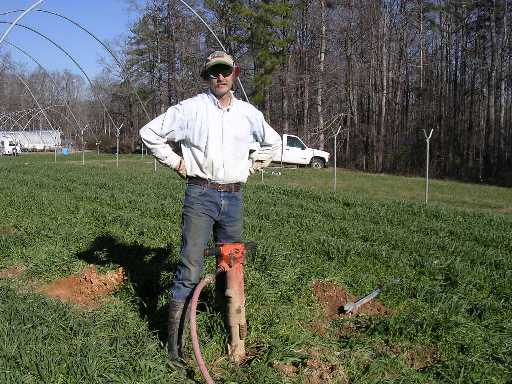
The construction of the Big Tops is going well.  We did get all the legs screwed into the ground last week except a dozen.  Monday we rented the BIG jackhammer and busted up the parts of the planet that stood in the way.  Having done this before, I was not looking forward to it but it actually went well and only took a morning to do.  This years staff, Cov and Dan, had never had the pleasure of running such a beast so after I worked the first six holes I turned the last six over to them.  They started the morning in their early 30’s and ended it in their late 30’s.  So now the legs and anchors are all in and most of the attendant braces.  By the end of today the frame should all be finished and maybe we can pull the plastic over by the end of the week.  Right on schedule to get the tomatoes planted early next week, whew!  Late last week we turned our attentions to getting caught up on planting and managed to get almost all the backed up plants into the ground.  We even got a little rain to help water them in but I am afraid I will have to get the irrigation set up this week too.  Why does it happen all at the same time?

Farm Tour this weekend, Saturday and Sunday, 1:00-6:00 each day (who added an additional hour?).  Our annual opening of the doors to the general public to come see the farm.  Many of you have been on the Farm Tour before and it is a great opportunity to see many of the folks who sell at the Carrboro Market.  Now in it’s thirteenth year, thousands of people go on the tour and it raises thousands of dollars for the work Carolina Farm Stewardship Association does.  Sponsored by Weaver Street Market, who does an incredible amount of work to promote the tour and local agriculture, it is easy to go on the tour.  Just pick up a map at the Carrboro Farmers’ Market or Weaver St. Market or many other local businesses and go to first farm that you want to see.  The best deal is to buy a button ($30) which will be your pass for as many people as you can stuff into one vehicle, for as many farms as you want.  35 farms this year so you will have to choose, it is hard to do more than 3 maybe 4 farms in a day.  In the mean time we will be mowing and picking up around the place, nothing like have hundreds of house guests all at once to make you buff up the joint!  Come on out and see what we have been up to, the weather looks to be a bit mixed but it goes on rain or shine!

Picture of the Week
As they say, this is a “file” photo from the last time but you get the idea

4/23/08 Vol. 5 #6

The Farm Tour weekend went beautifully but not without some excitement!  Saturday was it’s usual long day, up before 5:00 a.m. to go to market and then rushing home to throw the gates open for the visitors.  The afternoon was warm but pleasant and it was great to have time to visit with everyone.  Sunday was cooler and overcast to start but the folks came on anyway.  About 4:00 p.m. the sky looked very threatening and Betsy reported the radar showed a nasty line of storms coming at us.  Sure enough it pounded down for about a half an hour and then continued to rain for another half an hour or so.  Betsy and I were pinned down in the transplant greenhouse with some folks and our worst nightmare began, HAIL.  For about five minutes pea sized hail and larger came down.  I scampered out, as the lightning flashed, and rolled down the cold frame cover over the hundreds of tomato transplants and protected them.  Now we waited helplessly as we knew the potential damage that could be happening, a quarter acre of lettuce flashed through my mind, all of Betsy’s early season flowers.  In the end all looked not too worse for wear.  The lettuce does have some holes in the leaves from the hail stones but everything else looks fine.  Produce with a story Betsy says.

In our early years, 1984 or ’85, we had a tremendous storm come through in May.  All of our neighbors crops were hit hard.  Corn was blown down, tomatoes stripped of all their leaves, greens turned to paste by the hail.  We were in the blackberry business then and the new canes were growing vigorously at that time of year.  Even though they were up to five feet tall, they were still tender like an asparagus stalk.  The hail stones were big and hit with such force that many canes were broken off and others looked like we had beaten them with sticks.  Every one that was broken then sent out side shoots to compensate and those side shoots could grow up to 30 feet in a season!  All summer we worked to prune and manage those two acres of blackberries onto the trellises, trying to make a frame work that would make the next years harvest as easy as possible.  In the end it all turned out fine but the memory of that hail still haunts us to this day.

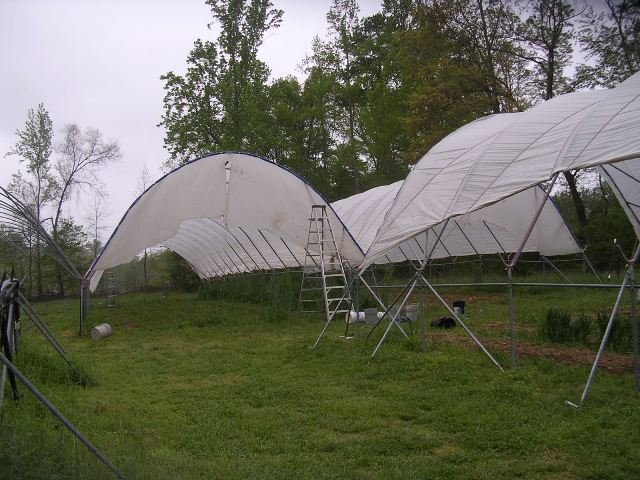
Busy week as we are still trying to catch up from Big Top construction.  The tomato Big Tops are done and covered!  This morning we have to cover two more bays, one for Betsy’s lisianthus and the other where NC State is planting their research tomatoes, tomorrow!  This afternoon the staff will be building the 1200 feet of trellis to hold up all the tomatoes.  Hopefully by tomorrow we can begin to tuck all the tomato plants into there respective beds.  The rains and warm temperatures really made things jump this week.  We did set up irrigation in the spring vegetables and the lettuce last week as they really needed it but the rains have really brought everything else around.  We moved up the thousands of pepper seedlings yesterday, a perfect overcast day to do it as it reduces the stress to the little plants as they work to send out roots into the new soil surrounding them.

Picture of the Week
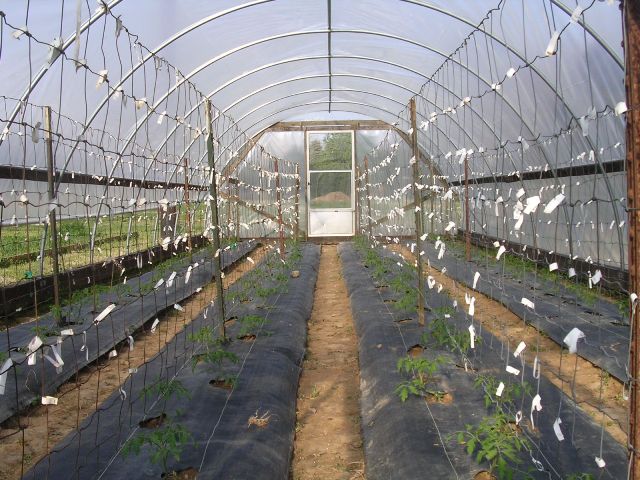
Just covered Big Tops with the ladder still in place