7/9/08 Vol. 5 #17

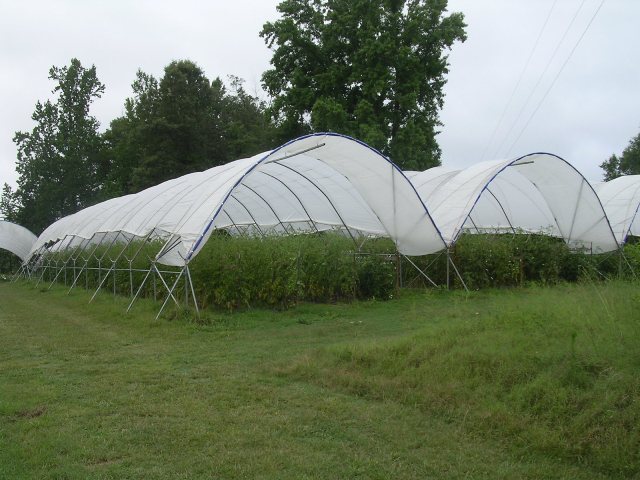
It has been so long since we have had a wet period like this, one almost forgets what it can be like.  It used to be that every July we would have a monsoon period right in the middle of tomato season, generally near the peak.  We feared these wet times as all of our hard work in tending the plants was literally washed away.  Two things were guaranteed to happen.  First the tender skinned ripe heirloom varieties would split and explode from too much water.  Tomatoes are not like balloons that you can just keep pumping up, once they begin to turn color that is as big as their skin will get, excess water has to go somewhere.  We would pick buckets and buckets full of huge Striped Germans and Cherokee Purples split across the bottom from side to side and just throw them away, every Sungold cherry would be split.  The second insult was that  the foliar disease, that haunts us, would run up the plants like someone light a match to them, exposing the remaining fruits to sunscald and increasing the chances of those fruits exploding because when there are no leaves to transpire (breath) water out of the plant any excess water makes the fruit splitting worse.  Once the disease started up the plants it was only a matter of a week or two until that crop was finished for good.  To counter act this we would plant tomatoes three times in the field to try and have some tomatoes all summer.  In reality the best tomatoes are the ones planted in late April right after frost because they grow the biggest plants to support great fruit with great taste.  Plants grown later in the summer just never get as big or set fruit as well.  As the days get shorter in August and then the nights begin to cool off in September it affects the flavor of the tomatoes too, never as intense as fruit ripened in the middle of the summer.  Enter the Big Tops, the cathedrals of tomato production.  We knew if we could keep those plants dry and control the water to their roots we could grow incredible tomatoes.  The trick was that smaller greenhouse structures can’t hold enough plants and get too hot in the middle of the summer.  The huge size of the Big Tops (24 feet wide and 13 feet high) makes it just like growing the plants out in the open but with a thin plastic roof just over the plants.  Now instead of only producing for four or five weeks, that April planted crop will produce for eight or nine weeks or longer and the fruit quality is nearly perfect.  So now when these rainy periods come, I just smile and sleep well, it’s a miracle!

Interesting day yesterday.  We spent most of the day being interviewed by a pair from the National Academy of Sciences for a study being funded by the Bill and Melinda Gates and Kellogg Foundations titled “Twenty-First Century Systems Agriculture”.  Twenty years ago the National Academies released a ground breaking report “Alternative Agriculture” that showed, definitively for the first time, that sustainable and organic approaches to farming actually worked and were as profitable as conventional agriculture.  Now two decades later they are doing it again but with a broader scope than just economics.  Using fact-finding workshops, data analysis and case studies to identify the scientific foundations of sustainable farming systems.  Somehow (it’s always a mystery to us) we were chosen to be one of the nine farms nationwide as one of the “real world” case studies.  They sent seven pages of questions that they wanted to cover (enough to scare anyone) but it turned out to be a wide ranging conversation about how we farm.  As Betsy said, “We had the easy part, they have to try and make a report out of that conversation!”
Picture of the Week
Happy tomatoes under gray skies

7/16/08 Vol. 5 #18

Well we seem to be in the tourist season now.  Last week the National Academy of Sciences, today a bus load of extension agents here in North Carolina for the National Association of County Agricultural Agents meeting.  Next week we have an all day turkey production workshop for 50, put on by our friends at the American Livestock Breeds Conservancy.  They were going to hold it down at the Center for Environmental Farming Systems in Goldsboro but all their turkeys got eaten by coyotes and they needed a new location that had heritage turkeys on pasture!  In two weeks we might be hosting a big press conference to announce two new endowed chairs in Sustainable Food Systems at NC A&T and NC State.  In three weeks we have 90 civil servants from India coming to see what farming techniques we use.  In four weeks we will be taking our summer break to rest up from all of this activity!  So we have been mowing and cleaning up the place.  Not that we don’t constantly do this kind of maintenance but usually not all at once.  All of the rain has made the mowing more critical as stuff is growing like wildfire.

The rest of our days are as usual, a steady pace of harvesting, planting and crop control.  I had predicted this week to be the peak week of tomato harvest but it appears as if last week actually was.  That week of 100 degree temperatures in early June is probably part of the reason.  When it’s that hot tomatoes don’t pollinate well.  That combined with not a lot of sun last week to help ripen the fruit and we seem to have a drop in production this week over last.  Still we have tomato plants to tie up, peppers and lisianthus to trellis, zinnias to be weeded and lots of flowers to be seeded for next years early crops (already?).  The last planting of zinnias and sunflowers went in the ground this week and the first of the fall lettuce too.  The little turkeys graduated yesterday, their first time out of doors.  It is always surprising how fast these broad breasted turkeys grow compared to the heritage birds and these guys are looking good.  In two weeks they will join the older birds out in the field.

Picture of the Week
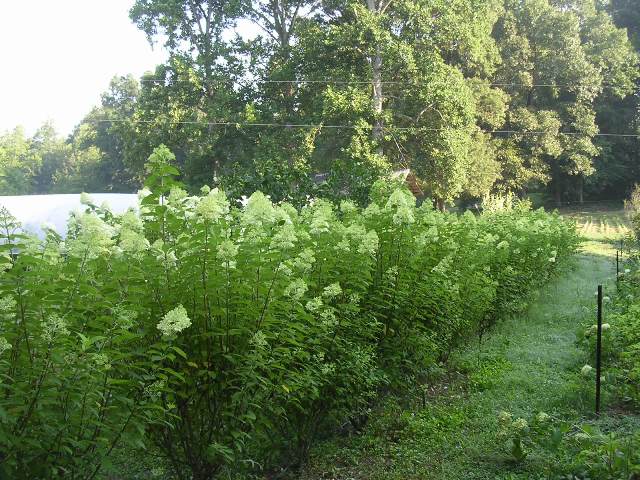
Limelight Hydrangeas

7/23/08 Vol. 5 #19

A couple of really thick days, the last few, the kind that remind you what living in the south used to be like before air conditioning.  The “Raising Heritage Turkeys on Pasture” workshop went well despite the heat.  They were here all day on Monday in the heat but we managed to keep them in the shade for the most part.  Organized by the American Livestock Breeds Conservancy, whose headquarters are in Pittsboro, is an organization founded in 1977 that is the pioneer organization in the U.S. working to conserve historic breeds and genetic diversity in livestock.  The ALBC is the group that really has brought the heritage turkey back from the brink of extinction by working with breeders to increase the stock and others like Slow Food to glamorize and popularize the eating of these birds.  As all people working to save endangered food species, whether it’s animals or plants, say “you have to eat it to save it”.

If there is no economic reason to grow a bird or a tomato then they just become museum items that eventually disappear after the last crazy old guy who kept them passes on.  This kind of loss happens everyday somewhere in the world.  The Cherokee Purple tomato that we all love is an example.  One gardener in Tennessee had it in his garden when a tomato collector/nut found it and asked for some seeds and then grew them.  It was so good that he passed the seeds onto several small seed companies who presented it to the world, that was about 1992.  If the Tennessee gardener had died without passing it on we would never have it today.  If you are interested in other endangered foods Slow Food USA has the Ark of Taste, with a list of the foods they are trying to promote and save

Animals are even harder to save for many reasons that one can imagine; size, numbers, room to keep them, etc.  While we grow the Bourbon Red turkeys and are part of the food system that is needed to save them, we are not doing the heavy lifting required to really save the breed.  The breeders are the ones who keep these animals year round, feeding and caring for them, selecting for the best hens and toms to keep for breeding, and hopefully hatching out enough eggs to make it all worthwhile.  This is not like keeping a small vial of seeds to replant next year.  This takes lots of room, facilities and skill.  To keep enough genetic diversity in a flock, a breeder needs to have 200 hens!  So you can see the difficulty, it’s not like raising dogs where you can work with two or three animals and keep a breed going.  At this workshop we were fortunate to have the god father of heritage turkeys and the master breeder, Frank Reese, here to lead the discussion.  Frank has devoted his life to saving these turkeys.  If you have ever had a mail order heritage turkey, it was probably one of Franks as he raises more than anyone else by many many times.  This year he and his partners are raising 17,000 birds!

It has been our search for the best quality foods that we can raise in an sustainable system that brings us to things like Cherokee Purple tomatoes and Bourbon Red turkeys.  The work done by many people and groups like ALBC, Slow Food, the North American Fruit Explorers, chefs we work with and your experiences that makes it easier for us to find and learn to grow these things.  Our job is to interpret the information we get (some times very old), to our farming conditions and system.  Sometimes it works, other times it doesn’t but that’s the nature of farming.

Picture of the Week
Turkeys headed out for the days work, eating cover crop and playing in the Zinnias

7/30/08 vol. 5 #20

Depending on how we look at it, it has been either 20 or 24 weeks since we started going to market.  Twenty occupying our regular Saturday spot with two spaces but with the market going year round now Betsy started going four weeks earlier with the first few anemones and ranunculus.  Either way it’s a long time without a break.  Twenty weeks for the staff as well, hot, cold, wet, dry, steamy, arid, seeding, planting, weeding, cultivating, harvesting.  Twenty weeks of dealing with each other and us, time for a pause.  As most of you all know we take a week off, every summer, in early August timed to hit just as the early tomatoes wane and before the peppers really kick in.  Now I always refer to it as the “break” and not a vacation because Betsy and I don’t really get to check out.  We give the staff the week off with pay and they usually leave town.  That leaves us here to water, and irrigate, keep and eye on the turkeys, pick a little bit of stuff that has to be harvested, etc.  The break is in not going to markets and doing regular deliveries.  We usually do a few hours of chores in the cool of the morning and then find some kind of diversion in the afternoons, eat a lot, take naps, read and other general sloth.  To that end there will be no newsletter next week and we will not be at market Wednesday 8/6 and Saturday 8/9.

This break marks the transition into fall and gives us the bit of rest needed to head into this most important time of year for the farm.  The ten weeks that follow the break are not only the end of our harvest season with peppers, tomatoes and the last of the summer flowers but it is the start of the next year.  We are busy dismantling all of the infrastructure we put in place all season to grow and support the crops; irrigation, trellises and more.  At the same time we are busy seeding and transplanting flowers for next spring, improving the soil with mineral amendments and seeding cover crops.  By mid October it will all be put to bed for the winter save a few hundred feet of row for the vegetables for Thanksgiving and the turkeys wandering around in their pasture.  In many ways the next growing season is decided and set in place during this period, we take it very seriously and when it’s done we then can take a “vacation” and rest assured that next year will be another good one!

Picture of the Week
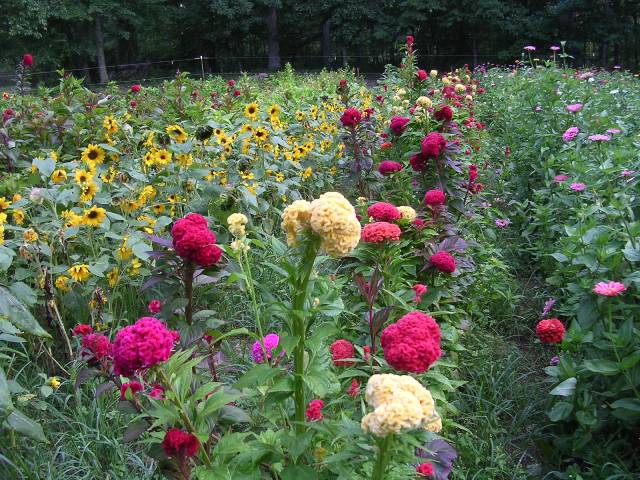
Crazy Celosia heads

8/13/08 Vol. 5 #21

Well the break is over and we managed as relaxing a time as we have ever had during “the summer break”.  There is usually a little too much farm work to do to really feel like we had time off.  This time though, while we did go out every morning and do some chores for a few hours, it was never a forced march.  Dan did come out on Wednesday to help me pick tomatoes so we could do a small delivery that day and because it had to be done.  Wednesday was really the only real work like day though.  We lounged around in the air conditioning and watched movies, went out to eat almost every night  (and many lunches too!), I even got to run up to the mountains for a night and just sit and look at the view.

The highlight though was definitely the 90 Indian civil servants who arrived on Tuesday afternoon in two buses when it was 98 degrees!  This group of officials from the Indian Administrative Service, which is the highest  tier of civil servants in that country, was here for two weeks hosted by the Duke Center for International Development.  While in North Carolina they were studying how government policy relates to service delivery and infrastructure development.  One of the things they specifically asked us for was to see some US farming techniques.  Now we have hosted a lot of tour groups over the years and many from foreign countries but this group was unlike any other!  They were like a fourth grade school field trip with their energy and questions.  As they rolled off the buses they immediately surrounded Betsy and me and started rifling questions as fast as we could answer.  No subject was passed over.  How long have you been farming, what is that crop, how do you irrigate, what is your income, how many taxes do you pay, where to you sell your crops, and on and on.  Betsy’s favorite question was do you sell to Walmart?  There was no organized guided tour as they were all over the place and then 45 minutes later they were on the bus and gone.  Wow, did that just happen?  It was so much fun that we told the Duke organizers to bring more!  Next up in a few weeks Chinese officials.

Now it’s back to the salt mines, but the end is in sight.  We even began the long dismantling process yesterday, taking out the first flower trellises and pulling up irrigation lines.  We are very glad to see some rain moving in today because thing were beginning to get crispy again.  One note, our Panzanella/Weaver Street Market farm dinner is this coming Monday the 18th from 5:30 to 9:00.  The menu will be pepper and tomato heavy, perfect!  I am hoping for a stuffed poblano and probably a fresh tomato sauce on pasta among others.  I believe that 10% of the proceeds go to the Center for Environmental Farming Systems.  Hope to see you there.

Picture of the Week
Cov and Dan working in the Brussels Sprouts on a rainy day

8/20/08 Vol. 5 #22

Wow, I almost forgot to write the newsletter this morning!  I woke up thinking about the turkeys and then just forgot that it was Wednesday.  We had one of those turkey events yesterday that makes one question why we raise them.  Most of the time the birds are well behaved and get along fine, but as they get older they become teenagers and lose all common sense occasionally.  Just like teenage boys the toms get full of themselves and can start picking on each other.  The problem with turkeys is once they draw blood they just keep at it until their victim is dead or disappears.  Such was the case as I went out yesterday evening to feed and water them.  I found two birds cowering under the roosts with the backs of their heads all bloodied, one seriously.  I separated them out to the hospital pen to heal and the others don’t even know that they are gone.  It is one of the things about raising any livestock; injuries, sickness and death occur more often than one likes.  It is something that you have to get used to, ready for and become somewhat hardened about.  It is just not the same kind of emotion as when a hail storm comes or a disease kills your tomatoes.  Fortunately these two should recover completely and will be reintegrated with the flock with no further troubles.  From now on though we have to keep a closer eye on them as you never know when they will get crazy.

We had a good evening on Monday at the Panzanella farm dinner.  Great turn out and the dishes they made with our produce were very nice.  It is hard to beat a good tomato and mozzarella salad or pasta with a fresh tomato sauce, just two of the dishes they offered up.  For us one of the best parts is seeing everyone who came out to eat food with our produce and to spend time with our own assembled group.  We always end up with a large table surrounded with our current staff, some former staff and other friends.  We carried on, told stories and hopefully weren’t too loud.  The next farm dinner features Chapel Hill Creamery and their great cheeses.

Picture of the Week
Dan and Cov cleaning up the lisianthus for the last time

8/27/08 Vol. 5 #23

Well that was the largest rain event we’ve had in maybe a year or more, 3.5 inches.  Just in time to help with the crops but it also helps to get the ground ready for fall planting of cover crops and next springs earliest flowers.  It has been so dry that it has been impossible to get the soil probe into the ground to take soil samples much less think about turning crop residues in.  The fall process here at the farm starts with taking soil tests of every planting area in August.  By the time we are ready to begin preparing the fields for next year, in September, the results will have come back.  We amend the fields only once every year as we are really feeding the soil microbes that in turn help release the nutrients that actually feed the crops.  We are just trying to make the soil environment ideal for all of the “livestock” that live in the soil and help us farm.

What we add to the soil are minerals that get used up in the process of growing the cash crops.  Every time we send a flower or head of lettuce home with you, you take some of our minerals with you so we have to replace them.  We add lime (calcium and magnesium) to make sure the soil is not too acid for the little critters.  We also add phosphorus (P) and potassium (K) which are major players in root, plant and fruit development.  With that all set for the coming year we then can turn under the remnants of this years crops and get the soil ready for the winter.  We will raise up beds or wide ridges so the soil will drain faster and warm up quicker in the late winter and early spring when we need to begin planting.  After that we will seed it all down with soil holding and improving cover crops of a grain and a legume.  It is hard to imagine that we need to be getting ready for next year already.

On the turkey front the two that were injured last week have been returned to general population.  One we slipped back in a few days later with the younger birds and then moved back with the older birds and they all are getting along fine.  Quee Queg (remember the tattooed native from Moby Dick), the more injured of the two stayed in the hospital for a week and now is in the same process of re-entry, first with the little guys and then the whole clan.  We moved them to a new field so there are new things to keep everyone entertained.  Did I say it was like teenagers?

Picture of the Week
some damp turkeys, Quee Queg on the far left

9/3/08 Vol. 5 #24

Well it looks like the rain isn’t over yet.  We ended up with seven inches last week from the remnants of Fay and with hurricane Hannah on the way there could be a whole lot more.  We had water moving debris in places we have never seen before.  Of course the driveways that I had just regraded are all now back down at the bottom of the hill.  The most interesting were the leaves and sticks that washed out of the small gullies that are across the heavily wooded hillside between the top fields and the bottom fields.  The river backed up on the bottom field for the first time in several years but only on the lower end.  It got within about a foot of the irrigation pump, which we are always prepared to pull out if need be.

It has dried out nicely now and the mowing has begun.  Nothing like a little water to make weeds and grass, pent up from the drought, go wild.  Betsy has been on the small mower for two days getting all the grassed areas and I have been on the tractor taking out the summer cover crops, old flower crops and areas we haven’t mowed for some time.  This will be the last mowing for the season on a lot of the farm so it is very satisfying.  Mechanical frost we like to call it.  After this next storm (assuming there is not another on its heels) I will begin turning soil over and getting ready for the winter cover crops.

No newsletter next week as we will be in Portland Oregon for the 20th Association of Specialty Cut Flower Growers conference.  I think that Betsy has been to nearly every one and this organization has been very important to the growth of her/our cut flower business.  She has served on it’s board of directors as both regional director and treasurer.  She now is the executive director of their Research Foundation.  It is always a good time with interesting tours of farms and of course checking in with old friends.  We will be back in time for next Saturday’s market though.

Picture of the Week
Newly mown Zinnias with the old celosia going next

9/17/08 Vol. 5 #25

OK enough with the rain for a minute!  Thirteen inches over the last few weeks but at least the forecast for the next week looks sublime and maybe fall is really here.  We had a great time in Portland last week with the cut flower growers where they kept us on the move.  Up every morning at 5:00 to get on a bus for another tour.  The first day we went out to the misty coast and saw acres of colored calla lilies, hydrangeas and the largest artichoke producer in Oregon, beautiful huge purple chokes.  The second day we went to the Portland Wholesale Flower Market for a short visit but it is always good to see how the larger farmers send their product through the system.  In our only real free time Betsy and I made it downtown to a really great small farmers’ market (the size of the Carrboro Wednesday market) with some of the finest produce displays we have ever seen anywhere.  We took lots of pictures and brought home some new ideas for our set up at market.

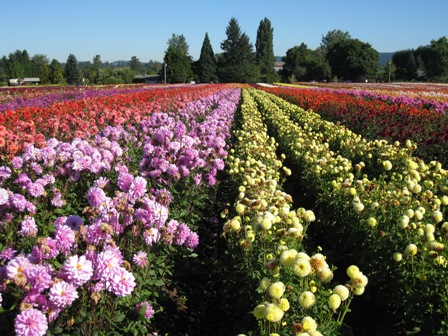
The last day we headed south of Portland into the Willamette valley to see four farms including the largest dahlia grower in the US with an amazing 40 acres in full bloom!  We also visited maybe the largest producer of dried flowers in the US with something like 30 acres including their huge drying rooms and processing facilities.  Just when we thought the bus rides were over we got back on the bus that evening and went up the Columbia river gorge for a dinner cruise on an old paddle wheel boat.  Beautiful night on the decks with the moon rising over the river.  Friday we were up again at 5:00 to start the long flight back home.  Back to the farm with just enough daylight to cut some lettuce, feed the turkeys and finish loading the truck.  Dan and Cov did a great job taking care of the place and had us ready for market but by the time market was over on Saturday we were ready for a rest!

Things here on the farm are winding up smoothly despite the rain.  Most of the irrigation is up and put away (don’t seem to really need it anymore) and the Big Tops are uncovered except the last bay with the last tomatoes.  Soon we will be ready to begin to turn under all the fields.  The little sliding tunnels are all cleaned out and several already planted with crops for Thanksgiving.  The Brussels Sprouts are maybe the best looking we have ever grown, at least at this point.  If the grass would just stop growing so fast from all the rain, the end would even be closer.

Pictures of the Week
Acres of Calla lilies and Dahlias

9/25/08 Vol. 5 #26

A day late for a number of reasons.  Anticipating this current impending storm we worked a full day yesterday getting things picked and soil turned over.  Friday was to be the last pepper harvest of the season but we moved it up to yesterday to get it all done while it was dry.  Just as we thought, there were still so many fruits left on the plants that is took all day to clean them off.  So many peppers in fact that we will be coming to Saturday market one more week than usual.  For nearly ten years now we have finished up our selling season the last Saturday of September as the peppers have waned along with everything else (including us!).  So this year we have a bonus week.

As I have mentioned before, one of the reasons we close down earlier than many other area farms it because we feel it is vitally important to help us properly get the farm put to bed for the winter.  Because our soil maintenance and fertility is based on growing lush cover crops we need to have the time and the fields empty so we can get the soil ready to plant them.  The optimum time to seed these winter soil improving crops is September and October.  If we had crops in the ground until November, or later, we would be able to maybe get some winter rye to come up but that would be about it.

So for weeks now we have been clearing the fields of trellises, irrigation and mowing down crops as they have finished up.  All that remains is the pepper field and a few rows of flowers, at least until next week.  Finally, yesterday, I spent the day on the tractor making the first pass over two acres of now empty fields cutting in the residues of the summers growth.  This first disking, followed by the rain over the next few days will allow the residues to begin to breakdown.  In a week or so I will follow with more soil preparation until in the entire farm is in raised beds and seeded to various combinations of winter grains and legumes.  We only have three weeks until we leave for the Slow Food event in Italy and there is still much to do.

Speaking of Terra Madre in Italy, not only are we going but two of our favorite fellow farms are also going.  Joann and Brian Gallagher of Castlemaine Farm (336-376-1025) and Ristin Cooks and Patrick Walsh of Castle Rock Gardens (919-636-0832)  are also going with us.  The deal with Slow Food is if you get yourself there they pay for everything else, housing, food etc.  That leaves a large plane ticket bill for these still new and small farms to cover.  To that end they are having a fundraising Chicken dinner at Castle Rock Gardens in Chatham county on Oct. 12th.  Chicken from their farms along with vegetables too for only $25.  Check with them at market for further details and tickets or call them at the above phone numbers.  Let’s help get them to Italy!

Picture of the Week
Just disked fields, a few rows of flowers and the green of the pepper field all the way down at the trees.