10/3/08 Vol. 5 #27

Last Saturday market of the season (for us). For six months each year our daily life is ruled by the anticipation of Saturday market. We may have lots of things going on here at the farm during the week but in the back of our heads it is always there, the inevitable weight that the Saturday market carries. Betsy says it always feels like Friday-Saturday, Friday-Saturday. Somewhere over sixty percent of our business is done in those five hours on twenty seven Saturdays. 135 hours a year to make most of our living. Most retail businesses are open something on the order of 3000 plus hours a year. At times I realize what a miracle it is that we can make a living, outdoors, in such an intensified way. Of course with out all of your support it would not be possible at all, thank you.

The winterizing of the farm goes apace. Yesterday the last of the pepper trellis was pulled out. We build quite an elaborate trellis system using metal t-posts, wooden cross arms, wire and baling twine to hold up the 1800 feet of row. Sometimes when you design these support systems you find out it takes longer to take it down than it took to put up. So over the years we have come up with a system that is not only fast to put up but also to take down. It is designed so, if done well, all the wires and strings are easily wound up on spools as they are pulled out of the plants. The spools are stored for the winter and next year will be reused and just rolled back out over next years pepper plants. Finally all the metal posts are pulled up and stacked next to the mountain of wooden cross arms, ready for another season.

The last of the tomatoes are gone too, trellises out and the last of the Big Top covers pulled down and wrapped up for the winter. The guys even got a fresh layer of mulch on the blueberries last week. All last winter the power company had crews trimming the trees along the power lines all around the area. We told them they could dump all the brush chips they wanted here. Now after half a year of composting it is beautiful mulch for the berry bushes. The turkeys have been moved to their last stop in the tour of the farm, a field with lush green grass to eat and rest on. In less than two weeks they will go away.

Two weeks from today we will have just landed in Italy, fighting jet lag and driving our way up into the Alps to see a part of the country we have never been in. Next week I will give you a run down of what our two weeks in Italy will be like. Don’t forget the fundraising Chicken dinner at Castle Rock Gardens in Chatham county on Sunday Oct. 12th. Chicken from their farms along with vegetables too for only $25. Check with them at market for further details and tickets or call them at 336-376-1025 for Joann and Brian Gallagher of Castlemaine Farm or 919-636-0832 for Ristin Cooks and Patrick Walsh of Castle Rock Gardens. Picture of the Week With the trellis gone, the guys are picking (and throwing some) the last peppers before mowing

11/25/08 Vo. 5 #28

Hmmm… what happened to that pre and post Italy report?  Well the race down hill towards leaving for Italy, including getting the farm shut down and taking the turkeys to processing, sucked all the air out of the room.  Since we’ve been back, between catching up on all we missed and fighting the head cold that seems to be going around we now find ourselves on the morning of the special Tuesday before Thanksgiving market from 3:00-6:00 this afternoon, more on that later.

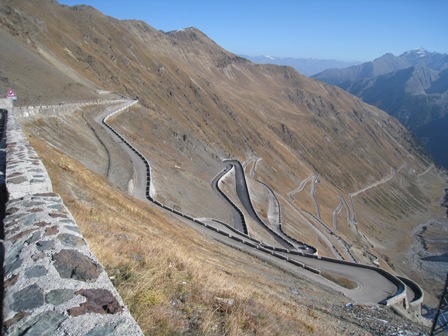
Like all big trips and conferences, Italy was exciting and exhausting, too short a stay and too long, too much to see and not enough.  We arrived in Milan a week before the Terra Madre conference was to begin.  This would give us time to recover and acclimate before we encountered both our Italian family and the nearly 8000 delegates at the conference, it is hard to say sometimes which takes more stamina.  Off we went in our rental car (Betsy driving and me navigating, which is quite humorous to our Italian friends) east up into the Alps and the Dolomites.  Past lake Como and then up a the long Valtellina valley whose specialties are pastas with buckwheat, a cheese called bitto, what seemed like a lot of apples and lovely red wines.  Just over the northern mountain is Switzerland.  The second day we drove over the Stelvio Pass the second highest in Europe at 9000′.

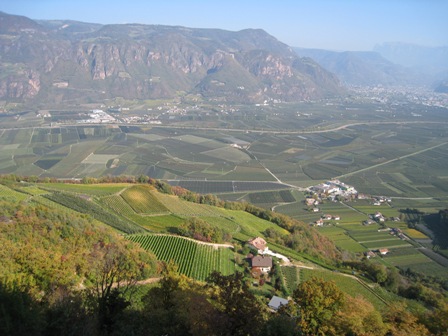
Once we cleared the pass we were in the Alto Adige or Sud Tirol as this area is really a part of Austria under the Italian flag.  All places have two names the Italian and the German and German is the dominant language.  For two nights we stayed at an apple farm up on the slopes of the Dolomites, over looking Bolzano, and were definitely the only non American tourists in the area.  The food here is Germanic with lots of sausages, kraut and dumplings, more beer than wine and a lot of apples.  We drove for parts of three days, maybe 150 kilometers, through non-stop apple orchards covering the entire valley floors.  The disappointing thing was they were all the standard commercial varieties we have here in the stores; Red and Golden Delicious, Fuji and Gala, no old European varieties!

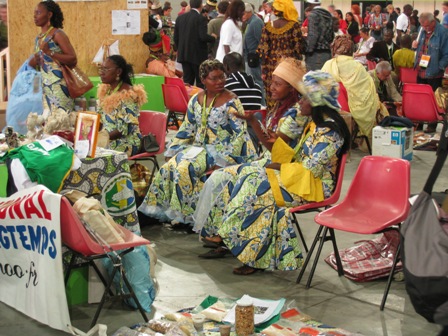
On the fifth day after leaving home we finally arrived in Torino and at our dear Italian friends who housed us and went too far out of their ways to take care of us.  We had a few days to visit with them before the Slow Food events started and it was just right.  The combination of the Terra Madre conference with nearly 8000 delegates from 150 countries and Slow Foods’ specialty food show, The Salone del Gusto, next door with 180,000 attendees over five days is in many ways too much.  Your senses are overwhelmed by the sights of everyone in their native dress and the taste and smell of the foods that it sustains you for a while, then you realize the crush and madness of it all and you have to walk outside for a while to reorient your self.  We do always come away with the reaffirmation that the local food and small farm movement is doing some amazing things around the world and in the US, and maybe that is enough of a reason to throw yourself into such a maelstrom.

The highlight, for us, was on the last day of the conference when our Italian friends hosted most of our Triangle delegation at their farm for a cookout and farm tour.  Amazing food and for most of them the only time they were on a farm since they left North Carolina.  I think that it allowed them to tie together some of what they had seen and heard for the previous four days about community and food that is “good, clean and fair”.

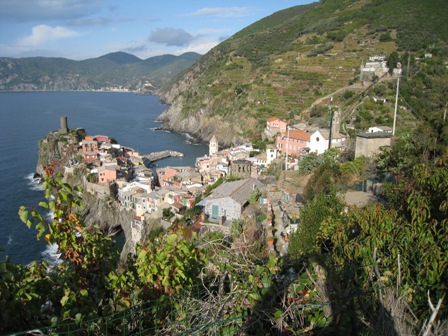
The last three days we retreated to the Ligurian coast and the beautiful area of Cinque Terra.  Five fishing villages clinging to and strung along a steep coastline.  We walked the trails between the towns, ate way too much, and slept.  Finally the long road home with many train, bus, and plane changes.

3/26/09 Vol. 6 #1

The calendar says it’s time for us to start another market season and winter’s death grip on spring appears to be having it’s fingers pried off one by one, Punxsutawney Phil and Sir Walter Wally were right on with this forecast.  We are doing our best to ignore the fact that it is much colder than usual and continue to plant on schedule including the first tomatoes into the sliding tunnels today! It has been an interesting winter and while we have done quite a lot, the amazingly cold and sometimes very wet conditions have kept us inside more than normal and we feel very fat and sluggish coming out into spring.

Over the next few weeks I will give you more details of our winter adventures but the highlights include trips to Texas, Tennessee (twice), Pennsylvania, and last weekend to Georgia.  Last weekends now almost annual trip (for me) to the Georgia Organics conference was even better because I finally convinced Betsy to go with me which is the reason we were not at market last weekend for our traditional start.  There were a number of events surrounding the conference that were also enticing to Betsy, several Slow Food related things and we both were interested in a full day workshop on farm transition.  Farmer friends of ours hosted this all day session as they have just begun the process of transitioning their farm to a younger farmer.  While we are not quite yet ready to go there, we do need to begin thinking about what we will do with this place in the end so we are very interested in how it is working for others around the country.  As usual I also gave several workshops during the conference and the conference wrapped up with a grand banquet for 1200, held under a huge tent, capped by a keynote talk by Michael Pollan of “The Omnivore’s Dilemma” fame.

Here on the farm our 28th growing season is beginning to happen at a much more rapid pace.  The staff started last week so now there is no excuse to stay in the house for another cup of coffee.  Cov is back for his third year and we are very happy for that.  New this year is Glenn who has made several stops at other farms over the past few years and is seriously looking at farming as a career after getting a non agricultural degree at UNC, a perfect fit here at PF.  So far we have moved the hoops for the Big Tops, slid the little tunnels to their summer positions (where the tomatoes are being planted right now) and planted a bunch of lettuce and flowers.  We are on schedule as far as planting and seeding goes, but the cool soil temperatures are holding things back, with some crops not happy at all.  We already had to replant the first outdoor Japanese turnips and the first planting of Sugar Snap Peas looks really bad.  On the bright side the beets, carrots and others have come up really well.  As soon as it dries out after this rain, we will need to begin cultivating like crazy.

Picture of the Week
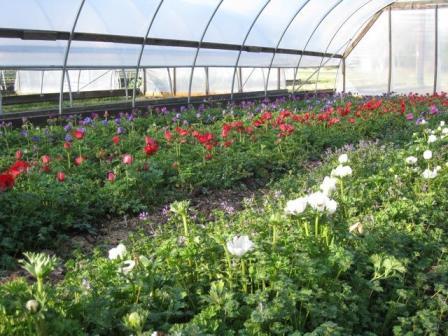
Anemones say it’s spring anyway

4/1/09 Vol. 6 #2

It has been some years since we had a wet spring, one forgets what it could be like.  So far this one is what I would call consistently damp, not so much rain that you begin to wonder if you will ever get stuff planted but the frequent wet days do make us rush around trying to get things in the ground before it comes again.  This week was just such a case.  We usually need about three dry days for the soil to drain enough to be able to till and not do any damage to our soil structure.  After last weeks inch plus rains it was just barely dry enough to till on Tuesday but the forecast for more rain on Wednesday was 90 percent so off we raced.  Three beds of lisianthus (very tedious as they go in four inches apart), two more beds of mixed flower transplants, followed by three beds seeded to carrots, turnips and radishes.

After all of the recent wet weather the weeds are really starting to germinate and in another week it would be scary.  So after lunch I set the guys on getting most everything cultivated even though another day would have made the soil conditions just right.  By three o’clock we had covered the most egregious areas including thinning the broccoli raab which had come up like hair on a dogs back.  Cov and Glenn then headed off to get some planting done in their own gardens before the rains came.  Almost two days work in one but with a rain day coming.

Wednesday morning I am at the desk viewing the radar on the computer as it had not started raining yet.  While I am making some notes on the crop plan I realize I had forgotten to seed the second planting of broccoli raab, with this forecast I better hurry out quick.  Quick means taking down the deer fences so I can get the tractor into the field, spreading a little bit of feather meal for nitrogen, firing the tractor up and lightly tilling the tops of the beds, carrying the seeder down and running it up and down the beds.  A light mist falls off and on as I do all this, then it stops.  The rest of the day it barely drizzles and we wonder what all the rushing around was for.  Oh well, I am looking at the radar again this morning and it looks like rain for sure again, we’ll see.

Picture of the Week
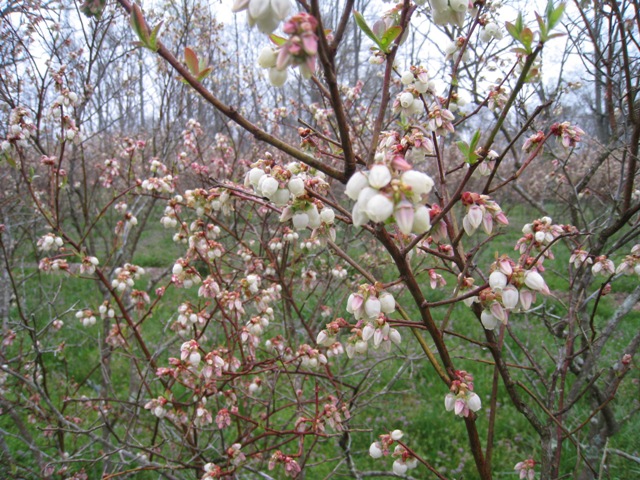
The blueberries are blooming like crazy

4/8/09 Vol. 6 #3

The annual last frost/freeze dance is near.  This morning it was 28 degrees, not cold enough to really do any damage but low enough to get our attention.  The only things out there that could really get damaged are the first tomatoes and 28 degrees is really their point of no return.  But they are inside the little tunnels tucked under an additional layer of row cover.  After the famous Easter freeze of two years ago when we had tomatoes under the same protections and they survived 20 degrees we are a little more relaxed about these last fronts of the year than we used to be.

There are really two major methods of cold weather crop protection covering, like we do for the most important crops and ice.  The ice method that the most of the strawberry growers use requires lots of water, big pumps and sprinkler guns and you still have to stay up all night making sure that it all keeps running.  Once you start to “throw water” you have to keep it up until it begins to melt the next morning.  If you run out of water and or the pump stops you can do more damage than if you didn’t spray any at all.  In high winds, like yesterday evening started with, it is even more difficult to get the water to behave and go where it is supposed to.

We don’t have the capacity to ice protect so we mostly use the third method of protection- we just don’t grow those crops that need it or wait to plant them until it’s safe.  This goes along nicely with my “keep it simple” motto of farming.  It is so easy in farming to make the basic act of growing crops into a wildly complex house of cards that relies on too many artificial supports for it to work.  At best it adds additional work and cost to a crop, in the worst case it can mean total crop loss if the support fails.  Even organic/sustainable growers are lured into the trap by the promise of an extra early crop and maybe a little more money, or a special spray that will “enhance” the crop in some way.  Farming is complicated enough without adding too many additional hurdles.  I am happy with my unheated greenhouses and simple row covers, it’s as high as I want to jump.

Picture of the Week
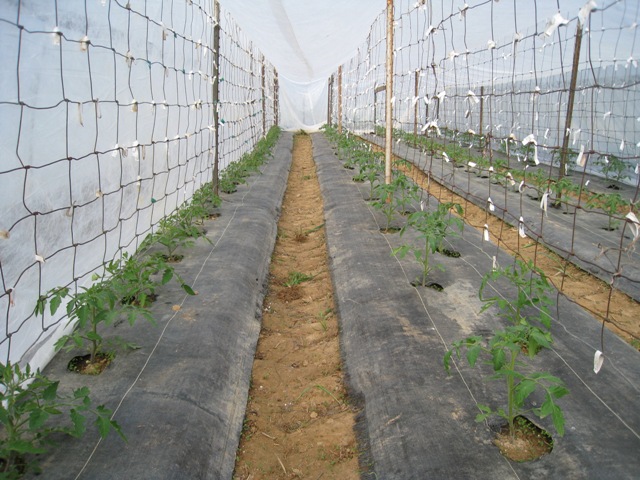
Warm tomatoes

4/15/09 Vol. 6 #4

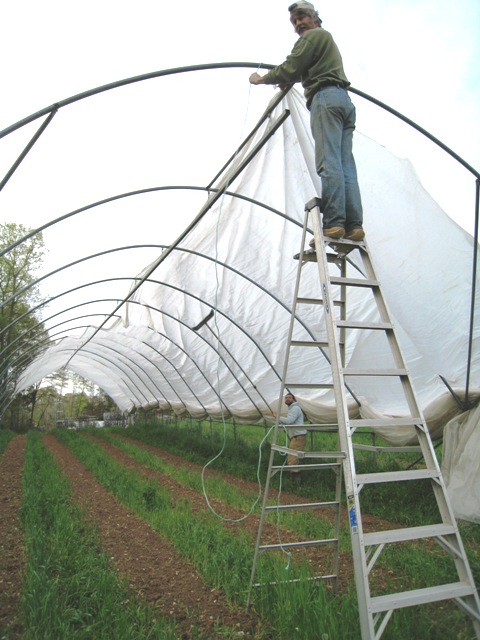
Today we are supposed to begin pulling the plastic over the Big Tops, the giant greenhouse structures that we grow tomatoes and some flowers under.  As I sit here looking out the window I can see a slight breeze in the tops of the trees which may mean no covering this morning.  30 by 100 foot sheets of plastic make great sails and any breeze gets exciting when you think you could be carried across the river unless you let go.  The Big Tops cannot take a snow load so we uncover them every fall, this also allows us to grow the important soil improving cover crops and recharge the soil with rainfall.  We wait until as late as we can to cover them so we can get all the natural water into the soil possible before we have to start irrigating.

This is all part of the inexorable march toward planting the main crop of tomatoes.  The cover crop of wheat and crimson clover was turned under a month ago to give it time to decompose and begin to release its nutrients for the tomatoes to use.  Last Friday we tilled the beds again, almost ready to cover with landscape fabric and build trellis but first we must pull the plastic roofs over as it is too hard to do with all the tomato trellises in the way.  Once covered we can proceed with these preparations so that sometime next week we can tuck the plants into the ground.  Timed to make sure we are after the last danger of frost, the transplants have been “in the system” for five weeks so that when they are planted they are at the best stage of growth so they can just take off without a pause.  The first sungolds six weeks later, if the wind will hold off.

With all of this rainy weather it is getting difficult to keep the guys busy but we keep having enough dry days to keep on schedule with planting.  This week more lettuce and spinach and flowers made it into the ground.  The pea trellises went up too.  The big spring clean up push began with brush burning, all of the limbs that fall in the winter plus various prunings of the perennial plantings.  Not only do we have to get ready to plant tomatoes but next week is the Farm Tour so we have to get buffed up for that too, lots to do.

Picture of the Week
We were successful in getting the tomato Big Tops covered!

4/22/09 Vol. 6 #5

It must be tour season as we have had 3 different college classes over the last two weeks.  Now we get a lot of tourists over the course of the season but this many is unusual even for us.  The first group was the greenhouse vegetable production class from NC State.  We were the last stop for the day and they had seen traditional heated greenhouses, and unheated tunnels but as usual when they got here they had to rewire the brain because we look like nothing they have ever seen before.  First we have the sliding unheated tunnels with a 12 year crop rotation to make sure we maintain excellent soil health.  Then we walk by the passive solar transplant greenhouse with no additional fossil fuel generated heat, certainly not the standard as taught at the university.  Finally we talk about the Big Tops with no side or end walls just the roofs to keep things dry, looks like a greenhouse structure but?…

The second class was from the Sustainable Farming Program at Central Carolina Community College where many of the things we do here have been replicated like the passive solar greenhouse and another take on the sliding tunnel.  This days subject was tomato and pepper production and as we have two tunnels with beautiful tomato plants growing and a greenhouse full of tomato and pepper transplants they are able to see the whole show, short of fruit to eat.  The final group was the Organic Crop production class also from NCSU, the idea that they have such a class is somewhat amazing and an indicator of how far we have come.  Again we are the last stop but this time they have been to several similar operations and it is harder to get their attention with talk of cover crops, rotations and beneficial insect habitats but I try.

Which leads to this weekend, the 14th annual Spring Farm Tour.  Saturday and Sunday, 1:00-6:00 each day.  Our annual opening of the doors to the general public to come see the farm.  Many of you have been on the Farm Tour before and it is a great opportunity to see many of the folks who sell at the Carrboro Market.  Thousands of people go on the tour and it raises thousands of dollars for the work Carolina Farm Stewardship Association does.  Sponsored by Weaver Street Market, who does an incredible amount of work to promote the tour and local agriculture, it is easy to go on the tour.  Just pick up a map at the Carrboro Farmers’ Market or Weaver St. Market or many other local businesses and go to first farm that you want to see (we are #33 on this years map).  The best deal is to buy a button ($25) which will be your pass for as many people as you can stuff into one vehicle, for as many farms as you want.  40 farms this year so you will have to choose, it is hard to do more than 3 maybe 4 farms in a day.  In the mean time we have been mowing and picking up around the place and it’s looking pretty shiny around here, nothing like having hundreds of house guests all at once to make you buff up the joint!  Come on out and see what we have been up to, the weather looks to be warm and beautiful!

Picture of the Week
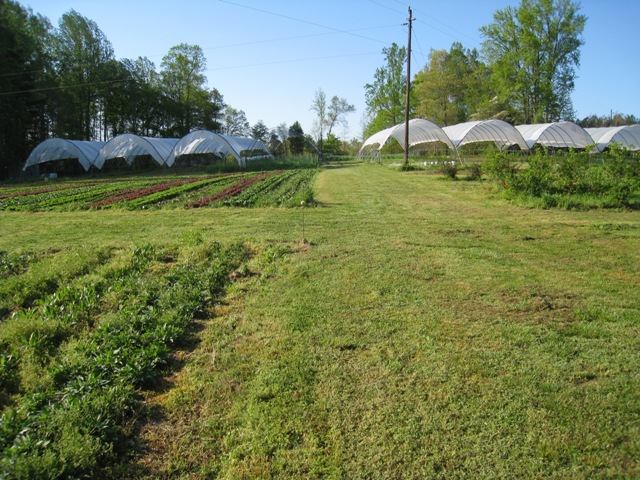
A beautiful spring morning, the Lettuce field and the Big Tops all covered

4/29/09 Vol. 6 #6

We survived the Farm Tour but just barely, it was damn hot!  We had good and interesting tourees as always and despite the heat they seemed to enjoy them themselves and the farm.  We spent so much time late last week getting irrigation set up that we didn’t get tomatoes planted until Monday of this week but the big planting is now in the ground.  “Only” fifteen varieties this year, sometimes you just have to go back to your base and do what you do best, plus it gives us a few more plants of all the kinds we all love best.  Plenty of Cherokee Purples, Kellogg’s Breakfast, Aunt Ruby’s German Green and more, can’t wait.  With this dive straight into summer we are now running hard to get things planted and keep up with what has been in the ground and waiting for some heat to really start to grow, weeds included.

Just wanted to let you all know about a meeting you might be interested in next Monday the 4th.  For some years now we, at the Carrboro Farmers’ market, have been talking about forming our own “Friends” organization like many markets around the country, to help support the market and work on community issues around sustainable agriculture. The Friends of The Carrboro Farmer’s Market is being developed as a tax exempt organization to undertake charitable and educational activities related to agricultural issues.  We want to hear your ideas of what you would like to see from a Friends organization and explore opportunities for you to be involved in its formative stages and future projects. Come join us for fun evening and help build greater support for sustainable agriculture!  The meeting is going to be held at the Carrboro Town Hall (where market is held) at 7:30 p.m.  This meeting is open to all, so if you have some ideas you’d like to share, please come and bring a friend. If you’re interested in attending , please email info@carrborofarmersmarket.com

On another farm front, as you know we are very proud of the people who have worked for us and especially the ones who have gone on to start their own farms.  You may also know that we have helped several get started by letting them use part of our land to grow their first crops.  We are pleased to announce yet another farm start up with Cov’s debut at the Wednesday Farmers’ Market last week.  He is using a half an acre in our bottom field and is producing some beautiful stuff down there.  Look for him in the other shelter on Wednesdays.

Picture of the Week
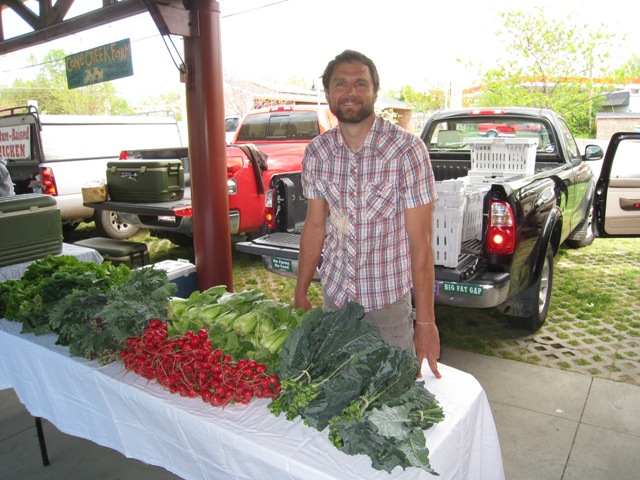
Cov at his first market, farm name yet to be determined

5/6/09 Vol. 6 #7

This is the kind of weather that berry and lettuce growers fear.  In the winter and early spring we hope for plenty of wet days to keep things cool and help the little plants grow.  During harvest season we prefer to have widely spaced rains with brilliant sun in between so the berries and lettuce can dry before the dreaded molds get a foot hold.  When we were in the wholesale blackberry business this kind of weather would give us sleepless nights.  We just knew that the beautiful glossy black berries we sent to the grocery stores would all be turning white with mold in the produce coolers and we would have to give them credit for many dollars worth of hard earned/picked fruit.  Because we were not going to spray fungicides it is one of the reasons we got out of the blackberry business.

On the lettuce side there is a soil borne fungus that is commonly called bottom rot and the lettuce heads just melt down.  Not all heads and just in places here and there in the field.  When the lettuce is at harvest stage and densely packed together on the beds the soil underneath them never sees the sun and stays moist, perfect for molds to grow.  We compounded the situation with this rainy period by irrigating Monday afternoon because we had to and weren’t sure if the storms would come, water on water.  Our only defense now is when we harvest, to try and cut the middle row out of the three on each bed to give them better airflow and hope the sun comes out.  Looks like we have a few more days to wait for the sun to appear.  Just when we are in the early weeks of delivering lettuce to Weaver Street Market, classic.

On the rest of the farm this is clearly a changing of the seasons.  The last of the lettuces are being planted while the first tomatoes and zinnias are in the ground and the peppers are going in next week.  In preparation for the peppers and other warm season crops the last of the huge winter cover crops went under the mower or the roller this week.  Some of the rye and vetch combos were mowed to turn under for the following crops but most were rolled down to provide mulch and slow release fertility for the sweet peppers, late tomatoes and winter squash all to be planted in the next few weeks.  The last pass through weeding the onions and other late spring crops, have to get all of these chores rounded up before the end of the month and the beginning of blueberry season.

Picture of the Week
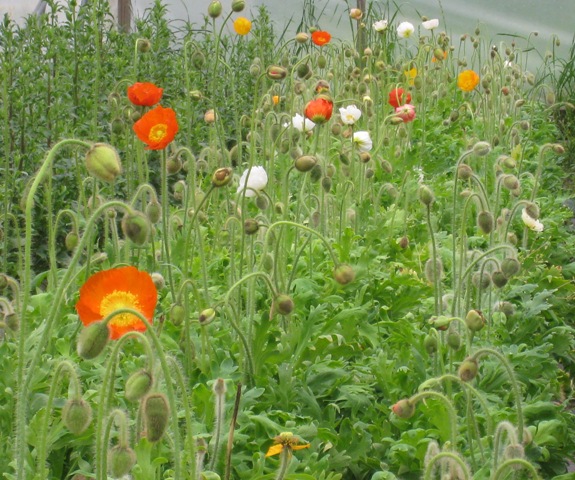
Bright Poppies on a dreary day

5/13/09 Vol. 6 #8

It has arrived, one of the most hallowed weeks of the season, pepper planting week.  I know that sounds like Daytona Speed week or ACC Tournament week or something equally exhilarating but this is the last of the big pushes for the spring.  Covering the Big Tops and planting the main crop of tomatoes is big, sliding the little tunnels is a big job too but pepper week is easily as complicated and important as those.  Sixteen one hundred foot long beds, over 2000 plants, 32 varieties to keep track of I am tired just thinking about it all.

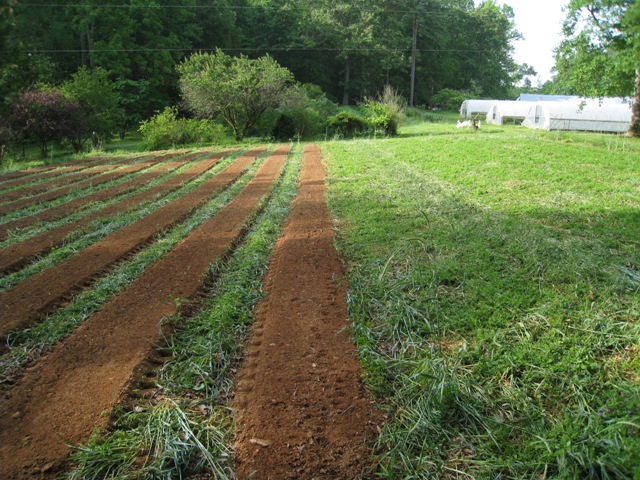
It started eight weeks ago when we seeded nearly 3000 seeds into small 200 cell flats, then four weeks ago we moved the best looking of those tiny seedlings up into 50 cell flats and the perfect two inch cell size for them to grow a good root system.  The same week I mowed and turned under the beautiful cover crop on the eight beds that will hold the hot kinds and the more “delicate” sweet varieties, leaving the cover to grow even more on the area that will be the no-till home of the sweet bells.  Two weeks ago, before the big storms, I rolled down the huge cover crop in the no-till zone so it would be laying parallel to the direction of the rows of plants.  Yesterday, after the month of decomposition, I re-tilled the eight beds giving us a beautiful soil to plant those hot peppers into.  I also re-rolled and crimped the cover crop in the no-till zone which will help it on it’s way to dying and turning into a thick mulch on the soil.

Today we will roll out irrigation lines on each one of those eight beds and stretch the landscape fabric over them.  We think that the hot varieties and some of the smaller fruited sweets benefit from the warmth of a raised bed and of the black fabric, some of them like the habaneros and the aji dulces take so long to set fruit that the warmer the soil early on in the season is what makes the difference.  The vigorous sweet bell peppers do just fine in the cooler, non tilled soil.  Today or tomorrow, we will cut slits in the thick mulch of the no-till zone to tuck the plants into.  Finally tomorrow we will plant, trying for the last time to not mix up the different varieties so we can accurately know who is who when it comes time to picking and evaluation.  Pepper week, it is a long time in the making.

Picture of the Week
Pepper Field ready to go