Peregrine Farm News Vol. 7 #10, 5/12/10

What’s been going on?

Pepper week, well mostly anyway. Seems like I need to look at the master schedule and move a few things out of this week for next year, way too much going on, in theory. It could be that things have just run together in such a way due to the late spring, who knows. Monday we had our usual harvest for deliveries and then covered the four Big Tops over the flowers as they are beginning to stretch and need trellising and protection. In between we did the final soil preparation for the hot pepper beds. Long day.

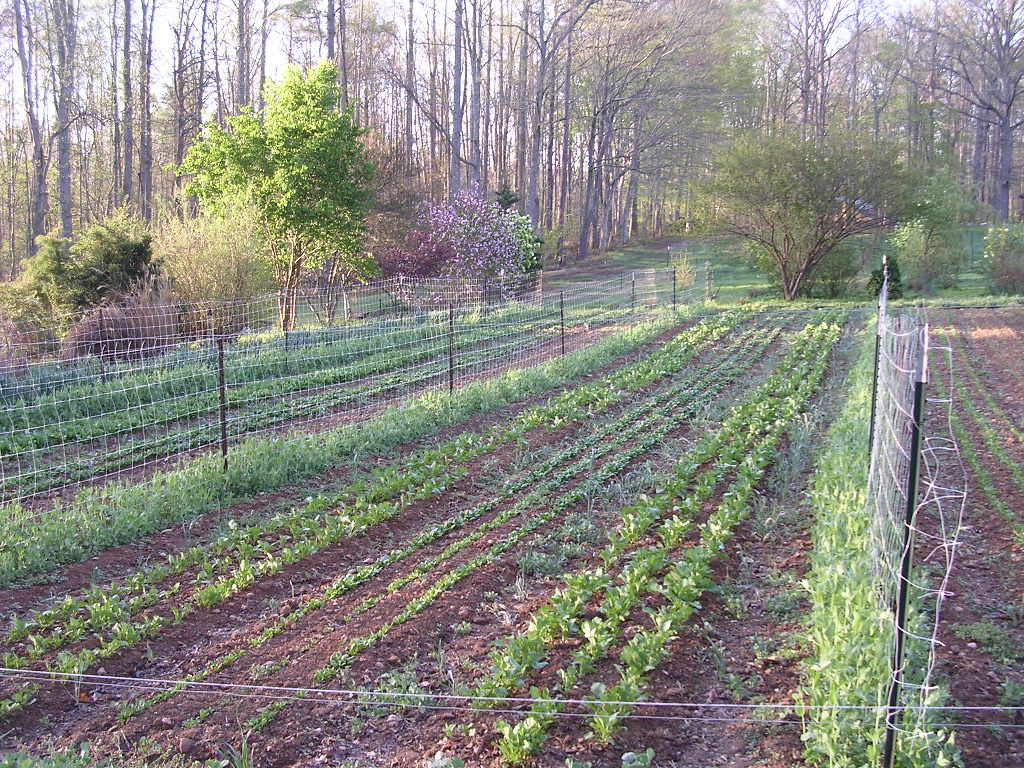
Yesterday I rolled and crimped the cover crop of rye and hairy vetch where the no-till sweet peppers will go. As opposed to the last few springs, the hairy vetch was blooming vigorously which will aid in it’s death. The ground is so hard, from the driest April on record, that I ran the sprinkler on the flattened cover crop for six hours to try and moisten the soil underneath so we have a chance to get the slits cut in it that will receive the plants. Today the guys will get the rest of the landscape fabric mulch on the hot pepper beds and get all of them and the eggplants in the ground. Perfect weather for transplanting peppers onto a synthetic mulch, over cast, warmish, light winds.

Tomorrow we will slit the no-till rows and begin poking the sweet pepper plants down into the thick cover crop residue/mulch. Twenty seven varieties this year, seven sweet types and the rest in hots and near hots. Can’t wait! Only 50 days until the first fresh peppers are at market and about 100 days until roasting begins! If you are interested here is an article on growing sweet peppers I wrote some years ago for Kitchen Garden Magazine, the techniques are the same, the varieties have mostly changed.

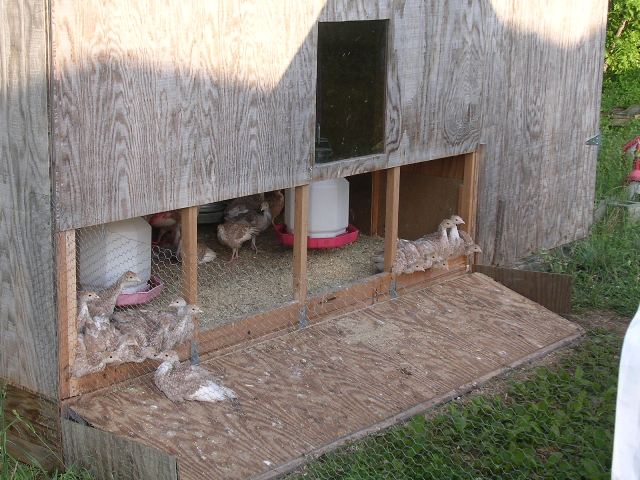
The turkeys have spent an enjoyable and dry week running in and out of the brooder and into the portable shelter that will become their new mothership when they move out to the field for good, next week. Sometimes these transition weeks from brooder to shelter are wet and cold and it is hard to let them out too much as their immune systems are not fully developed yet and the fear is they will get set back. Not so this week, plenty of sunshine and green grass to eat and play in, they are growing like the weeds in the garden.

Picture of the Week

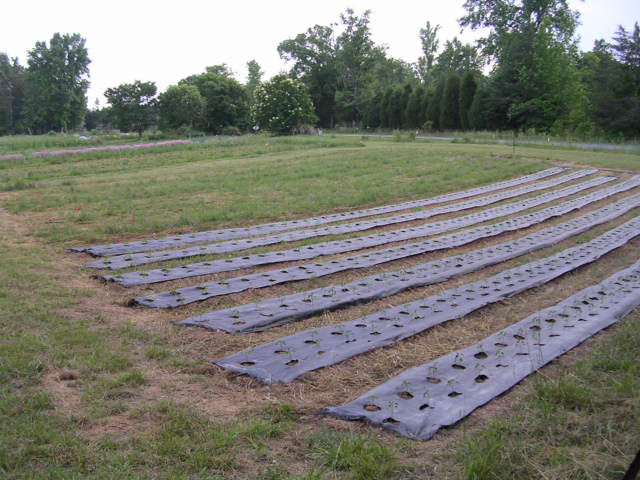
Four covered Big Tops, three mulched hot pepper beds, one beautiful cover crop for no-till

What’s going to be at the market? Continue reading
Peregrine Farm News Vol 7 #7, 4/21/10

What’s been going on?

Wow! Too many things to write about this week but I’ll try and focus. I would be remiss though not to mark tomorrows 40th anniversary of Earth Day. While there are many reasons that Betsy and I ended up farming and in a sustainable manner, this one event in April of 1970 certainly stands out as an important influence. We were thirteen then and the stirrings of the environmental movement were all around us and our minds were moldable. Of course we didn’t know each other back then but we both ended up pursuing educations in the environmental sciences. We wanted to be able to work outdoors, in the country side and in the end leave our surroundings in better condition than when we started. 40 years later we are still trying, where is that original Earth Day button I had?

The Piedmont Farm Tour is this weekend and is always held on the weekend closest to Earth Day. Originally started as a change of events for Weaver Street Market’s Earth Day celebration, they came to us and we got together with Carolina Farm Stewardship Association (CFSA) to put on a tour to showcase the farmers at the Carrboro Farmers’ Market. Now 15 years later there are 40 farms from all over the NW Triangle area and it is the single largest fundraising event CFSA has. It is a self guiding tour, pick up a map at lots of locations (like the farmers markets) and head to the first farm you want to see and buy your all access button there. You can buy your buttons in advance and save $5 at places like Weaver St. Market. Saturday and Sunday afternoons, 1:00-5:00, come see what we are up to this year. Let the mowing begin.

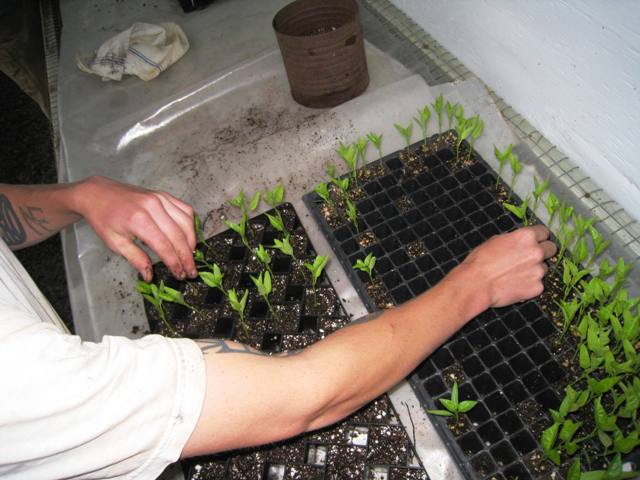
Busy week on the farm. Last Thursday the first of the turkeys arrived. After a year hiatus raising birds we are back at it and you can read more here. They are happy and growing well. We are lurching towards tomato planting next week and yesterday pulled the plastic over the first three bays of the Big Tops that will protect the big planting from diseases. The rest of this week will include installing the irrigation, mulch and trellises. Today the guys are moving up the 2500 or so pepper seedlings into their larger containers to grow on until planting time in about three weeks. Also yesterday I finally finished the rebuilding of the Stand that collapsed under the snow in January, just in time for the Farm Tour as promised. The big issue right now is it would be nice to get some real rain, this pitiful spitting this morning doesn’t count.

Picture of the Week

Moving pepper plants up to larger containers, a good rainy day activity

What’s going to be at the market? Continue reading
4/16/04 Vol. 1 #5

Kind of a mixed bag this week.  Beautiful rains early in the week allowed us to catch up on rainy day chores.  The Staff moved up 2400 pepper plants into larger containers to grow on for a few more weeks when they will go out into the field the first week of May.  21 varieties this year, a few new ones for you to try out, the pepper roaster will make it’s appearance in only 18 or 19 weeks!  Wednesday was a raw day and we used it to do some cleaning up of the edges of the field and burn some brush.  The Wednesday afternoon market also opened this week (kind of slipped up on us and I forgot to let you know last week that it was opening, sorry).  More clean up on Thursday after trying to cover one more of the “big tops” with those 30′ X 100′ pieces of plastic, we are lucky we all didn’t get blown into the next county.  Today is the day!  Calm winds and perfect weather, we are going for at least 4 bays, find out next week!  Cold weather scare the last two mornings, Thursday was right at 32 degrees with some scattered frost and we fully expected this morning to be colder but it looks as if 36 degrees might be a cold as it got.  We protected everything as if the worst was coming and it all looks good.  I did pick some short asparagus in anticipation of a freeze so they will look a bit odd at market tomorrow.

A bit of news from last week.  We had one of our best cheerleaders/supporters here last week helping us on the farm.  A bit of history, Betsy and I started Peregrine Farm by incorporating and then selling shares of stock to people who knew us and wanted to support this kind of endeavor, several who receive this newsletter.  We had many great shareholders who were very patient with us in the lean years as we figured out how to make this place profitable.  The best was Dottie Eakin who not only helped us with investment money but has come almost every year, from far distant places,  to spend a few days to a week working on the farm.  The reason I say was is that we now own all of Peregrine Farm, Inc. so we no longer have outside owners but Dottie still comes and helps.  Without her and others like her we would not be here today, thank you all!

Picture of the week
Look at the what’s to come!  Peas, spinach, broccoli raab, turnips…

5/19/04 Vol. 1 #10

OK I think that we have rounded the corner.  The peppers are all in and we have gotten caught up on flower planting as well- more zinnias, sunflowers, celosia as well as salvia, cosmos and dahlias.  Betsy is excited about the new dahlias partly because they are a new crop for us and this is a new kind of dahlia as well.  We even managed to finally get the basil in the ground and the celeriac too!  Part of the reason that the peppers are such a job (beyond the fact that there are 17 one hundred foot long beds with 2200 plants) is that almost two thirds of them we plant using system called “no-till”.  The less we turn the soil over the less organic matter we lose and the better the soil micro life likes it.  Every time we till the soil it’s like opening the draft on a woodstove and causes the organic matter in the soil to decompose faster.  Some crops we have to till for a good seed bed but others we can just plant directly into the remnants of the huge cover crops that we have grown over the winter.  In effect we grow our fertilizer and mulch right in place instead of hauling it in.  We have been using this technique for nine years now and have expanded it to include the late tomatoes, winter squash and are experimenting with some of the flowers.  It is a tried and true method used by corn and soybean farmers but it is very new to vegetables.  The slow part for us it that we have to plant by hand into a slit that the tractor makes in the cover crop residues, sometimes the slit is better than others and it takes at least twice a long to plant as the ones that we do on landscape fabric.  In the long run though not only is it better for the soil but we have found that our sweet bell peppers perform better.

This week we also began a research project with some NC State grad students on beneficial insects.  They are planting some tomatoes and certain cover crops down in our bottom field and will be seeing what good and bad bugs are attracted by the different crops.  This is one of many projects that we have hosted over the years with NC State.  It’s good for us because we are exposed to all kinds of new ideas and good for them because they get out onto real farms, which is different than doing projects on research stations.  It is hard to create  the kinds of crop mix and interactions that we have here back at the research station.

More weeding, trellising, and lots of irrigating going on.  It is really beginning to feel like a drought year at least in the way we are having to water crops, but that can change quickly.  The turkeys are doing great, trying to fly around now and we have put roosting bars into the Poultry Villa now so that they have a place to fly up to and sleep on.

Picture of the Week
The pepper field, hot peppers on the landscape fabric and the sweet bells in the greenish looking cover crop residue at the top of the field.  In a couple of months it will look like the picture on page 62 of Magnolia Grill’s Not Afraid of Flavor

6/16/04 Vol. 1 #14

Gray, damp, humid, snippets of rain, not much sun.  Nothing grows or blooms fast but the diseases.  Now don’t get me wrong, a little natural water is a welcome thing (our ponds are full again) but a bit of sun in between the showers would be great.  This is exactly the kind of weather that we put the “Big Tops” up for.  In weather like this the tomatoes would go from looking green and lush and in a week start showing brown dying leaves on the bottom and in several more weeks black to the top.  Not so this year!  They are high and dry under the roofs and look fabulous.  There is a little foliage disease here and there but nothing like we have had in years past.  Betsy is also struggling to find enough flowers to cut, with no sun there is are not many buds opening.

Most of the week we have been dealing with the repercussions of what seemed to initially be a short 15 minute thunderstorm on Friday night.  In the daylight after Saturday market we saw the results.  We had a burst of wind over 40 miles per hour and maybe over 50.  Buckets and other things blown all over, limbs up to 4 inches broken off, sunflowers, dahlias, and peppers laid down and the front corner of one of the “Big Tops” leaning to one side.  Every year we have some kind of weather event that makes its mark on the season, some in big ways like Hurricane Fran, some in small ways like this one.  The job on the schedule for this past Monday was to begin trellising the peppers, 48 hours too late for this storm.  Once peppers fall over they are predisposed to lay down the rest of the season, so we put in a string support when they are 12-18 inches high to keep them straight.  As they grow through the season we put additional layers of support in to carry the weight of the fruit and branches.   All of the hot peppers and some of the sweet ones where blown over and then they started to grow upright again giving them a bend in the trunk and branches.  We have them all strung up now but this S curve in the plants and their predisposition to lay down will haunt us all season as we try and manage them.  It is a lot easier to pick peppers if they are standing up and not laying down in the rows or the aisles.

Not all things moved sideways on the farm this week, we did get a lot more planted before the big rain on Friday.  More flowers including the third planting of zinnias and a specialty melon trial we are doing to see if we can have some exotic melons for you in September!  The soil moisture is perfect for pulling weeds in some of the beds we haven’t been able to take care of while picking blueberries and the staff trellised quite a few of Betsy’s flowers (so they won’t get blown over!).  The turkeys are having a grand time out in the big world, running around under the hydrangeas and viburnums and eating all kinds of weed seeds and bugs!

Picture of the Week
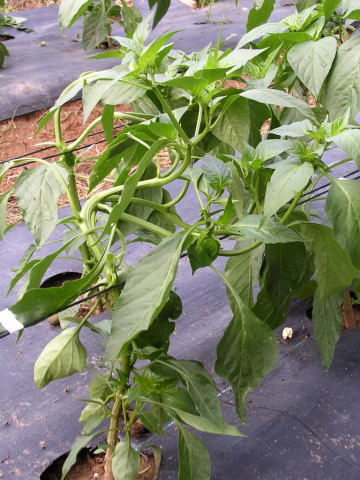
Modern art pepper plants

3/17/05 Vol. 2 #2

OK so it’s now three days from the official beginning of spring and it’s snowing!   We have consulted with lots of our fellow farmers and no one can quite remember a spring this late in getting started.  We are moving forward with the planting plan, as usual, and I think we have caught back up to where we need to be but things just look sad out there in the cold!  There are now over 6000 heads of lettuce in the field and I managed to get the first spinach, turnips, carrots, radish, beets, broccoli raab and the first two plantings of sugar snap peas in the ground but we are still waiting to see them come up.  Most of the flowers look good except they are not as far along as they should be.  Now most of this will quickly correct itself with some consistent warm days, we do wonder though.

In the greenhouse I have gotten a little out of control.  Last week was the big tomato and pepper seeding and as hard as I try to not look at the seed catalogs the siren call of new varieties is seductive.  20 varieties of tomatoes this year including two new purples, several new reds including three we brought back from Italy.  On the pepper side the story is even worse.  36 varieties, partly due to our Italian travels again as well as our continued search for disease resistant varieties.  We have been devastated the last two wet seasons with bacterial leaf spot, which defoliates the plants.  This is a huge problem for large commercial growers and so the breeders are now releasing resistant varieties, at least in the sweet bells.  Our yellow bell has the resistance and it really works, we found one red bell last season that we liked and we are now going to trial four newer ones also.  There are also three new varieties in each of the Poblano and Anaheim/New Mexican green chile types.  The logistical nightmare of keeping track of all these varieties is huge;  from soaking seeds, to seeding in small-cell-size flats (almost 5000 seeds), to moving up the best seedlings into larger containers and then finally moving them to the field and remembering where they are!  All this talk of tomatoes and peppers makes it seem warmer outside already.

Picture of the Week

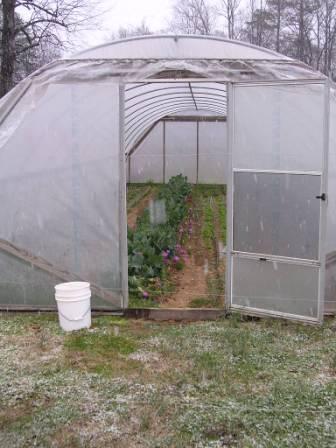
Snow falling outside while the collards, anemones and lettuce are staying warm inside.

5/5/05 Vol. 2 #9

A day late with the newsletter for good reason.  The heritage turkeys came yesterday morning and we were scrambling around getting the brooder house (a.k.a. Poultry Villa) ready for them.  Every year it is something new with this turkey thing.  This year there are problems between the US Postal Service and certain airlines, who carry the mail, about shipping live birds.  So we were not sure that we were going to be able to get these turkey poults from Texas until they confirmed that they had actually made it on to the plane.  That was Tuesday afternoon and we originally thought we had until Thursday to get ready!  So we scampered around until dark on Tuesday getting the brooder all cleaned out and disinfected and going to town to get feed and  bedding.  Yesterday morning I was putting the finishing touches on the Poultry Villa as Betsy drove up to the Post Office after they called at 7:00 to let us know that the the little cheeping box had arrived.  So here we go again!  70 two day old balls of fluff zipping around.  So far they are all singing and dancing amongst the feeders and waterers.  We plan on getting another 35 Broad Breasted Bronzes from a local source in about 6 weeks to round out the flock.

Cinco de Mayo today and to celebrate we got all of the hot peppers in the ground the last couple of days, now we have to get all of the sweet bells planted if it will ever warm up!  It is now official, this cool spring season is the worst we have had in over ten years.  So cool that even the cool season crops are holding back including the flowers!  For the first time ever we will not have the overflowing flower display at market for the Mothers Day crowds.  It is also holding us back a little on getting the rest of these peppers in the ground as we plant the sweet bells, no-till, into a cover crop that we kill by rolling it down.  The problem is the cover crop won’t kill/die if it is not blooming and because of the cool weather it too is delayed.  Additionally if we plant the sweet bells into the colder-than-usual soil under that cover crop they will just sulk.  We plant the hots into black landscape fabric, just as we do with the early tomatoes, so that the soil is warmer but the sweet peppers don’t need as much heat , usually.  So we are going to wait a week to see if warmer temperatures will finally settle in.  How am I going to bring out the pepper roaster on schedule if peppers are delayed?

The cool weather has some good points.  Because there is not a lot for the staff to harvest yet we are getting really caught up on all the other jobs around the place.  Everything is weeded (well almost) , irrigated and trellised.  We may have to break out the paint brushes and put a coat on the packing shed or something!  The Rhubarb plants finally came this week and we planted them quickly.  This is the third time we have tried Rhubarb so if it doesn’t work this time then destiny is not on our side.  I think we finally have learned from our mistakes and have it in the right spot.   Next year we will see if we were right.  The video crew from NC State came out on Tuesday to shoot for a piece on the farm for the on-line Agroecology course.  If it is available for the public to view I will give you the link when it happens.

Picture of the Week
Bourbon Reds, Blue Slates and one of the black sheep Slates drinking and reading the N&O

5/18/05 Vol. 2 #11

Wow, what glorious weather!  Summer must be right around the corner.  This week as we were planting yet more Celosia flowers (this is an inside joke at the farm, Betsy always seems to have more Celosia to plant) Rett asked how many folks who had worked for us had gone on to start their own farms.  I had to think about it for a bit and finally came up with at least six (mostly in this area) and another three or four who most likely will someday.  That is out of the twenty plus people who have worked a full summer with us in the last ten years, that’s almost 50 percent!  I always say that only about one percent of the folks that start out to farm actually make it past the first five years.   Now some of my market gardener colleagues would view these new operations as competition but we view it as an indicator of sustainability.  An indicator that we have developed a sustainable farming system that can thrive and hire quality people who can then go on,  take parts of our system and create their own.  An indicator that this kind of farming is truly being embraced and supported by consumers and communities all over the country.  Remember that one of the three tenets of sustainability is the social component and we feel that in the long run it really is the glue that holds it all together.  This is an example of why certified organic is really a narrow view of farming, it doesn’t take into account these sorts of social dimensions.  Rett who is working on his own side market garden project had his first day at farmers’ market yesterday, so another one is launched!

You know that summer must be close when we start planting the winter squash!  We planted 2500 feet of row to six different varieties including acorns, butternut, and my favorite  Sweet Dumpling.  We got the second planting of corn in and cultivated the first planting (not a great stand due to the cold soil temperatures)  More sunflowers and other warm season flowers too.  Finally the late spring cover crops began to bloom and so we have started to plant the no-till peppers and late tomatoes.  We roll down these huge cover crops, which kills them, and then we cut a slit into them and the soil then plant the transplants right into the mulch.  By the end of today all of the peppers will be in the ground and we put the last planting of Cherokee Purple tomatoes in last Friday.  The irrigation rolls out behind all of these new plantings as we are beginning to get dry and these little quarter inch rains just don’t do much, when the hot days come it will become critical quickly!

On a literary note, I knew last week that I had mangled Twain’s quote about cold weather in San Francisco.  The quote actually goes “The coldest winter I ever spent was a summer in San Francisco.”.  Well I had several corrective e-mails and further conversations at market, including one that said he had used that statement about Portland or Seattle.  This all peaked my interest and so I did a little research and it turns out that it is all an urban legend, there has never been any documentation that Twain ever said or wrote this quote.  So I guess we where all wrong!  None the less, the comparison to the generally cool temperatures in that part of California allowing ideal conditions to grow lettuce still holds.

Picture of the Week
Tough love, peppers planted directly into the rolled cover crops.  Better for the soil and the sweet bell peppers

6/22/05 Vol. 2 #16

Well we made it past the longest day of the year and now it’s all downhill to the finish line.  As I was just walking around the farm this morning (very early) opening and closing valves for irrigation I was able to review all of the new trial crops for this season.  The report is mixed.  The artichoke plants look good and growing well but Betsy says she thinks we probably didn’t get them in early enough to make many “chokes” as they need to have more chilling hours than they got, we’ll see.  The new blackberries are sending up nice strong new canes for next years production.  The sweet corn test is looking pretty bad.  The first two plantings are thin as the germination was poor in the unusually cold soils that we had and the third planting the wild turkeys and crows picked all of the seed out of the ground before it came up (this is a common problem for corn growers).  I re seeded it and just chased more crows out of the field.  The rhubarb is looking pretty good.  They sent the plants too late in the spring for my liking but two thirds of them are up and looking good, maybe we finally found the right place for them!  Finally the new asparagus planting is hanging in there, I wish it looked a little more robust but at least they are still sending up new shoots, we started to irrigate them this week and that should help.

It is getting mighty dry out there and we are pumping water every day now.  We have the ability to irrigate every last corner of the farm and at this time of year all crops have drip irrigation lines running down the middle of every bed.  This is the most efficient way for us to water both from a volume of water standpoint but also it is very energy efficient to pump water for this low pressure system.  The problem right now is that we have about 17,000 feet of line out there and are pumping roughly 10,000 gallons a day, every day!  This is more water than our pond and creek supply on a daily basis.  Soon we will have fewer crops to water (as the last of the spring crops come out) so we can cut back on the number of lines but it always makes me nervous when the pond is going down and there is no good chance of rain in sight.

Blueberry season is coming to a close and now we can put the staff back on other chores.  Yesterday we worked on taking down old and putting up new flower trellis’ and began to build the last of the pepper trellis.  We also cleaned out the turkey brooder house in preparation for the next batch that is supposed to be here tomorrow.  These 35 broad breasted bronzes are for those folks who like fifteen to twenty five pound birds.  Today may be the last berry harvest for the year, if not Friday for sure.

Picture of the Week
Peppers no-till and on landscape fabric, trellised straight and tall!

5/10/06 Vol. 3 #9

So busy yesterday that I couldn’t get this done until this morning (after chasing yet more roaming turkeys), see you at market!

The big pepper plant is today and I hope we are ready for it.  It is a challenge this year as we are planting into maybe the most difficult field we have, as far as soil is concerned.  This is the field that we call “the Top” as it is the highest point on the farm and the farthest away from everything.  When we started going to Farmers’ Market in 1986 this was the only piece of ground that wasn’t planted to blackberries and raspberries so we turned it over and began the experiment with vegetables and cut flowers.  My brother Jon was here at that time and vegetables were his area of expertise.  He and Betsy borrowed a neighbors plow and turned over this far corner of the farm and found a mixed bag.  The field is long and irregular in shape (you know those of use who are members of the straight line police hate that) and the soil changes from one end to the other.  Marvelous sandy loam on the bottom end but the top end is the most difficult red clay we own, very slow to dry out and almost impossible to work into a good seed bed.  Joann is still scarred from having to plant tomatoes into that red clay and having to stack what amounted to pieces of brick around the root balls.  This spring, however, the beds worked up as nicely as they ever have so we don’t have to fight that problem, at least on half of the 1600 feet of pepper beds.  The other half we always plant without tilling the soil, right into thick cover crop of grain rye and hairy vetch that we have killed and flattened down by rolling it.  It is like growing our fertilizer and mulch right in place.  After we roll it down we cut slits into the mulch and the soil, with the the tractor, to set the plants into.  If it is too dry the cutting wheels can’t cut through.  If it is too wet, especially in red clay, it can make a mess that is hard to plant into.  With all of the rain in the last two weeks I am a bit worried that it could be a bit too wet.  We’ll find out later today if that is the case!  None-the-less Rachel and Will (the newest staff member) will be charged with carefully interpreting my diagram of which pepper varieties go where.  Just like the tomatoes there is a strategy as to which ones like or will do better in the different soil types.  The hot peppers definitely need to be in the warmer sandy loam soil while the more disease resistant sweet bells can stand up better to the red clay.  No matter what it will be one at time until the over 2000 plants are tucked into the ground whether it be sandy or clayey.

Late graduation day for the turkeys this week.  Usually we start letting them out to get used to the idea at three weeks of age.  This year because we got them earlier and it has been cold we just let them out yesterday for the first time.  Now five weeks old and full of extra energy from being cooped up they have been acting up already!  We pull one of the shelters up in front of the brooder building, about five feet away and then put up some chicken wire between the two.  There is a ramp/door on the front of the brooder so they can come in and out.  Usually they are very tentative and take a day or so to get used to going out, into the new shelter, and eating grass.  These guys came out and started flying over the chicken wire almost immediately.  I had to chase some down into the woods to catch them.  We clipped the wing feathers on these bad actors after they flew out a second time.  I hope we can get them calmed down or it will be a long summer of rounding up escapees.

Picture of the Week
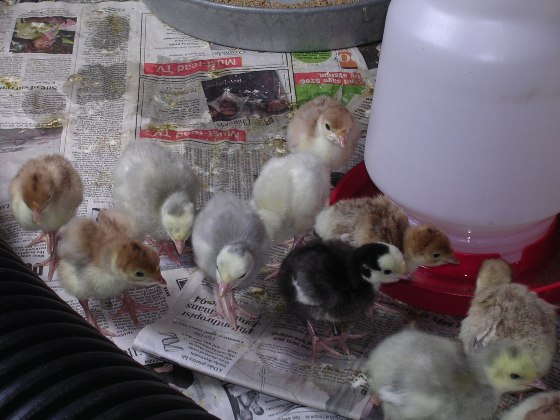
Tentative about the outdoors just before going wild in flight