4/11/07 Vol. 4 #4

Wow, that was cold!  Five mornings in the twenties with the nadir Sunday morning at 20 degrees!  Everyone wants to know what the damage has been to the crops but it is really too early to really tell about most of them.  The tomatoes survived with some severe freeze damage on the outside rows but they all should grow out of it.  The cucumbers look unscathed, amazing.  The dutch iris actually look great, Betsy has begun to cut a few. and we haven’t had any open completely yet but so far they appear to have no injury.  The big question is the blueberries.  That will take a week or more for the damage to be really apparent.  This freeze is very similar to the April freeze in 2001, when it was 24 degrees on the 18th with high winds.   That season we lost all the blueberries.  Most of the rest of the crops look fine, the sugar snap peas are burned a bit along with other odds and ends of crops.  Time will tell.

Monday I gave my last big presentation of the speaking season in Spartanburg, SC.  While I have traveled around the country quite a bit giving talks on all kinds of farming subjects it is these full day workshops that I seem to becoming known for.  This one, for 60 farmers and other ag related folks, is at least the fifth or sixth where I hold forth for an entire day, attempting to cover the entire subject of organic/sustainable vegetable production.  Can’t be done really.  The best part, is that after an entire day of examples and pictures I think they go away with the most important lesson: this kind of farming is an interrelated system where each action the farmer takes affects other things up and down the line.  Sure they go away with a big notebook full of information, and lots of details on soil management, how to control weeds and more but it is the big picture that I hope has become clearer to them.  It is hard to get a grasp on this complex system when you only hear someone speak for and hour or so.  I am currently working with the Southern Sustainable Agricultural Working Group (SSAWG) on a CD-Rom on Organic Vegetable Production and Marketing that is modeled after my full day workshops.  Now all of this is really just the Readers Digest version of the Sustainable Vegetable Production course that I designed and taught for five or six years at the Sustainable Farming Program at Central Carolina Community College in Pittsboro.  There I carried on for three hours a night for sixteen weeks!  Full immersion for sure.  Now the real benefit for Betsy and me to all of this is that the more times I have to explain to people how we farm, the closer I scrutinize why we do things in certain ways and, hopefully, we refine the system even more.
Picture of the Week
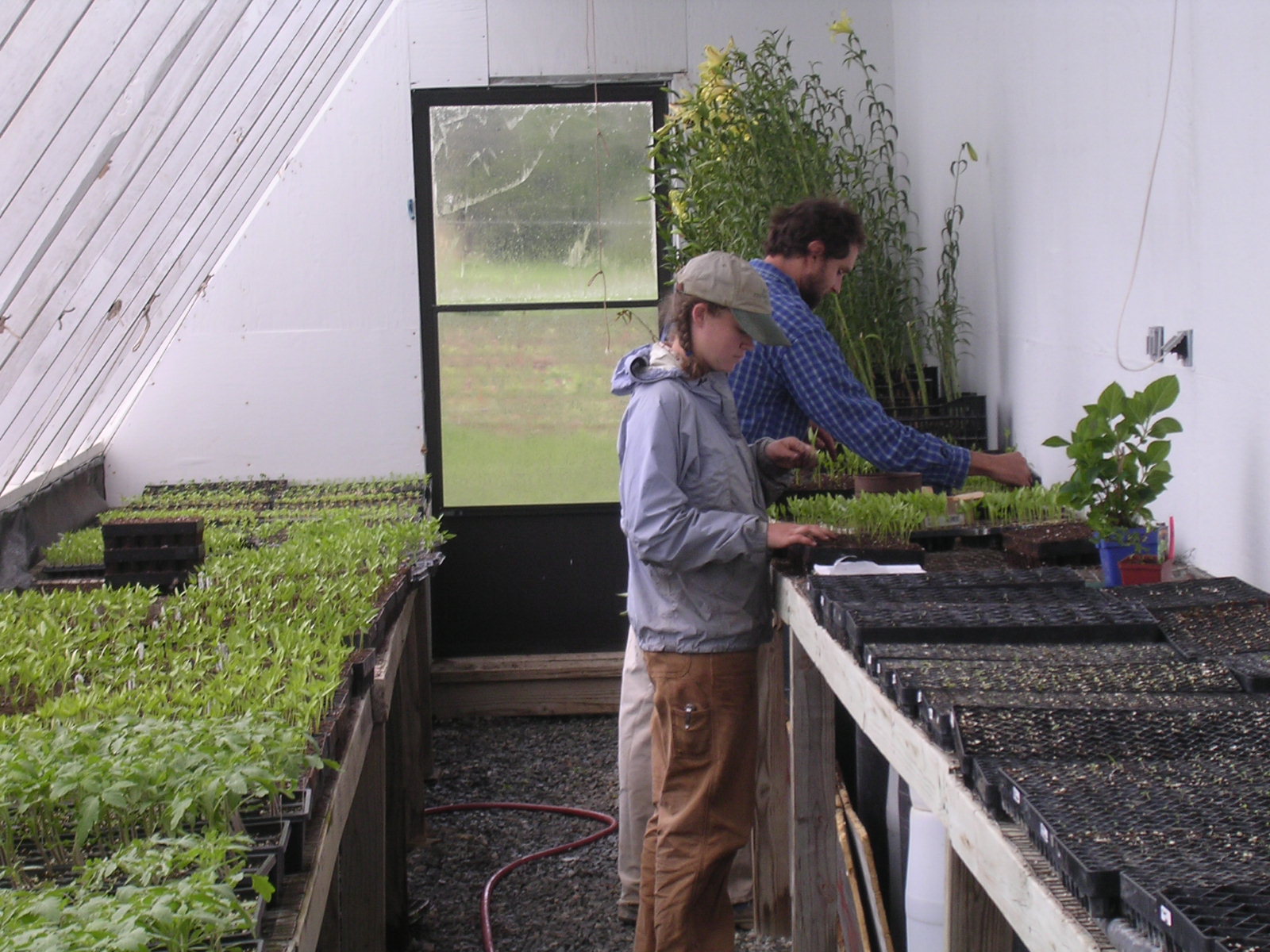
The perfect rainy day activity, moving up the 2500 plus pepper plants

4/19/07 Vol. 4 #5

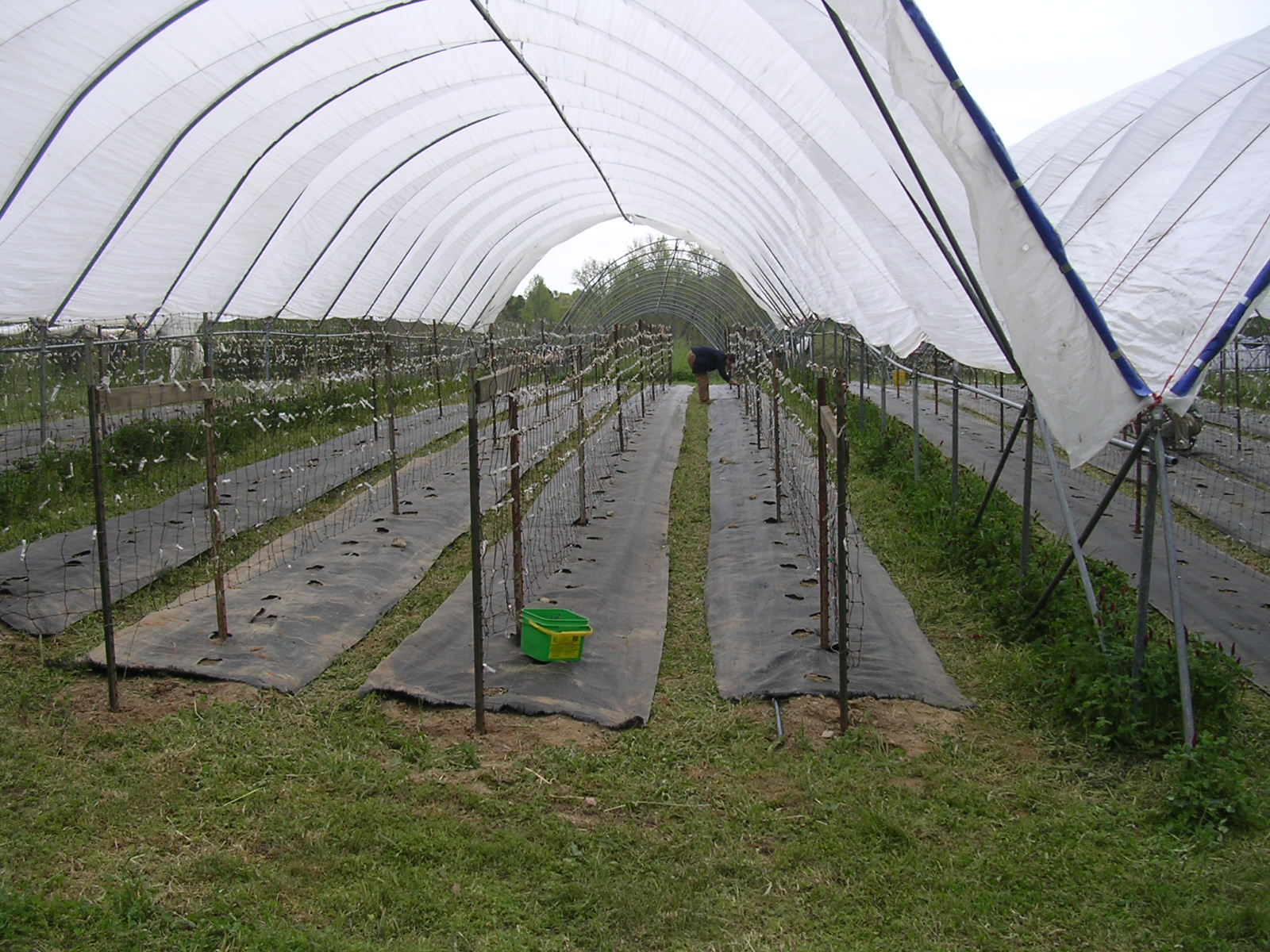
This is one of the pivotal weeks of the year, tomato week.  The whole focus is on getting ready to plant the big main crop of tomatoes and there are a lot of steps in the process.  Tomatoes are a major part of our business and we pay special attention to making sure they very happy.  Of course like everything on the farm we premeditatedly began this dance last summer when we took soil tests to make sure the tomatoes would have just the right amounts of mineral nutrients, especially lime and potassium which they need more of than any other crops.  Then in September we work those minerals into the soil and raise up the beds we will plant the tomatoes into and seed a cover crop of clover and oats.  This cover crop will hold the soil in place all winter, take up any extra nitrogen that may still be in the ground from previous crops and grow more organic matter to further enrich the soil for the coming tomatoes.  A month ago we tilled the tops of those beds, turning that cover crop in so it could begin to decompose and release its good nutrients for the soon to be planted small tomato plants.  Saturday I tilled those beds again, revealing a beautiful rich soil but we are far from ready to plant.  Yesterday after patiently waiting for the incessant winds of Monday and Tuesday to stop we started early (hence the reason for a late newsletter) in calm conditions and pulled the huge 30′ by 100′ sheets of plastic over the Big Tops, under which the tomatoes will grow.  New crew this year as the only people who have ever helped us do this job in the previous three years were Rett and Joann, it went flawlessly.  Under the shelter of the big plastic roofs, the beds can now be covered with the woven landscape fabric we use to keep the weeds down and warm the soil a bit.  A drip irrigation line runs under the fabric because from here on we have to give the tomatoes all the water they will need.  Finally 90 metal posts are driven into the ten beds of this planting and 1000′ of fencing that we use for trellis to support the plants will be hung from them.  By the end of today all will be ready to plant.  The hundreds of little seedlings are waiting in the cold frames, getting toughened up by the breezes and full sun.  Monday they will all be tucked into that beautiful soil, ready to grow up those trellises and give us lots of tasty fruit!

Saturday and Sunday is the Farm Tour, 1:00-5:00 each day.  Our annual opening of the doors to the general public to come see the farm.  Many of you have been on the Farm Tour before and it is a great opportunity to see many of the folks who sell and the Carrboro Market.  Now in it’s twelfth year, thousands of people go on the tour and it raises thousands of dollars for the work Carolina Farm Stewardship Association does.  Sponsored by Weaver Street Market, who does an incredible amount of work to promote the tour and local agriculture, it is easy to go on the tour.  Just pick up a map at the Carrboro Farmers’ Market or Weaver St. Market or many other local businesses and go to first farm that you want to see.  The best deal is to buy a button ($30) which will be your pass for as many people as you can stuff into one vehicle, for as many farms as you want.  34 farms this year so you will have to choose, it is hard to do more than 3 maybe 4 farms in a day.  In the mean time we will be mowing and picking up around the place, nothing like have hundreds of house guests all at once to make you buff up the joint!  Come on out and see what we have been up to, the weather looks to be perfect!

Picture of the Week
Putting the final touches on the tomato trellis under the roof on a gray day.

4/26/07 Vol. 4 #6

Farm tour weekend, wow, always enjoyable and always long days.  We had our usual modest sized crowds which makes it much easier for us to visit with everyone and answer their specific questions.  Some of the farms, especially those with animals, have told me that they had more than 1000 visitors!  There is no way we could deal with numbers like that and enjoy it as much as we do.  It was great to see everybody especially our customers from market, we also get quite a few people who are farming or are seriously looking into it and they ask really good questions about why we do things in certain ways.  One of the highlights was the three van loads of farmers and extension agents who drove all the way up form Louisiana for the tour!

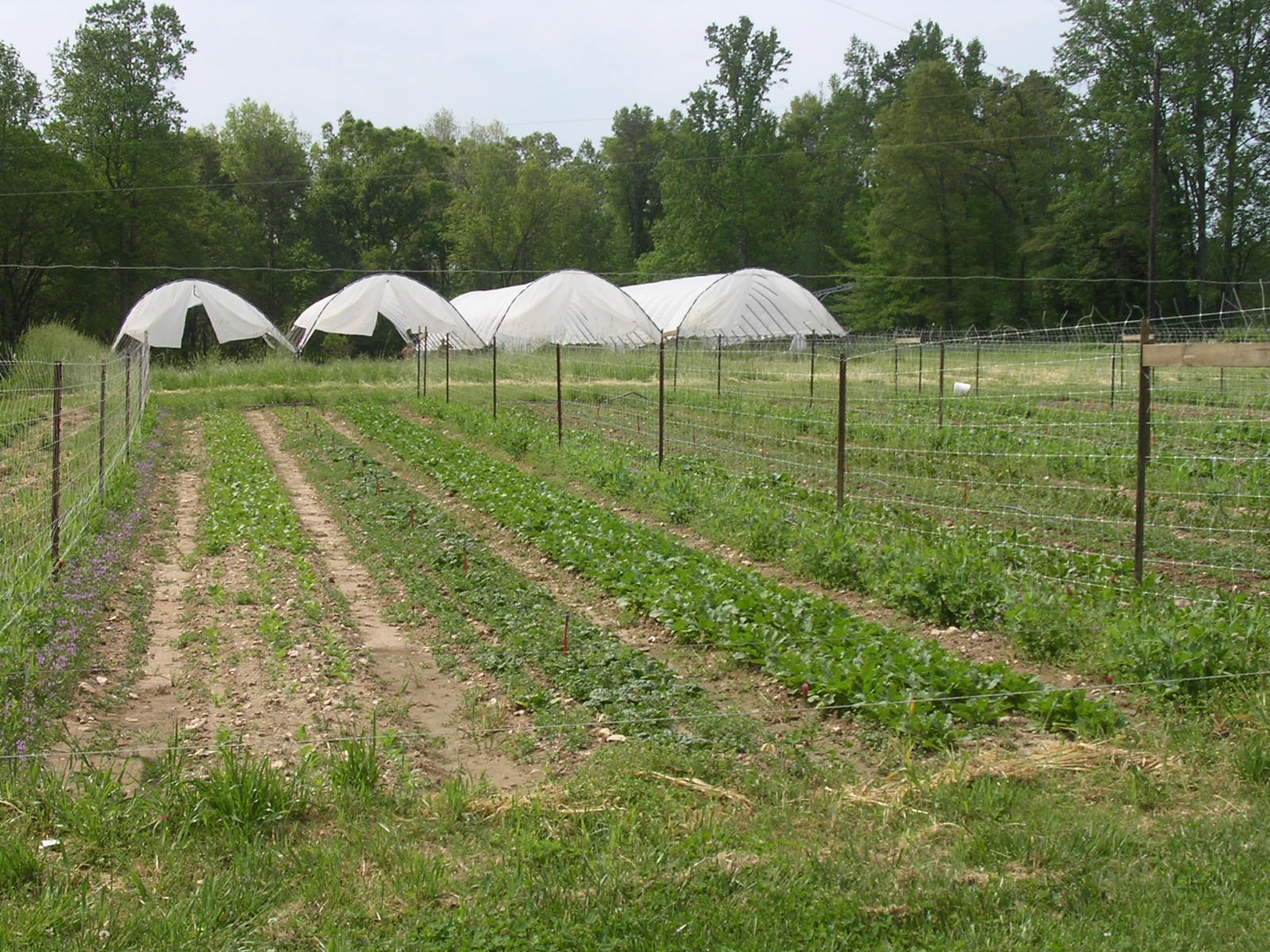
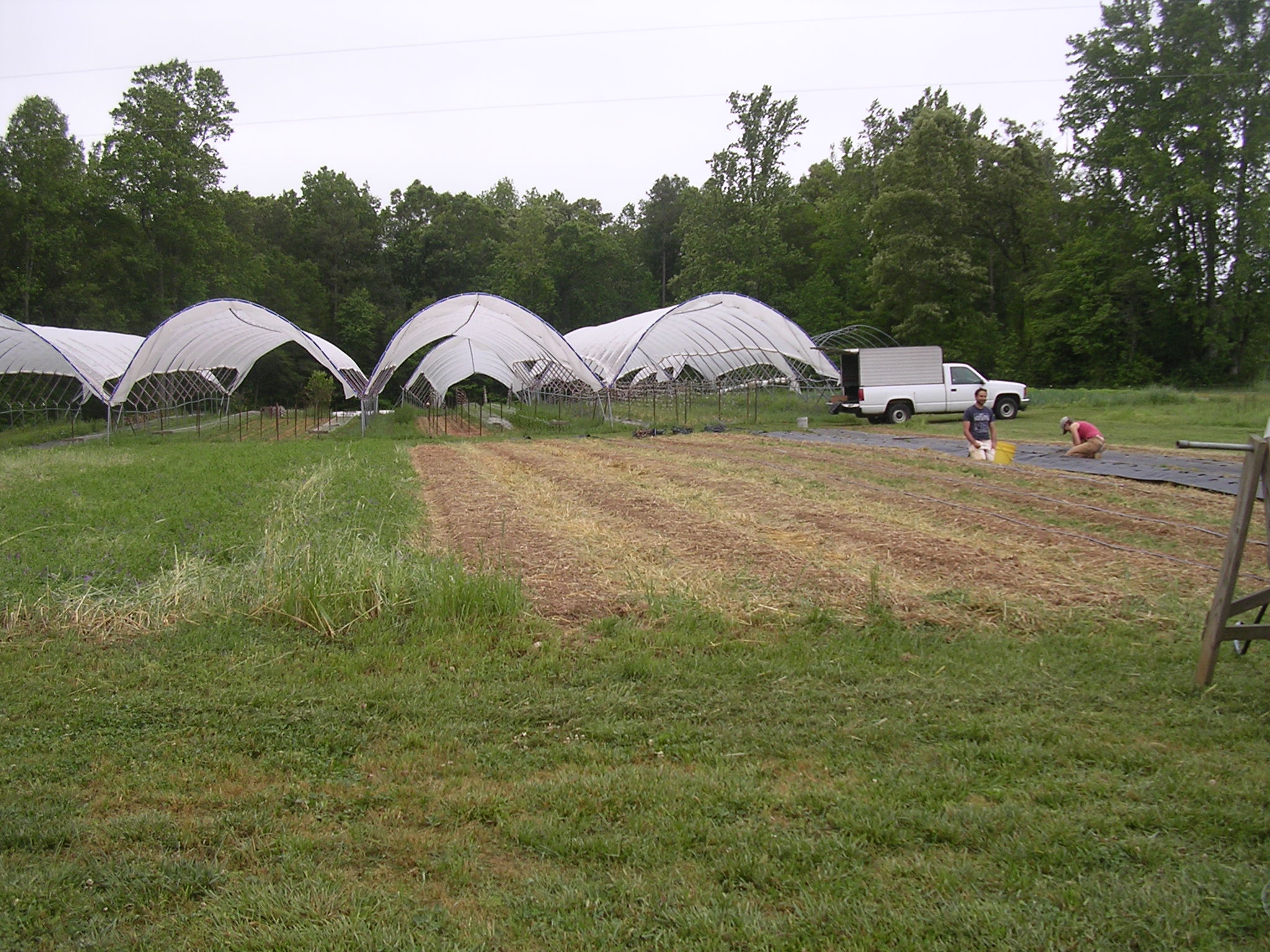
With the hubbub of the farm tour behind us we now turn to the next big projects on the list.  Yesterday we covered the four bays of the Big Tops, over the flowers, moving quickly before the winds came up.  We can now begin the last cultivation and weeding in those crops before we have to start trellising them in the next few weeks.  There are only a few big “hurdles” we must clear each year so we can move on with certain crops and this is one of them.  They punctuate the season which is dominated by little steps each day on the way to the end of the year.  Sliding the tunnels, preparing for planting tomatoes, covering the Big Tops, preparing for planting peppers; those are the ones that always loom large in my mind, three down, one to go.  The big planting of tomatoes went in Monday and they are very happy with this warm weather.  “Only” seventeen varieties in this planting including some new large sauce types from Italy and a cherry from Italy which is one of the Slow Food Presidia, special crops or foods that have been designated as such to help save them.  Here is a link to more information about Slow Food’s efforts to save endangered foods.  Pea trellis went up yesterday, the sugar snap peas have grown out of the freeze damage of a few weeks ago and are wanting to climb.  More flowers and vegetables have been planted and now we settle in on the chores of cultivating, trellising and keeping them watered.

Well many of you have been asking about the turkeys and if we will be raising them this year.  We normally would have the little poults here by now but have been waiting to receive word about the status of the new processing plant.  I finally talked with them on Tuesday and while they are making good progress on building it they could not assure me that it would be ready for Thanksgiving.  So the decision has been made for us.  No turkeys this year.  After two years of the stress of not knowing if there would be a place to have them processed we feel it is best to wait until we know for sure there will be a facility.  This is one of the big differences with turkeys as the heritage types, like the Bourbon Reds that we raise, take a full six months to grow so we need to be assured of the outcome far in advance.  With chickens they only take a little over two months to raise and are easier to get the chicks for, so those farmers producing them can still wait and have several flocks this year when the plant is ready to go.  Sadly no excellent turkey for Thanksgiving or stories of Mr. Tasty as the season unfolds.

Picture of the Week
Just covered Big Tops and newly trellised Sugar Snap Peas

5/2/07 Vol. 4 #7

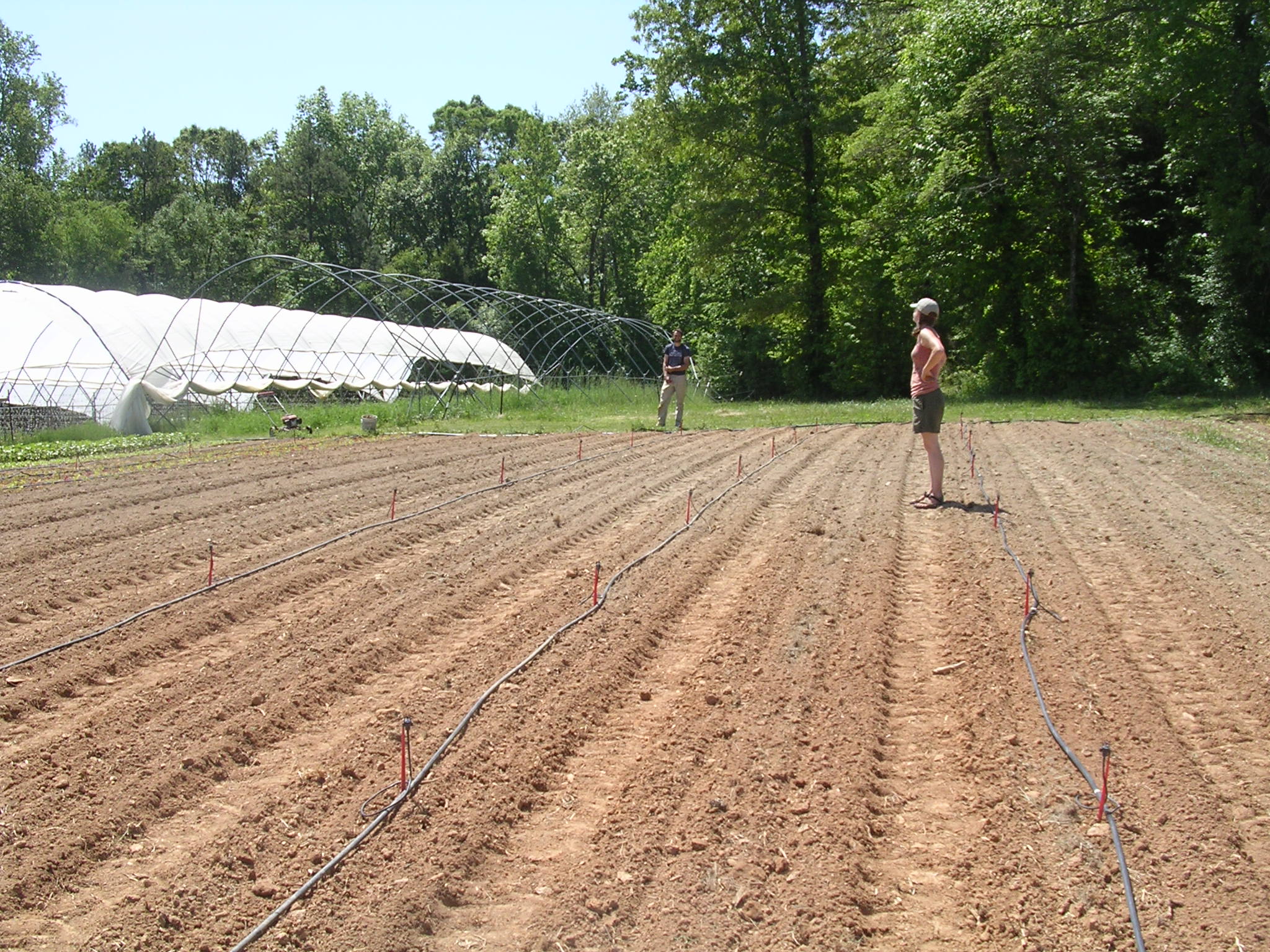
After two straight Wednesdays of early starts to cover the Big Tops I am finally back on schedule with the news from the farm.  It’s hot and getting dry, dry, dry and we are working to get enough water on everything but the newly transplanted small seedlings would really like a rain to get them established.  Our standard spring planting procedure is to plant on days just before a rain is due to arrive so everything gets a good drink of water.  The past few weeks the weather has not cooperated in that way so we move to our summer dry weather system of preparing the planting bed and then burying a drip irrigation line right down the middle of the bed.  We then plant the bed and drag a hose along to water the little plants in well and then let the buried irrigation take over.  This irrigation line is buried just a few inches deep so we can weed over it but it also makes it so the water, that slowly drips out of its openings, moves out through the soil soaking the bed and the plants roots.  That’s the theory and generally it works.  When the top few inches of the soil is as dry as it is now and a hot dry wind blows it is almost impossible to get the whole bed wet with the irrigation line.  We would have to run it for hours and hours to wet it completely and then the established plants in neighboring beds would be too wet.  So the next move, if the rains don’t come and the little plants are drying out, is to roll out the micro-sprinklers to artificially rain on them.  These little sprinklers run on low pressure like the drip irrigation lines do but can throw a fine spray up to ten feet but then we irrigate up the all the weeds too.  No easy solution other than a little rain, maybe tomorrow?

For the second year in a row we are working with NC State on an interesting research project with grafted tomatoes.  In other parts of the world with limited agricultural land and intensive plantings it can be very easy to begin to have problems with soil-borne diseases from planting the same kinds of crops in the same place year after year.  One solution is to use a disease resistant rootstock and graft the variety of vegetable you want on top of it.  Just like fruit trees where they use rootstocks to control the size of the tree and then put say a Golden Delicious on top.  In places like Korea and Japan and Israel a large percentage of their tomatoes, melons and other fruiting vegetable crops are now grafted.  Last year we/they tested two rows of tomatoes here on our farm, just out in the field, testing three different rootstocks just to see the growth and yield differences.  This year they wanted to have the research plot under the Big Tops just like the rest of our tomatoes and to use one of our usual varieties.  So we decided on testing our favorite tomato, Cherokee Purple.  We grow more Cherokee Purples than red tomatoes and so it is a very important crop for us.  Just in case they had trouble producing the grafted transplants in the lab at NC State we started a whole set ourselves so we wouldn’t be without our favorite kind, assuming we would just give those plants away if the graduate student ended up with enough plants.  Then we got nervous and decided to plant those plants anyway just in case there was other difficulties with the grafted plants, this is research after all, things can happen.  So now we have twice as many Cherokee Purples than ever before!  It could make for a very tasty July!

Picture of the Week
Setting up the micro-sprinklers to try and water up the new zinnias

5/10/07 Vol. 4 #8

Blackberry winter is what my father always called these times in late spring when we get abnormally cool periods.  Not really abnormal as it seems to happen every year, and it is when the blackberries are blooming along the roadsides.  We were in the high 30’s on Monday morning and all of the crops, except for the lettuce maybe, are looking skyward wondering when the heat will come and make them bust out in profusion.  Another Mother’s Day and graduation upon us and Betsy is wondering just when all those flowers will start to bloom too.  There is a bloom here and there just teasing her and the plants are looking really good and full of buds.   This is the story the beginning of each May when the big question from Weaver Street, graduates, parents of graduates, brides and others is “When will you have more flowers?”, we just shrug and say probably the week after Mothers Day.  It does seem to be exaggerated this year due to the tremendous cold snap at Easter, it really made a lot of crops just stop and it has taken some time for them to get rolling again.

The last big hurdle is in front of us this week.  Pepper planting.  Now that the tomatoes are in and looking really great, the last of the large plantings is upon us.  From here on we only plant a few beds a week and never are they as important to the whole farm as the big pepper array is.  Twenty two varieties this year including a few new ones.  The best part is we are in one of the best fields we have.  Great soil and sun, the last time we had peppers here (2002) it was a superb crop.  The plants look as good as they ever have too.  Good germination and they have grown well and look very uniform.  Sometimes, especially with the hot peppers, germination can be poor and then they can take forever to get going.  The last few years we have gotten into the pattern of planting the peppers in two stages.  The first half go into raised beds covered with black landscape fabric which warms up the soil a bit faster.  We put the hot peppers and some of the finicky sweet ones  into these beds, I think they need the additional boost the warmer soil gives them.  In the second planting stage, all of the red bells, and half of the yellow and orange bells, we plant “no-till” into the remains of a huge cover crop of rye and hairy vetch.  There are many reasons why we do it this way but better long term soil management and less disease on the peppers are the main ones.  We have been experimenting/working with this system since 1995 and each year we refine it.  This year is exciting as we have new tractor implements that we hope will make it really easy to plant into the thick residue from the cover crops.  Again this spring we may have to wait another week to get them in the ground because it is impossible to kill the cover crop organically until the hairy vetch is really blooming.  Like everything else, it is delayed from all of the cool weather.  Once the rye has sent out its seed heads and the hairy vetch is in full bloom we can just roll down this mass of plant material which crimps the stems and they give up the ghost and die.  If they are not blooming then, even with the rolling, they have a will to live and make a seed that allows them to re grow which then makes them a pesky weed in the peppers.  Patience is the key, they began blooming nicely this week so next week will be just fine.

Picture of the Week
Preparing the pepper beds for planting, no-till on left, tilled with fabric going on, on the right.

5/17/07 Vol. 4 #9

Some weeks are all nose to the grindstone and then there are periods when we raise our heads up and let the outside world in.  This next week is one of those times.  Yesterday day we are hosted 21 agricultural extension agents from Florida.  Florida is a huge agricultural state but in the “old school”, large scale, let’s ship it around the world way.  This group is up here for four days to see, feel and touch our thriving local food system.  While all parts of the country are improving as to the numbers of small farms, farmers markets and the infrastructure that supports them, ours here in central North Carolina is really bustling.  Not that we don’t have holes in the system that need to be addressed like the poultry processing problem, easier supply of some inputs, and other things; we do have large numbers of viable farms, great markets and strong groups working on making it all happen.  This is the second group this spring to come to the area to see how we do it, you might remember the three van loads of agents and farmers from Louisiana that came for the Farm Tour.  So if you see a large group moving through market on Saturday you all will know who it is and be proud of all the work we all have done and are doing for local food here in North Carolina.

The second round of events starts next Tuesday when Carlo Petrini the founder of the Slow Food movement arrives in the area for two days of farm tours, dinners and speeches.  You all know of our involvement in Slow Food, having twice gone to Italy for the Terra Madre conference and subsequently working with the local chapter on various projects.  Touring the country to promote his new book Slow Food Nation ,  Carlo is coming to launch the lecture series for the Center for Environmental Farming Systems (CEFS).  CEFS is the largest research farm in the country doing work on sustainable and organic farming systems and it is here in North Carolina!  Betsy and I sit on the Friends of CEFS Board of Advisors and during a meeting last winter we suggested having Carlo Petrini come and speak, never thinking it would happen this quickly.  Carlo Petrini is one of the most influential people in Italy and in the world of artisanal food production and local food systems their is no larger figure.  Information about his visit can be viewed here .  There are three public events that we are involved in.  The first is a huge (sold out) picnic being held at Chapel Hill Creamery on Tuesday night where farmers and chefs have been paired to showcase local foods that are in season.   We are working with our friend Sara Foster of Foster’s Market in Durham.  Betsy is donating all the flowers for this event as well and for the second event on Wednesday evening in Raleigh.  A reception for members of Friends of CEFS with Carlo Petrini will be held just before his lecture at 7:00 p.m. which is free and open to the public, this will culminate his visit to the area.  Tuesday and Wednesday before these events Carlo and others from the national Slow Food office will be touring farms in the central NC, possibly including ours, just be assured that Betsy has been out on the mower!

Picture of the Week
Tender Baby Swiss Chard

5/24/07 Vol. 4 #10

Whew! Petrini week is over.  Three days that felt like a week, but it all went beautifully.  Monday was like a normal Friday for us as we harvested almost as many vegetables for the CEFS-Slow Food picnic as we would in getting ready for the Saturday market.  The staff worked a full day (Mondays are generally half days) to make sure we could get everything done because we had lunch guests coming the next day.  You may remember in last weeks newsletter that Carlo Petrini and his Slow Food compadres were going to tour some farms around the area, well we found out on Friday that not only was he going to come see us but also have lunch here on the farm!  Lunch here?  I wondered how the founder of a movement that “celebrates the pleasures of the table” would feel about peanut butter and jelly sandwiches.  We had a plan, call some one else to help!  It’s not that Betsy and I aren’t good cooks with plenty of great material to work with we just had a few more things going on like helping with all of the events including donating all the flowers for them, oh and we had a farm to run.  We have several good friends who are excellent cooks that we could call on but our first call was to Anne Everitt who you may remember used to be the manager of the Farmer’s Market as well as pastry chef at Elaine’s and Lantern restaurants.  Anne immediately swung into action designing a simple but refined menu using mostly Peregrine Farm ingredients along with other local and NC foods.  With the help of Amy Eller, formerly communications director for the Carolina Farm Stewardship Assoc., they took over our kitchen and chopped, sliced and washed there way to an extremely tasty meal.  The next day, when asked by a reporter what was the best meal he had eaten on his three week tour of the US, he said he thought it might have been the lunch here at Peregrine Farm!

By 1:00, when they arrived, the table was set up under our former pick your own stand in the shade of the huge tulip poplar trees with views of the farm.  We took a short walk around the farm and then retreated to the lunch, Italian style.  We had good discussions with all the Slow Food folks about this area and how lucky we are to have great markets, customers, non-profits and lots of small farmers.  More importantly we were able (Betsy in her hard earned Italian) to speak privately with Carlo about our Italian farm family and their struggle to keep there farm from being sold out from under them.  Their situation is a long and complicated story but since last fall we have been trying to enlist Mr. Petrini’s help.  He is a very influential figure in Italy especially the Piedmont region where our friends farm.  If we could get him to say a few words to the right folks in the regional government it could save their farm of five generations.  He said he had received our letter and had called the regional President but that it was messy situation.  He then promised to contact our friends when he returned to Italy to get the whole story.  At that point he pulled out his cell phone and dialed their number (which Betsy just happened to have in her pocket)…they did not answer.  We feel sure that he will contact them and help when he gets back to Italy!

The rest has been a whirlwind.  As soon as they left the farm we had to rush over to the picnic to get set up including all of the flowers that Betsy, with the great help of Jennifer Delaney, had arranged.  A very enjoyable event with great food and everyone really seemed to enjoy it.  It was hard to believe that there were almost 400 people in that field.  Mr. Petrini and friends seemed to have a really good time and were (I think) further amazed at our local food community.  Yesterday the drum beat continued.  Get ready for the Wednesday Farmers’ Market, which the staff was to be dispatched to while Betsy and I headed to Raleigh for the final two Petrini events.  We had to arrive to the reception early to set up the flowers there too.  The Friends of CEFS reception was well attended which then flowed next door to the final event, Carlo’s presentation about the meaning and value of preserving food traditions, defending biodiversity, and protecting food that is good, clean and fair.  Nearly 1000 people were in attendance, and even though he spoke with an interpreter, they all seemed to take away some important messages.  With it all over we limped home.  We didn’t mange to get any pictures but friends where taking lots so hopefully next week we can have a Carlo Petrini picture of the week.

Picture of the Week
An armload of radishes

5/30/07 Vol. 4 #11

OK so it’s officially dry now as the plantains along the drive way are curling up and crinkly.  Also because we are now pumping water every day.  Once the temperatures hit the 90’s and the evaporation rate is something like a quarter inch a day we have to irrigate every day just to keep up.  All spring it has been so cool that, while dry, what water we put out there lasted a long time in the soil, not so anymore.  We began running water out of the creek this week to try and keep the pumping pond full, right now it is about 18 inches down.  So my daily routine is to roll out of bed and walk down and turn on the irrigation.  Then every two hours walk around the farm opening valves on another field or two and closing the valves on the area just watered, checking for leaks or other problems along the way.  This goes on for eight to ten hours until the early afternoon when we turn it off for the day, no use in putting water out there in the heat of the day when it just flies out of the ground almost as fast as you put it out there.  These perambulations allow me to get a good look at everything on the farm as normally there are crops that are left alone for long periods after planting until we need to cultivate or begin harvesting.  It’s not like we just ignore them but we don’t check them every day, like Betsy says “If it’s not on fire…”.

We should begin to be preoccupied with picking Blueberries about now but I still haven’t seen one ripe.  I am worried that with only about a twenty percent crop the birds are going to get them before we do.  We have been noticing a small flock of birds flying out of the bushes every time we approach.  Now we have always lost a few to the birds but never had a group like this consistently working it’s way up and down the rows.  I have heard from the strawberry growers that they are noticing more birds in there patches too.  It could be that with the freeze they lost a lot of their native fruits and other food so are going for the easy pickings in the cultivated fields.  With this lack of berries we are able to get plenty of other work done around the place.  The main planting of tomatoes are waist high and need tying up again, the construction of the pepper trellis was started this week, and general flower weeding and trellising is always needed.  Soon the spring vegetable will all be gone and we will begin the dismantling of the pea trellis and rolling up the irrigation.  Summer cover crops will need to be planted soon too but not without the chance of rain.  Maybe we’ll even have time to run some new water lines, just might need them.

Picture of the Week
A view from the top of the farm

6/6/07 Vol. 4 #12

Just when you think that you have seen it all in 25 years of farming some new wrinkle appears.  We are in a pitched battle with some kind of varmit who is eating all the ripening tomatoes in the little tunnels!  Don’t be messin’ with my tomatoes!  In the past we have found a few things (mostly melons) with tooth marks in them and only one or two a year, but this critter is having a grand old time working it’s way up and down the rows eating or biting into a dozen or so a night.  We put traps in the tunnels a few nights ago and caught a possum and thought OK problem solved but yesterday morning someone had been having a picnic again and the trap was tripped but no one inside!  So now they are getting crafty, maybe a raccoon?  We upped the ante baiting the trap with peanut butter (the universal food used to attract all wild things from mice to buffalo) and now slices of apple.  If this doesn’t get some results then we may have to surround the tunnels with the electric net fencing we use for the turkeys and that will keep them out but also make it harder for us to get in and work.  I am not yet ready to sleep out there with the gun but I mean we are talking about the first tomatoes of the season here!

What a great rain on Saturday night, we had an inch and a half that seemed to all soak in.  Now we can not only let the pond fill back up a bit but we can also get some things planted that just didn’t make sense to do unless there was some moisture in the soil.  Tuesday we finally planted the quarter acre of winter squash (acorns, butternut, spaghetti, sweet dumpling) which should come up nicely now that we had an additional bit of rain last night too.  A bit late to get the squash in the ground as our rule is it needs to be planted in May otherwise we lose the fruit to pickle worms in August.  But it was just too dry the last few weeks to get them germinated and it is one of the crops that I don’t plan on irrigating, especially when we are watering the rest of the farm and running low on water.  So we’ll see, maybe the first of June will be OK and we will slip past the flights of the pickle worm moths.  It is seasonal change here on the farm, cool season crops coming out and the beginning of the harvest of the warm season ones.  Peas and pea fences came down yesterday, the irrigation lines came out of the larkspur and bachelors buttons, soon all will be mowed and turned under ready for the summer soil improving cover crops.

Picture of the Week
Rat Tail Radish Pods

6/13/07 Vol. 4 #13

This is the time of year that we are always tieing something up.  Many of the summer crops need “assistance” standing up, so over the years we have developed multiple ways to trellis them.  Trellising takes extra time and labor so we only do it for certain crops that really need it.  Tomatoes, peppers, cucumbers and pole beans in the vegetables along with lisianthus, sunflowers, celosia, delphinium and a few others in the flowers.  Besides making it easier to harvest them because they are up off the ground it also gives us better quality.  Straight flower stems with clean blooms are Betsy’s goal, those S shaped sunflower stems may look cool but most folks won’t buy them.  In the vegetables it also give us nice clean fruit but also allows for good airflow around the plants so they dry out faster in the mornings after a rain or heavy dew.  Most of the diseases that affect these crops are a fungus or a bacteria, warm wet conditions are perfect for them to go wild.  If we can get those plants up into the breeze then we can slow down the inevitable spread of these diseases.  So we have come up with a set of trellis designs that can be put up fast, do the job and then come down just as fast.  I am the king of metal T-posts, electric fence wire, a few pieces of 2X4, baling twine and some kind of mesh either plastic or metal.  Sounds just like a farmer, a job is not worth doing if it doesn’t involve some electric fence wire, baling twine and maybe some duct tape.

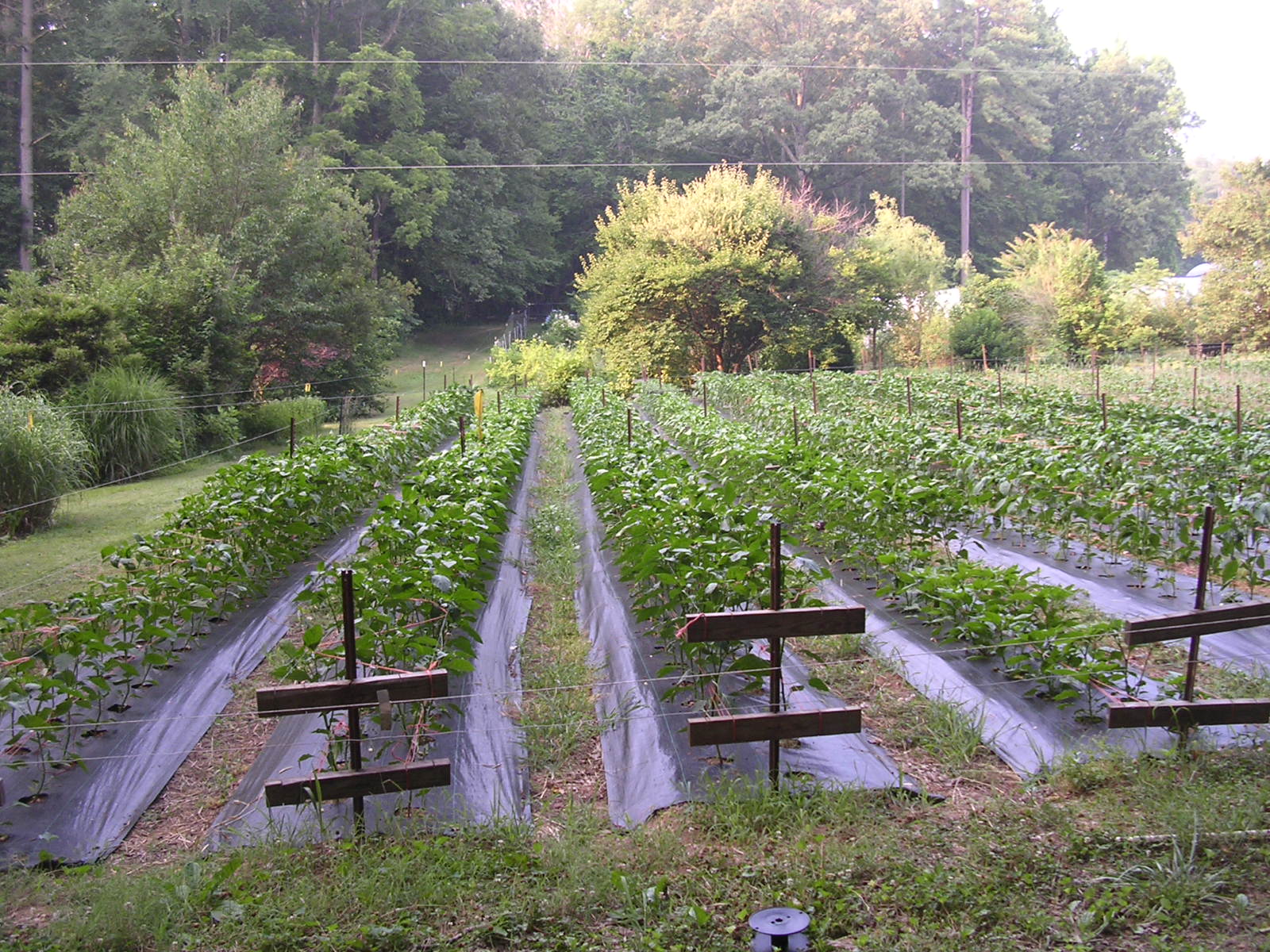
Early in the year the staff is gradually trained in how to build the various “styles”.  Heavy duty tomato trellis with metal fencing hanging off of six foot T-posts, strong enough to bear the weight of nearly 1000 pounds of fruit and vine per 100 foot long row.  Then the wispy pea fences of plastic mesh hanging off the same post set up, just enough structure for them to grab onto with their tendrils and light hollow stems.  Soon they move to the graduate courses in trellising, horizontal structures that float over the rows on cross arms attached to… metal T-posts.  First the plastic flower netting placed just above the growing and budding plants so the weight of just the heavy blooms are supported as they grow up through it.  Finally the two and three level condos of trellises, the pepper array.  A lower level of baling twine run on either side of the little ten inch tall plants to keep them upright in the summer storms.  Then another layer eighteen inches above that of wires and baling twine to catch the branches as they grow up through it to support the weight of the growing fruit, really tall peppers like poblanos get a third, pent house layer at almost four feet above ground.  Cov and Elizabeth are now certified trellis technicians, with almost 6000 feet of construction behind them.  This week the last 500 feet of tomato trellis and the first layer on the pepper trellis.  A friend once said my tombstone would read “He was an OK farmer but he sure could tie things up”.

Pictures of the Week
Tomatoes reaching for the sky and nice straight peppers